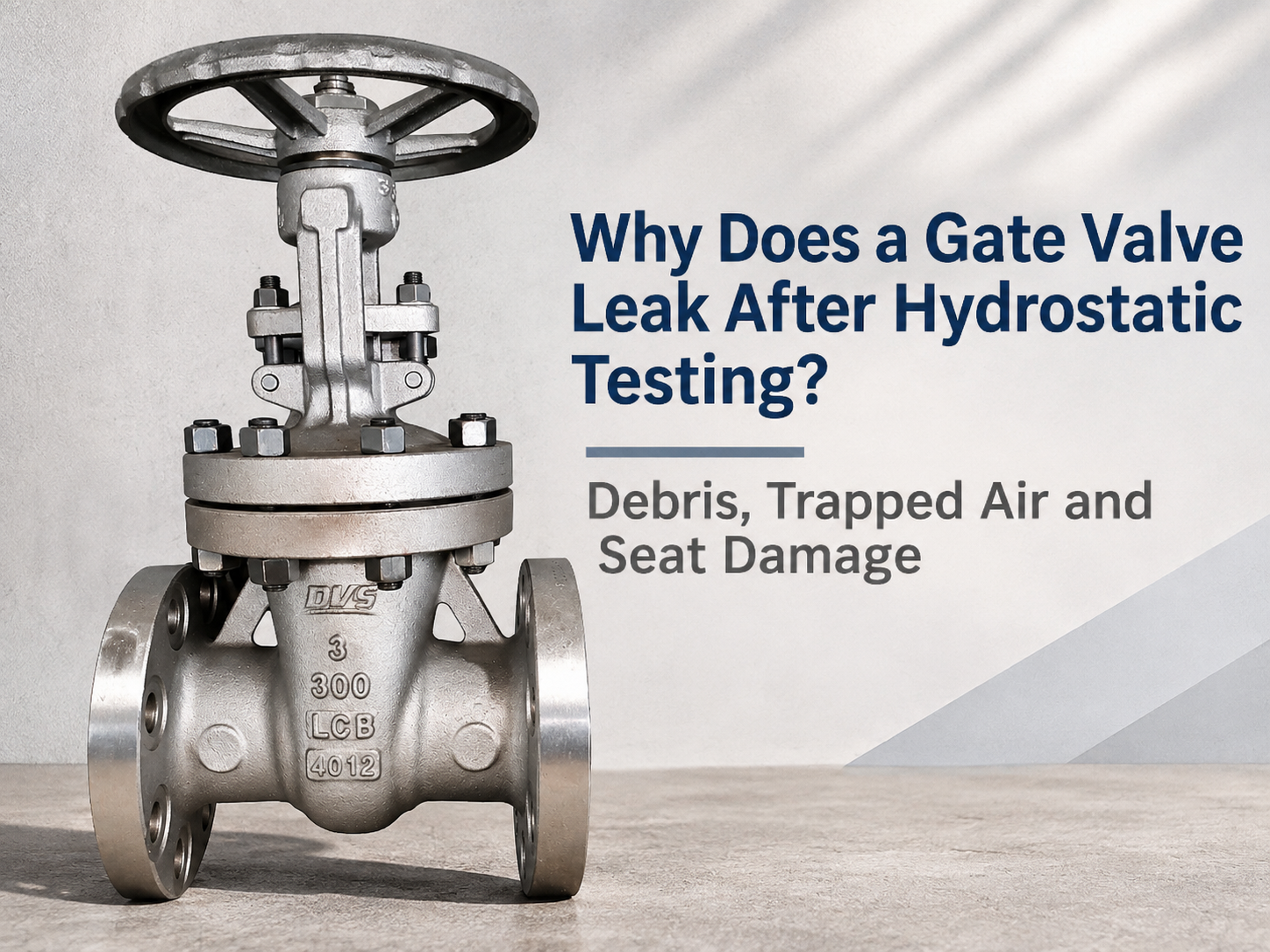
A pressure drop after hydrostatic testing does not automatically mean the gate valve seat is damaged. The loss may come from temperature change, trapped air, test equipment, an external joint, incomplete closure, debris on the seat, or permanent sealing-surface damage. The fastest solution is to confirm the leak path before removing the valve. First: Make the Test Safe Do not tighten, open, or cycle a valve while it is holding full test differential pressure unless an approved procedure specifically permits it. Isolate the test section, depressurize it, verify zero pressure, and drain safely before working on the valve. Confirm that test pressure is within every component’s allowable limit. Record the medium, pressure, temperature, hold time, and valve position. Step 1: Prove Where the Pressure Is Going Pressure loss alone is not proof of seat leakage. Check the pump isolation valve, temporary hoses, blinds, flanges, drains, vents, body-bonnet joint, packing, and pressure instruments. Then identify the symptom: Observation Most likely direction Pressure falls but no water appears downstream Temperature stabilization, trapped air, instrument error, or another system leak Water appears at the stem or bonnet Packing, gasket, or pressure-boundary leakage Measurable water continuously passes to the isolated downstream side Incomplete closure, seat contamination, or seat damage Leakage falls sharply after flushing and controlled cycling Debris was probably preventing full contact Leakage remains steady and repeatable after cleaning Inspect for damaged seats, wedge, gate, or alignment Use the project-specified leakage procedure. Drain residual downstream water first, then observe whether new water accumulates. Step 2: Eliminate Trapped Air and Temperature Effects Entrapped air compresses and produces an unstable pressure response. Vent all high points while filling the line slowly. Test-water temperature also matters. Cooling normally lowers pressure; warming can raise it. Allow the filled system to stabilize and record water, pipe, and ambient temperatures with pressure readings. If pressure change follows temperature change and the rate gradually reduces, investigate stabilization before blaming the valve. Refill and repeat the test only under the approved test procedure. Do not simply add water until the chart looks acceptable. Step 3: Confirm Full Valve Travel A gate that stops slightly above its closed position will pass water even when the handwheel or actuator appears closed. Check the stem position, travel indicator, gearbox, actuator limit switches, torque settings, and mechanical stops against the manufacturer’s data. Do not use a cheater bar or increase actuator torque without approval. Excessive force can bend the stem, overload the wedge, damage resilient...
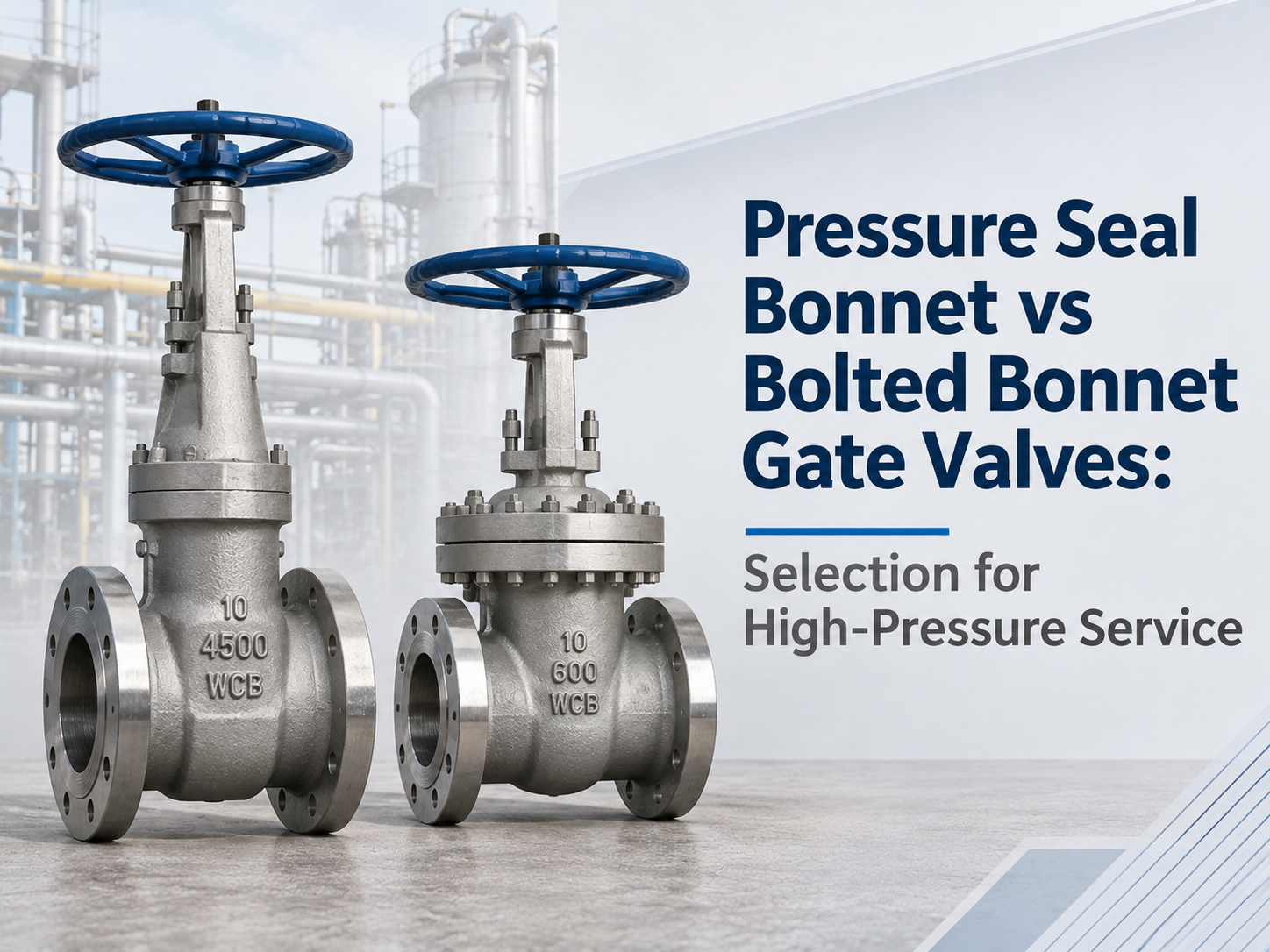
A pressure-seal bonnet is usually the stronger candidate for very high-pressure, high-temperature service because internal pressure increases the sealing load at the body-bonnet joint. A bolted bonnet relies primarily on bolt preload to compress its gasket and is often simpler to inspect and disassemble. That does not create a universal pressure-class cutoff. A Class 600 valve may use a pressure seal, while a bolted-bonnet design may be available at a higher class. The correct choice depends on the applicable pressure-temperature rating, valve size, material, thermal cycles, start-up conditions, maintenance plan, and the manufacturer’s qualified design. Quick Selection Answer Choose a pressure-seal bonnet when the service combines high pressure with high temperature, repeated thermal loading, or a critical external-leakage consequence, and the plant can support its more specialized maintenance procedure. Choose a bolted bonnet when the approved valve design satisfies the full pressure-temperature envelope and familiar disassembly, gasket replacement, and general maintenance access have greater value. Do not use the bonnet style to decide the valve function. Gate, globe, and check valves can all be made with pressure-seal constructions, but they perform different jobs in the system. How Does a Bolted Bonnet Work? In a bolted-bonnet valve, a flanged joint connects the bonnet to the body. Studs or bolts apply the initial clamping force, compressing a gasket between the mating faces. The bolting, flange geometry, gasket, surface finish, assembly method, and temperature all affect joint integrity. As internal pressure rises, pressure-generated forces tend to separate the body and bonnet. The joint must retain enough gasket compression after pressure, temperature change, bolt relaxation, and thermal expansion are considered. Correct tightening sequence and controlled preload therefore matter. The main practical advantage is familiarity. Maintenance teams can see and access the external bolting, and the disassembly sequence is generally straightforward. However, the joint may become large and heavily bolted as pressure, size, and design load increase. How Does a Pressure-Seal Bonnet Work? A pressure-seal bonnet uses an internal gasket and a retaining system rather than a conventional large external body-bonnet flange. Exact details vary, but common designs use a bonnet or cover, pressure-seal gasket, spacer or thrust ring, and segmented retaining ring inside the body neck. Process pressure acts on the bonnet assembly and forces the sealing elements against their contact surfaces. As pressure increases, the body-bonnet sealing load also increases. This is why the design is described as self-energizing or pressure assisted. Self-energizing does not mean self-assembling. At zero or low pressure, the process has not yet created its full sealing force. The initia...
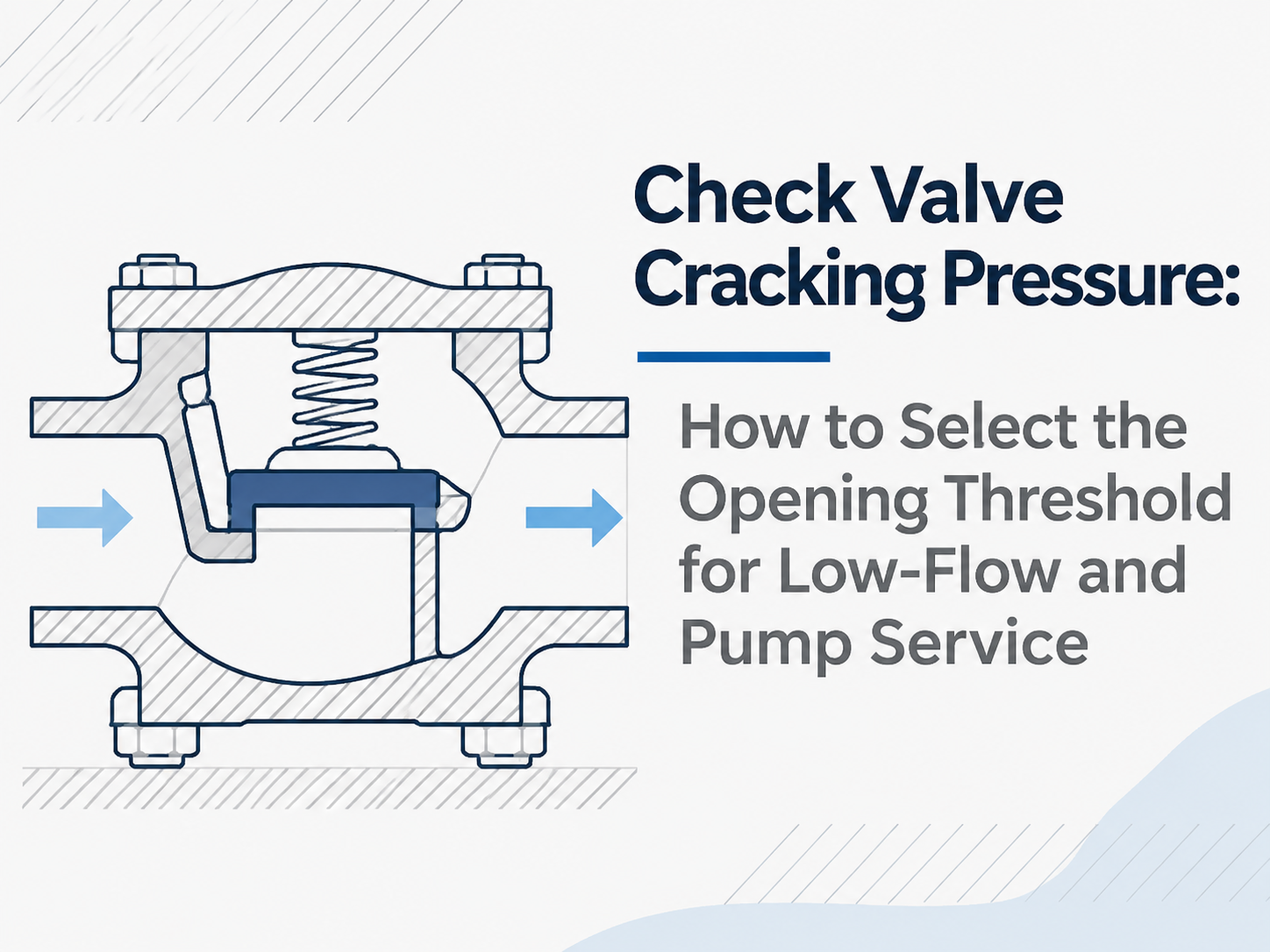
A check valve can begin to pass fluid and still be far from a stable open position. Check valve cracking pressure is therefore the threshold for first detectable flow, not the full-open pressure drop or proof of reliable minimum-flow operation. For low-flow and pump service, the opening threshold is acceptable only when the system can exceed it in the worst forward-flow case. The selection must then pass three separate checks: stable valve travel at minimum flow, acceptable pressure loss at normal and maximum flow, and timely closure when the pump stops. Start with the Worst Available Differential Pressure Parker defines cracking pressure as the upstream pressure at which detectable flow is measured, while Swagelok notes that first flow does not mean the valve is fully open. The relevant system value is not pump discharge pressure alone, but the pressure difference across the valve when it must open. For an initial screen: Available opening ΔP = minimum upstream pressure at the valve − maximum downstream pressure at the valve If the pressures come from remote points, correct them for elevation and line losses. Evaluate the least favorable credible case, such as a variable-speed pump starting at low speed or a standby pump opening against a live common header. The maximum guaranteed cracking pressure of the offered valve should be below this available ΔP, with an engineering allowance for manufacturing tolerance, temperature, orientation, deposits and measurement uncertainty. There is no defensible universal allowance. A nominal value alone is insufficient because catalog cracking pressure may be specified as a range, and a valve left idle may initially require a higher differential than it does after cycling. Low Cracking Pressure Does Not Solve Low-Flow Instability After the closure member lifts, more differential pressure and flow force are needed for stable travel. An oversized valve may crack open but hover near the seat because velocity is too low, causing clicking, flutter, impact and accelerated wear. Swagelok’s service guidance identifies excessive spring cracking pressure and excessive valve size as possible causes of chatter near the threshold. Size from the operating envelope rather than automatically matching the pipe diameter. Ask the supplier to evaluate three points for the exact size, spring and trim: Operating point Required evidence Minimum continuous flow Stable-open position, minimum stable flow or velocity, and corresponding ΔP Normal flow Model-specific pressure-drop curve or validated flow coefficient Maximum flow Peak ΔP, velocity limits, erosion risk and acceptable travel Cracking pressure answers “When does motion begin?” The flow curve and stable-flow limit answer “Will the valve remain open without damaging itself?” Pump Opening and Pump Shutdown Are Different Design Cases At s...
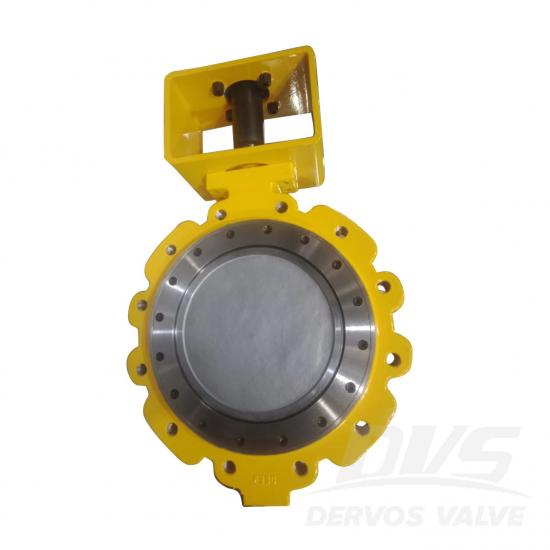
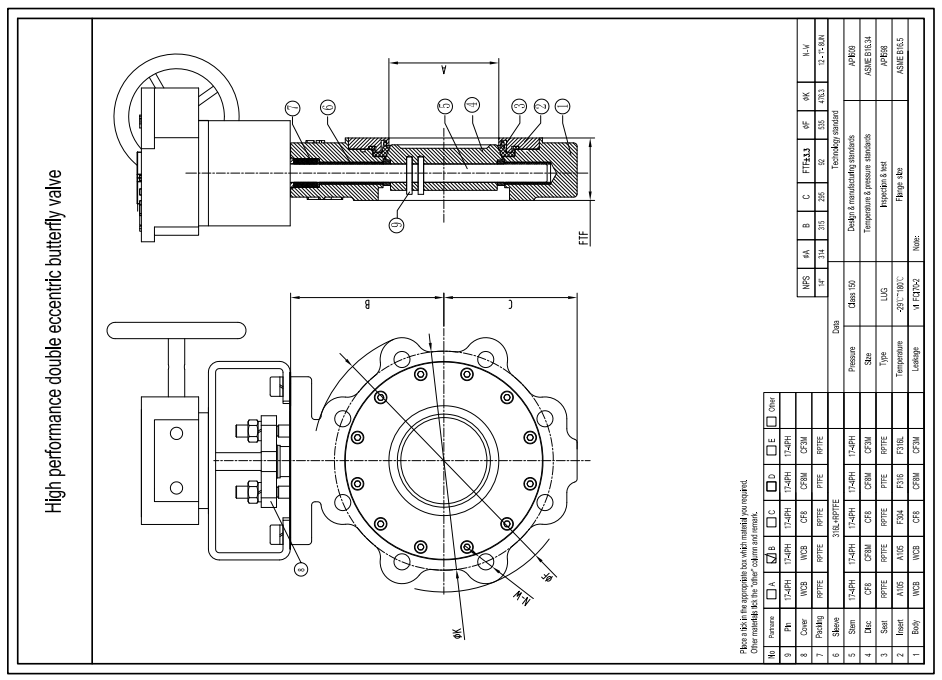
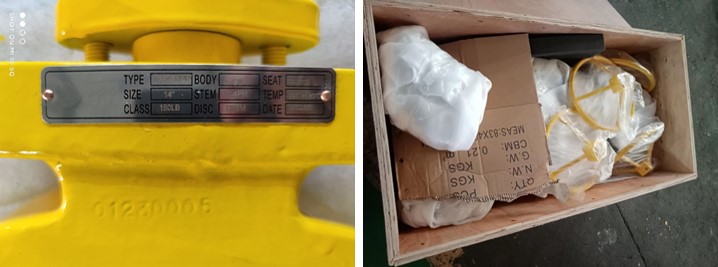
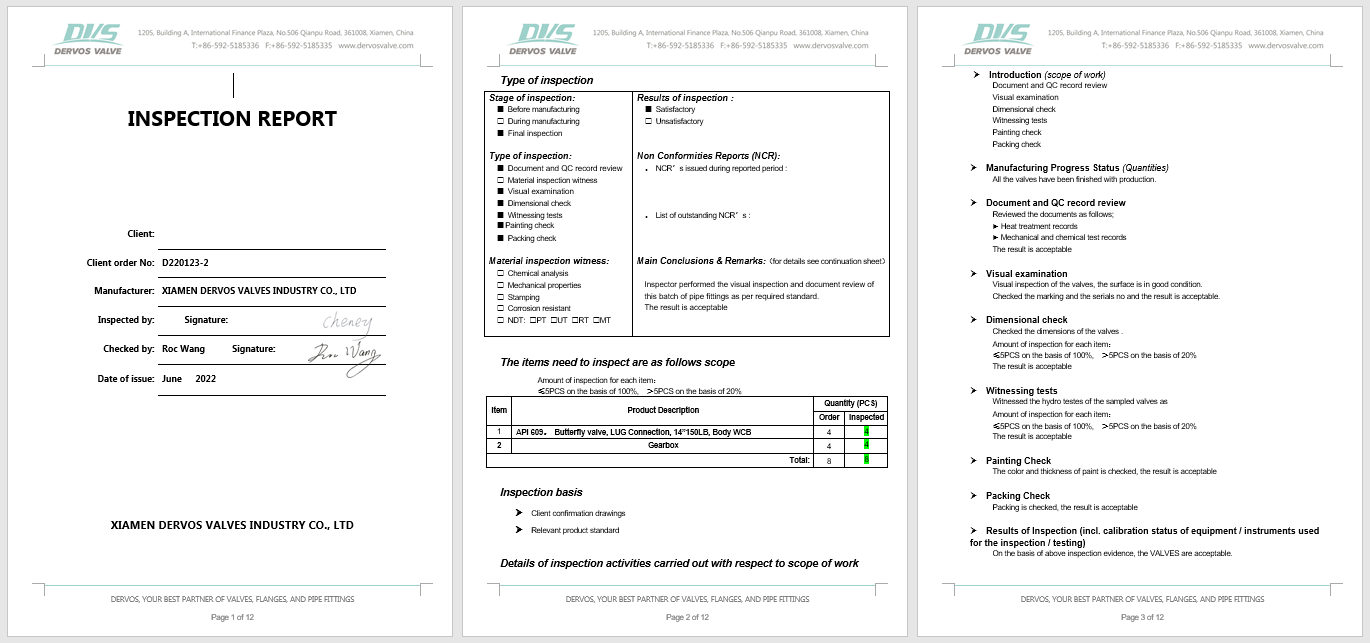
14" 150LB butterfly valve is made according to API 609 standard. The valve body is made of WCB. It has the structural characteristics of double eccentric and high performance. Its connection mode is lug type. And it has turbine with locking device operation mode.
Payment:
30% when order confirmed, 70% before shipmentProduct Origin:
ChinaColor:
CustomizationShipping Port:
Shanghai, ChinaLead Time:
30~60 days Ex Works after order confirmationMaterial:
WCBMethod of Operation:
Turbine with locking deviceProduct Description
|
Type |
Butterfly Valve |
|
Size |
14" |
|
Pressure |
150LB |
|
Connection |
Lug Type |
|
Operation |
Turbine with locking device |
|
Body Material |
WCB |
|
Design Norm |
API 609 |
|
Temperature & pressure standards |
ASME B16.34 |
|
Test & Inspection Code |
API 598 |
|
Flange size |
ASME B16.5 |
|
Temperature |
-29 ~ 180°C |
|
Applicable Medium |
Water, Oil and Gas |
Features
1. Reliable sealing, excellent flow performance, and long service life;
2. Reasonable design, compact structure, easy assembly and disassembly, and easy maintenance.
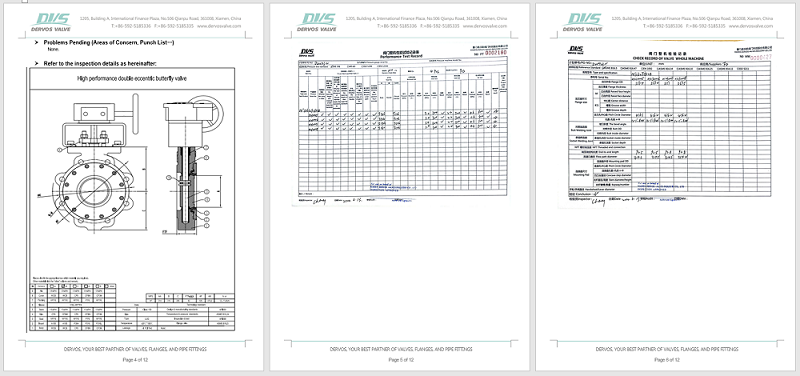
Technical Drawing
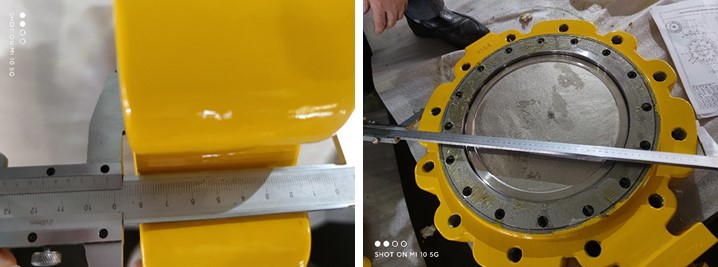
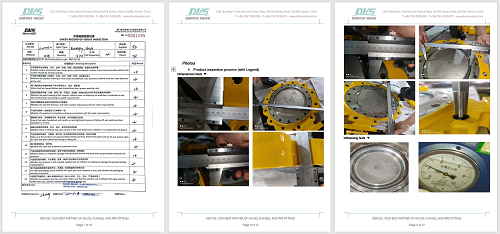
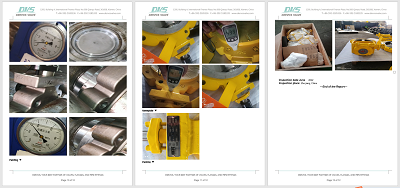
Dimension Checking
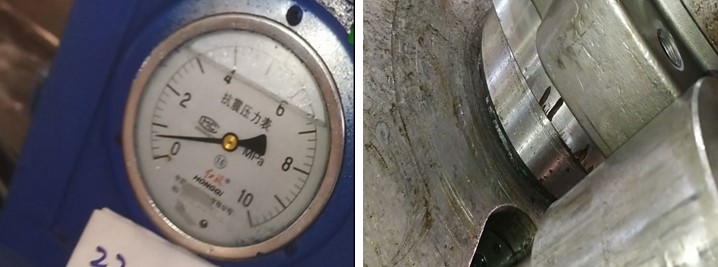
Pressure Testing
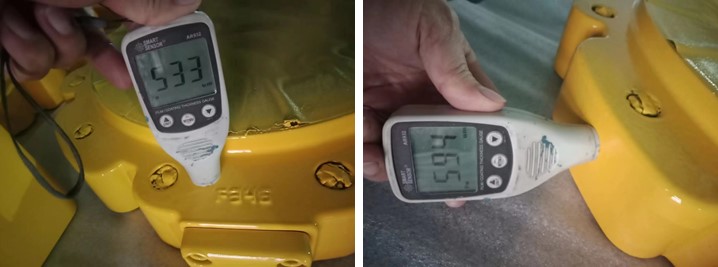
Painting
Nameplate & Packing
Inspection report
If you are interested in our products and want to know more details,please leave a message here,we will reply you as soon as we can.
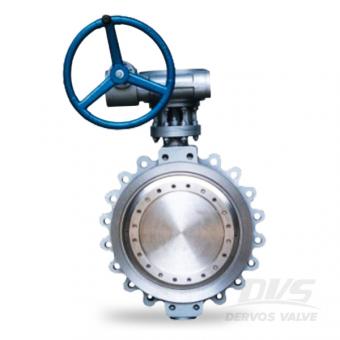
The 16 inch triple offset butterfly valve is designed with metal seat, stainless steel CF8M body, disc and stem. The fully lugged butterfly valve with gearbox has Class 150 design pressure as per API 609. Design Feature 1. Small volume, light weight, simple structure 2. Multi-layer metal seated/fully metal seated 3. Firesafe design 4. Anti-blowout stem 5. Small torque value for operating easily 6. Reliable sealing and could meet zero leakage requirement 7. With function of regulating flow 8. Triple eccentric design for minimized wear of sealing face Quick Detail Type Butterfly Valve Size 16'' Pressure ANS 150 Structure Triple Eccentric, Triple Offset, Metal Seated Connection Type Lug Type Operation Gearbox Operated Design Code API 609 Face to Face ASME B16.10 End Connection ASME B16.5 Test & Inspection API 598 Body Material A351 CF8M Temperature Range -29℃~+425℃ Application Water, Oil, Gas Material No Part Name Carbon steel to ASTM Alloy steel to ASTM Stainless steel to ASTM WCB WC6 WC9 C5 CF8 CF8M CF3 CF3M 1 Body A216 WCB A217 WC6 A217 WC9 A217 C5 A351 CF8 A351 CF8M A351 CF3 A351 CF3M 2 Below Axle Bush PTFE or Stainless Steel and Graphite Spiral Wound 3 Stem A182 F6 A182 F304 A182 F304 A182 F304 A182 F304 A182 F316 A182 F304L A182 F316L 4 Seat Ring F6 Stellite 6 Stellite 6 Stellite 6 A182 F304 A182 F316 A182 F304L A182 F316L 5 Butterfly Plate A216 WCB A217 WC6 A217 WC9 A217 C5 A351 CF8 A351 CF8M A351 CF3 A351 CF3M 6 Lock Ring A105 A182 F22 A182 F22 A182 F22 A182 F304 A182 F316 A182 F304L A182 F316L 7 Pin Carbon Steel or Alloy Steel 8 Screw Carbon Steel or Alloy Steel 9 Top Axle Bush PTFE or Stainless Steel and Graphite Spiral Wound 10 Packing Graphite+SS304 11 Bolt A193 B7 A193 B7 A193 B7 A193 B7 A193 B8 A193 B8 A193 B8 A193 B8 12 Nut A194 2H A194 2H A194 2H A194 2H A194 Gr.8 A194 Gr.8 A194 Gr.8 A194 Gr.8 13 Bolt A193 B7 A193 B7 A193 B7 A193 B7 A193 B8 A193 B8 A193 B8 A193 B8 14 Nut A194 2H A194 2H A194 2H A194 2H A194 Gr.8 A194 Gr.8 A194 Gr.8 A194 Gr.8 15 Yoke A216 WCB A217 WC6 A217 WC9 A217 C5 A351 CF8 A351 CF8M A351 CF3 A351 CF3M 16 Gland A182 F6 A182 F304 A182 F304 A182 F304 A182 F304 A182 F316 A182 F304L A182 F316L
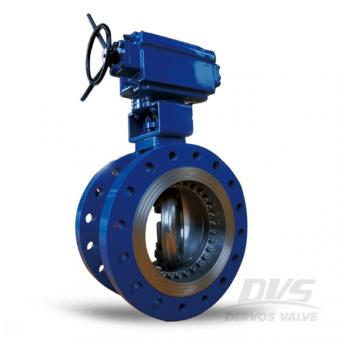
The eccentric butterfly valve has triple offset design. It has excellent sealing performance and longer service life due to its small abrasion on sealing face during operation of valve. The 30'' butterfly valve is designed with ANSI 150 double flanged connection and fully metal seat. Quick Detail Type Butterfly Valve Size 30 Inch DesignPressure ANSI 150 Construction Triple Offset/ Triple Eccentric ConnectionType RF Double Flanged Type Operation Gearbox Operation Design Code API 609 Face to Face ASMEB16.10 End Connection ASMEB16.5 Test & Inspection API 598 Body Material A216 WCB TemperatureRange -29℃~+427℃ Application Water, Oil, Gas Available Product Range Norminal Size: 2 Inch ~150 Inch Design Pressure: 150LB~900LB Valve Connection: Flanged, Lug, Wafer, Butt Weld (BW) Valve Operation: :Lever/Wrench, Gearbox, Motorized, Pneumatic Body Material: Carbon Steel WCB, Stainless Steel CF8/CF8M/CF3/CF3M, Low Temperature Steel LCB/LCC Seat Material: Fully metal seat, SS+Graphite Seat
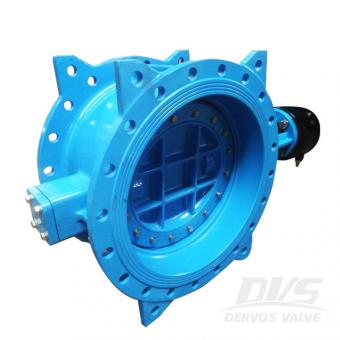
The cast iron butterfly valve belongs to double offset type. also is soft seal butterfly valve,It owns a compact body, low torque value, and perfect sealing function, suited for water application with normal temperature range. Quick Detail Type Butterfly Valve Nominal Size DN500 Nominal Pressure PN10 Structure Double Offset, Soft Seated Connection Type Flange Type Operation Gear Operated Design Code EN 593 Face to Face EN 558 End Connection EN 1092 Test & Inspection EN 12266 Body Material Cast Iron GGG50 Temperature Range -15℃~+150℃ Application Water, Oil, Gas Dimension Checking & Pressure Testing Tag & Packing
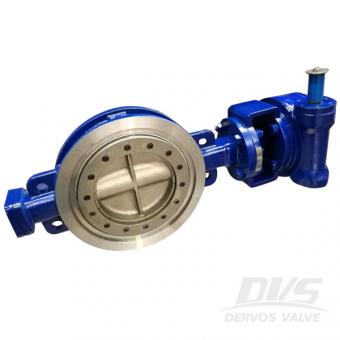
WCB 14inch 150LB Butterfly Valve Triple Eccentric Un-directional Seal Wafer Type Gear Handwheel Operation WCB Body WCB Disc F6a Stem PTFE Seal Ring 13Cr Overlay on Seat. Design and Manufacture API 609. Face to Face Dimension API 609. Flange and Dimension ASME B16.5. Test and Inspection API 598. Quick Detail Type Butterfly Valve Size 14” Pressure 150LB Construction Triple Eccentric Connection Wafer Operation Mode Gearbox Body Material A216 WCB Trim Material Ball/Stem F6a, Seat PTFE Design & Manufacture API 609 Pressure & Temp Code ASME B16.34 End to End ASME B16.10 End Connection ASME B16.5 Inspection API 598 Temperature Range -29℃~+200℃ Medium Oil, Water, Gas
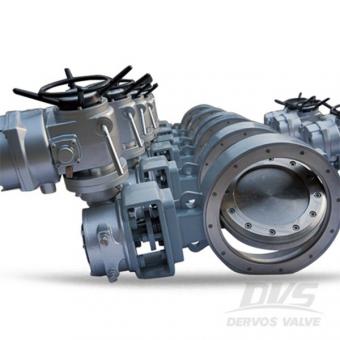
The triple eccentric butterfly valve, made of carbon steel, is designed under Class 150 for a better performance of 0 leakage. With a gear operator, it can be better drove. Quick Detail Type Butterfly Valve Nominal Size 20 Inch Nominal Pressure Class 150 Structure Triple Offset,Triple Eccentric, Metal Seated Connection Type Wafer Type Operation Gear Operated Design Code API 609 Face to Face ASME B16.10 End Connection ASME 16.5 Test & Inspection API 598 Body Material Carbon Steel Application Water, Oil, Gas Founded in 2008, DERVOS VALVES INDUSTRY CO., LTD is a professional vendor, exporter and supplier of industrial valves, pipes and fittings. Dervos has expanded its business to five continents around the world, including Europe, Oceania, Africa, America and Asia. Our commitment is to find the most suitable products for our clients in an efficient way. We adopt modern management skills to make sure efficiency in production and selling system.
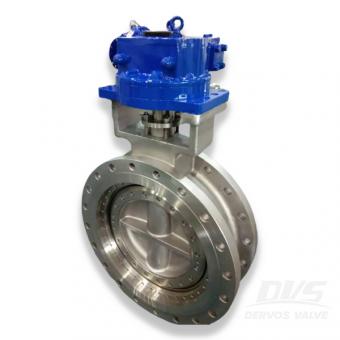
You can found this valve in a various high performance applications such as steam, chilled water, gasoline, oil, jet fuels, natural gas, utility lines, process lines and in industries.
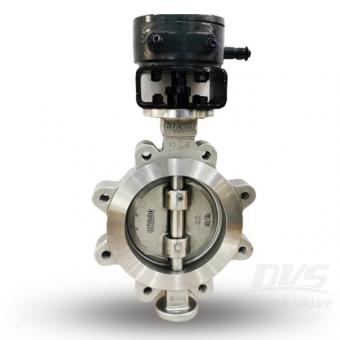
The PN10 DN200 double offset butterfly valve collects durable body and an easy replaceable seat for control services the power, chemical, petrochemical and other fields.
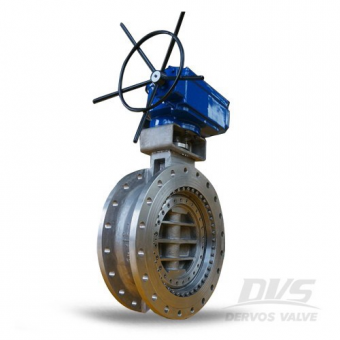
The 12 inch 150 LB triple eccentric butterfly valve is designed per API 609 with flange end and gearbox operation. The valve is made of stainless steel CF8 with metal seat design. Quick Detail Type Butterfly valve Size 12 Inch Pressure 150LB Construction Triple Offset/Eccentric, Metal Seat Connection Type Flange Operation Gearbox Design Code API 609 Face to Face ANSI B16.10 End Connection ANSI B16.5 Test & Inspection API 598 Body Material CF8 Applicable Temp -196℃~+800℃ Application Water, Oil, Gas Materials Dimension
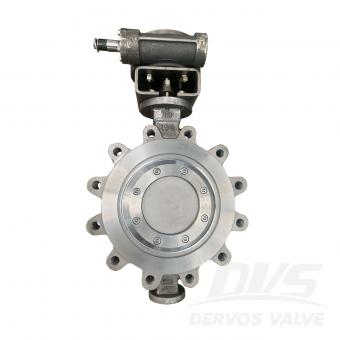
10" 150LB butterfly valve is made according to API609 & ANSI B16.34 standard. The valve body is made of WCB + inconel. It has the structural characteristics of double eccentric, two-way pressure, reverse pressure 10bar. Its connection mode is lug type. And it has turbine operation mode.
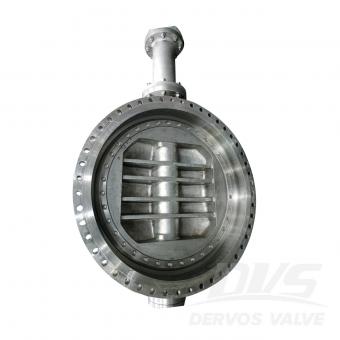
42" 150LBS butterfly valve is made according to API 609 standard. The valve body is made of CF8M. It has the structural characteristics of triple eccentric, multi-level and NACE. Its connection mode is RF flange. And it has turbine operation mode.
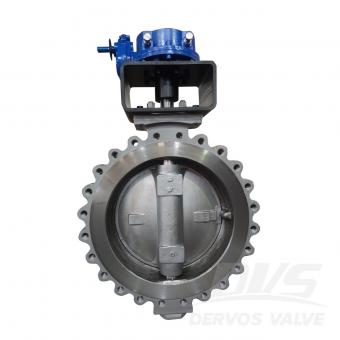
26" 150LB Butterfly valve is made according to API609 standard. The valve body is made of WCB. It has the structural characteristics of double eccentric, high-performance, bi-directional sealing, fireproof design and anti-corrosion turbine. Its connection mode is lug type. And it has turbine operation mode.
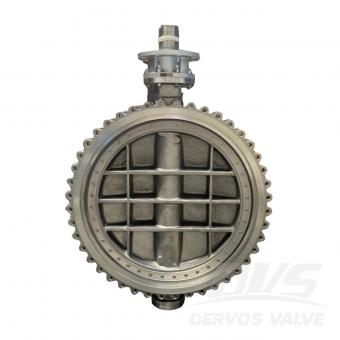
48" CL150 butterfly valve is made according to API 609 standard. The valve body is made of ASTM A351 CF8M. It has the structural characteristics of triple eccentricity. Its connection mode is lug to ASME B16.47B. And it has smooth rod with flange connection plate operation mode.
Copyright © 2015-2026 DERVOS VALVE CO.,LTD.All Rights Reserved Blog / Sitemap / XML / Privacy Policy