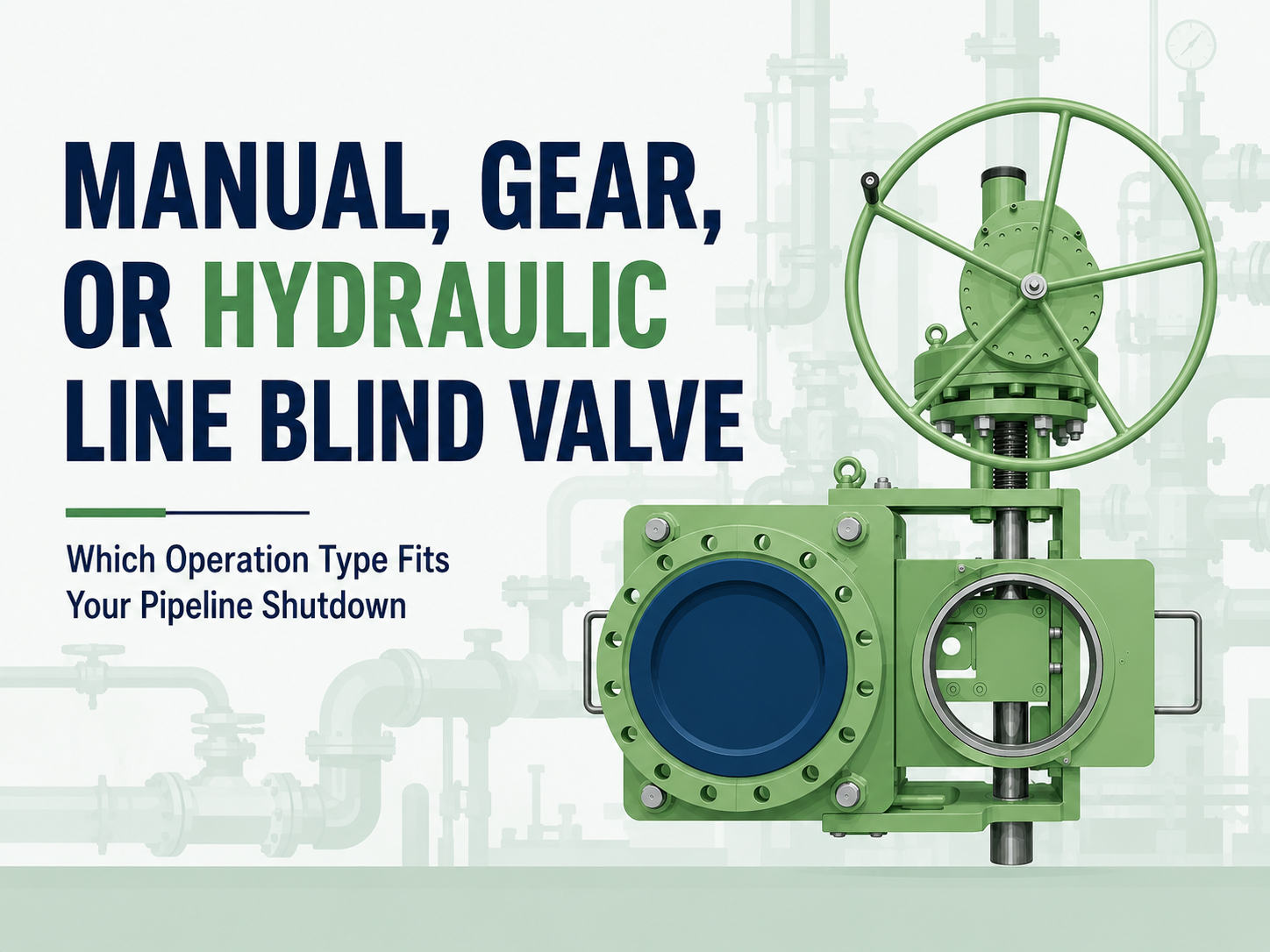
Operation Type Is a Shutdown Decision A line blind valve is chosen for positive isolation, but the operation type decides how practical that isolation will be during a shutdown. Manual, gear-operated, and hydraulic designs can all move the blind between open and closed positions, yet they do not create the same workload, speed, or safety margin. For shutdown planning, the right question is not only “Can the valve isolate the line?” It is “Can operators switch, verify, lock, and return the valve to service safely within the shutdown window?” Manual Operation: Simple, but Limited Manual operation is usually suitable for smaller line blind valves, lower pressure classes, infrequent switching, and sites where operators have clear access around the valve. It keeps the design simple and avoids dependence on hydraulic power units or control systems. The limitation is physical effort. As size, pressure class, seal load, and plate weight increase, manual operation becomes slower and more exposed to human error. If several operators, lifting tools, or extended handling time are needed, the valve may no longer be a good fit for a tight shutdown schedule. Manual operation is best treated as a low-complexity option for manageable sizes and low switching frequency. Gear Operation: Better Control for Medium-Duty Shutdowns A gear-operated blind valve gives operators more mechanical advantage and better control than direct manual operation. It is useful when the valve is too large or stiff for simple manual switching, but the site does not justify a hydraulic system. Gear operation often fits plant shutdowns where isolation is planned, access is available, and switching speed matters but is not the only priority. It can reduce operator strain and make the changeover more predictable. The buyer should still review gearbox location, handwheel access, operation turns, torque, locking method, and position indication. A gear operator that cannot be reached safely during shutdown is not a good solution, even if the valve design is correct. Hydraulic Operation: For Large, High-Pressure, or Time-Critical Lines Hydraulic operation is usually considered when the pipeline isolation valve is large, high-pressure, frequently switched, or located in a difficult operating area. It can reduce manual handling, shorten changeover time, and improve control during planned isolation. This makes hydraulic line blind valves attractive for refineries, gas systems, terminals, high-temperature service, and shutdowns where every hour of downtime has a cost. Hydraulic operation can also support safer distance between personnel and the moving mechanism, depending on the control arrangement. The tradeoff is system complexity. Hydraulic cylinders, hoses, power units, seals, and controls need inspection and maintenance. Buyers should ask how the valve is operated if hydraulic power is lost, how the pos...
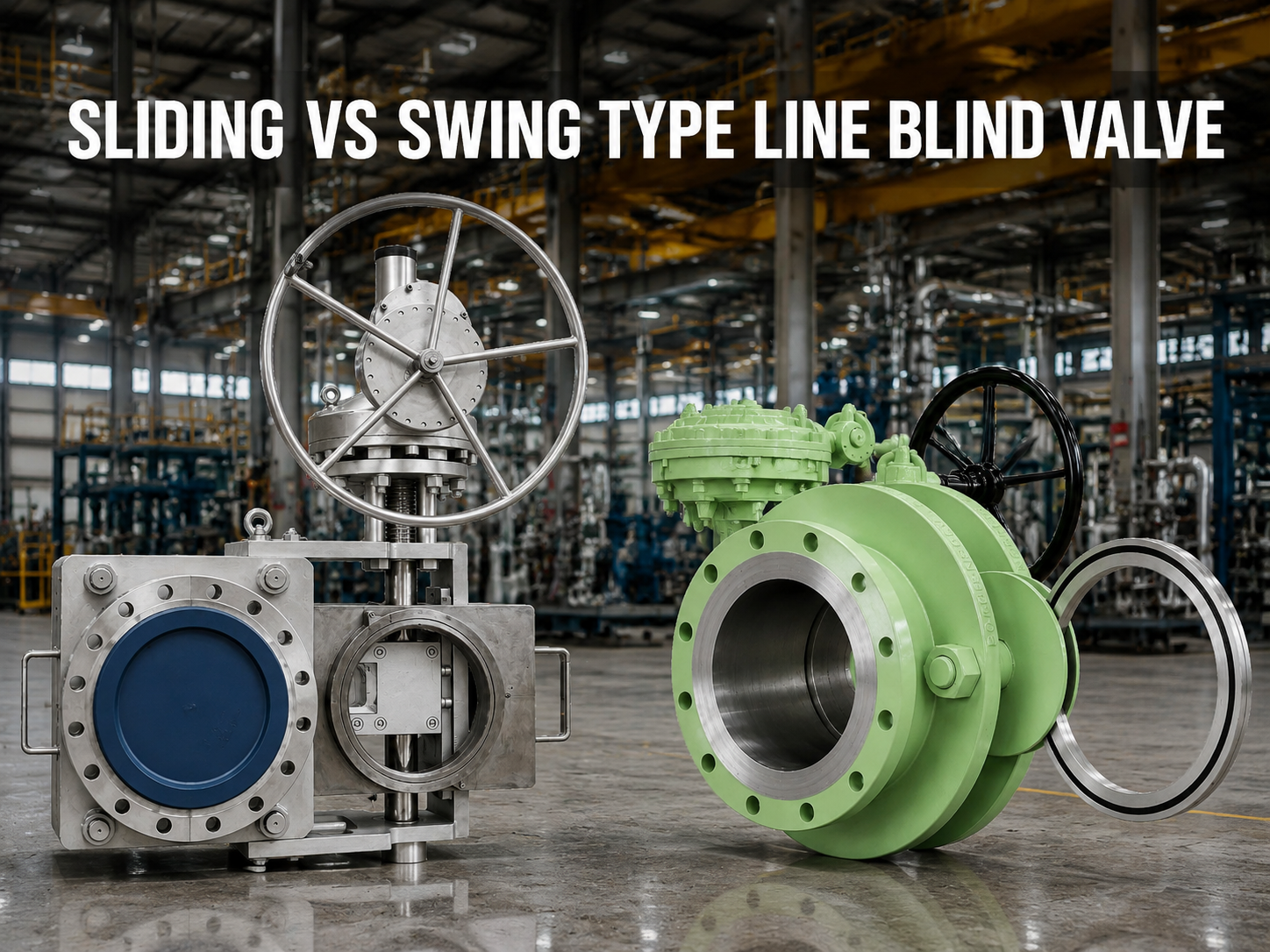
Both sliding and swing type line blind valves are used for the same core purpose: positive isolation. In the closed position, a solid blind plate blocks the pipeline bore, giving operators a visible and mechanical isolation method before maintenance, inspection, shutdown work, or media changeover. The difference is not whether one can isolate and the other cannot. The real question is how the valve moves, how much space the site has, how often the line must be switched, and how difficult the operation will be under pressure, temperature, and site-access limits. A sliding type line blind valve moves the blind plate laterally. This design is often useful where side clearance is available but swing clearance is limited. A swing type line blind valve rotates the blind plate into or out of the flow path. It is often selected where fast, clear changeover is needed and the installation area allows the plate to swing. Selection Factor Sliding Type Line Blind Valve Swing Type Line Blind Valve Structure Blind plate slides sideways between open and closed positions Blind plate rotates or swings between open and closed positions Operation Often gear, hydraulic, pneumatic, or electric assisted for easier plate movement Manual, gear, hydraulic, pneumatic, or electric operation depending on size and class Maintenance Sliding tracks, sealing surfaces, and drive parts should be checked regularly Pivot, locking parts, sealing surfaces, and drive parts need inspection Space Requirement Usually better when swing radius is restricted, but needs side travel space Needs enough swing clearance around the pipeline Suitable Service Frequent switching, compact plant layout, limited swing area Clear operation path, quick changeover, maintenance isolation, oil, gas, steam, or chemical lines For compact plants, pipe racks, or areas with nearby equipment, sliding type designs may be easier to arrange. Their lateral movement can avoid the large arc required by a swing plate. This is one reason sliding line blinds are often considered when installation space is a serious constraint. Swing type designs are often preferred when the site has enough clearance and operators want a simple visual change between open and blind positions. For large sizes or higher pressure classes, the operation method becomes important. Gear, hydraulic, pneumatic, or electric operation can reduce manual effort and improve safety. When choosing between the two, start with the site layout. If the valve cannot physically move through its full travel, the design is wrong no matter how good the specification looks. Then check pressure class, medium, temperature, material, sealing type, switching frequency, and required test standard. For high-temperature steam, hot oil, gas, toxic media, or flammable service, do not select only by valve type. Confirm body material, blind plate material, seal material, operating torque, ...
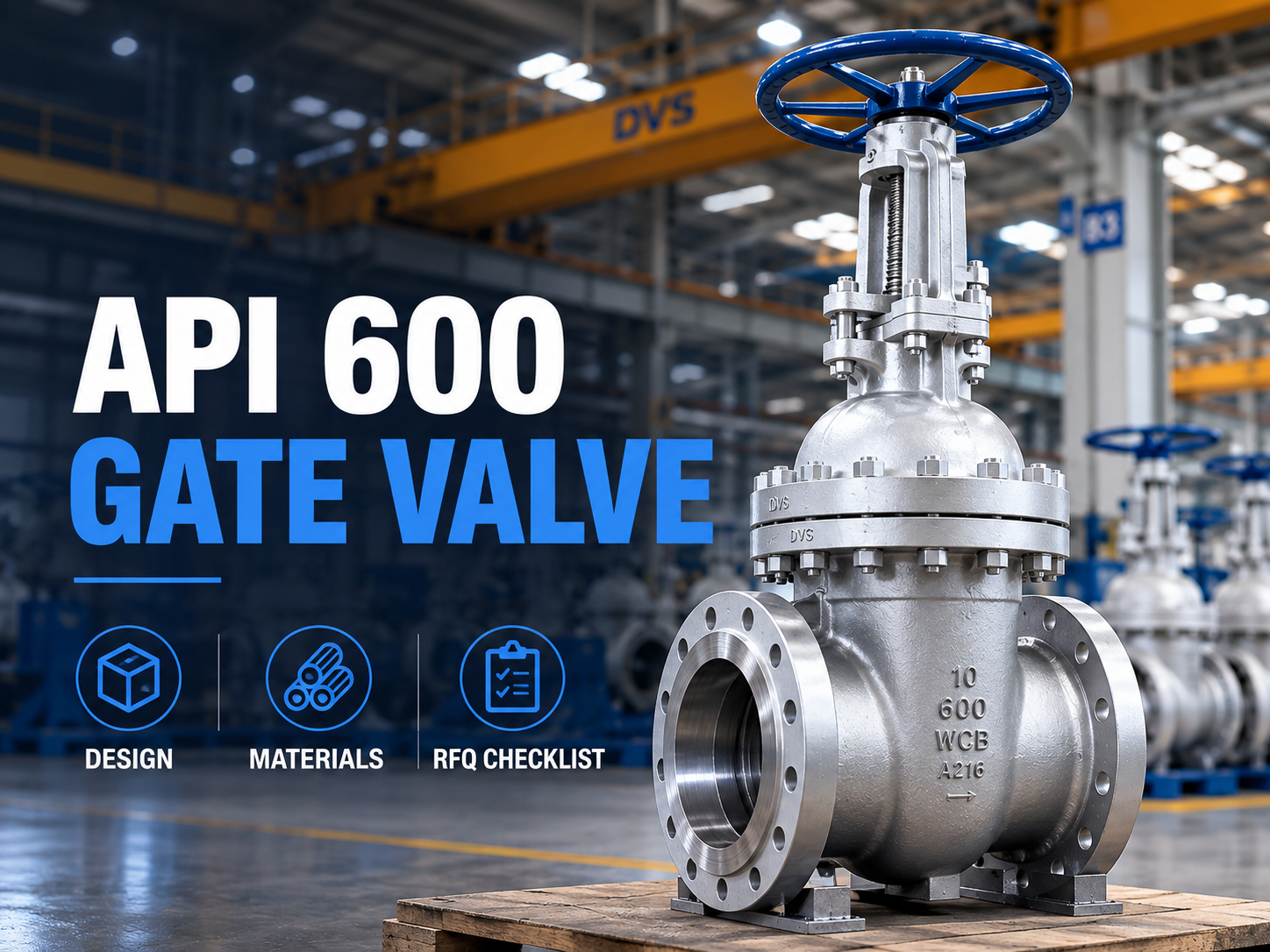
An API 600 gate valve is a heavy-duty steel gate valve used for full-open or full-closed isolation in petroleum, natural gas, petrochemical, refinery, and power applications. A good RFQ should define size, pressure class, material, trim, end connection, operation method, testing, and documentation requirements. What Is an API 600 Gate Valve? An API 600 gate valve is a steel gate valve designed for demanding industrial service. It is commonly used where the valve must provide reliable isolation under pressure, temperature, and process conditions that require a more robust construction than light-duty valves. API 600 is specific to steel gate valves. It is commonly associated with bolted bonnet construction, outside screw and yoke design, rising stem operation, metallic seating surfaces, and flanged or butt-weld ends. The key point for buyers is simple: API 600 gate valves are intended for isolation, not throttling. They should normally be operated either fully open or fully closed. Key Design Features The design of an API 600 gate valve focuses on strength, sealing, and service reliability. Common design features include: ● Bolted bonnet construction ● Outside screw and yoke, or OS&Y design ● Rising stem ● Flexible wedge or solid wedge ● Metallic seating surfaces ● Renewable or welded-in seat rings, depending on design ● Flanged, RTJ, or butt-weld ends ● Handwheel, gearbox, or actuator operation A rising stem helps operators see whether the valve is open or closed. OS&Y construction also keeps stem threads outside the pressure boundary, which can support easier inspection and maintenance. For high-temperature or high-pressure service, the wedge, seat, gasket, packing, and bolting materials must be checked carefully. A valve can meet the general standard but still be unsuitable if the material or trim is wrong for the media. Common Materials for API 600 Gate Valves Material selection should match the process medium, operating temperature, corrosion risk, and pressure class. Common body and bonnet materials include: Material Typical Use ASTM A216 WCB General carbon steel service ASTM A217 WC6 / WC9 High-temperature alloy steel service ASTM A352 LCB / LCC Low-temperature service ASTM A351 CF8 / CF8M Stainless steel or corrosive service Duplex stainless steel Corrosion or chloride-containing service Trim selection is equally important. The stem, wedge, seat, and hardfacing should be compatible with temperature, media, and leakage requirements. For refinery, steam, or petrochemical service, buyers often need to check trim number, seat hardfacing, graphite packing, gasket type, and bolting grade. API 600 vs API 602 API 600 and API 602 are often compared, but they are not the same. API 600 applies to steel gate valves, typically used for larger and heavier-duty process applications. API 602 applies to compact forged gate, globe, and check valves, usually in smaller sizes...
Payment:
30% T/T When Order, 70% T/T Before ShipmentProduct Origin:
ChinaColor:
CustomizationShipping Port:
Shanghai ChinaLead Time:
30~55 days Ex Works After Order ConfirmationMaterial:
Carbon Steel Plug Valve, Cast Steel Plug Valve, WCBMethod of Operation:
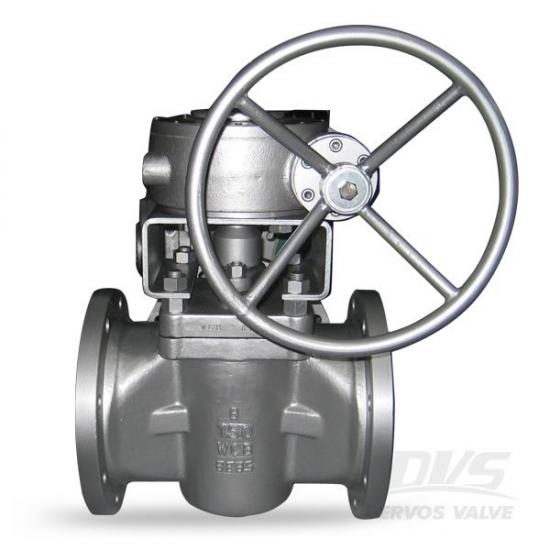
Manual Plug Valve, Gearbox Operation Plug ValveThe 6 inch sleeved plug valve features in non lubricated design and soft seat. The full port plug valve is made of carbon steel body and PTFE seat as per API 6D, with Class 150 flange connection.
Quick Detail
|
Type |
Plug Valve |
|
Size |
6'' |
|
Design Pressure |
150LB |
|
Construction |
Self-Lubricated Type, Sleeved Type, Soft Seat |
|
Connection Type |
RF Flange |
|
Operation |
Gearbox Operation |
|
Design Code |
API 599 |
|
Face to Face |
ASME B16.10 |
|
End Connection |
ASME B16.5 |
|
Pressure & Temp |
ASME B16.34 |
|
Test & Inspection |
API 598 |
|
Body Material |
A216 WCB |
|
Temperature Range |
-29℃~+425℃ |
|
Application |
Water, Oil, Gas |
Material & Dimension
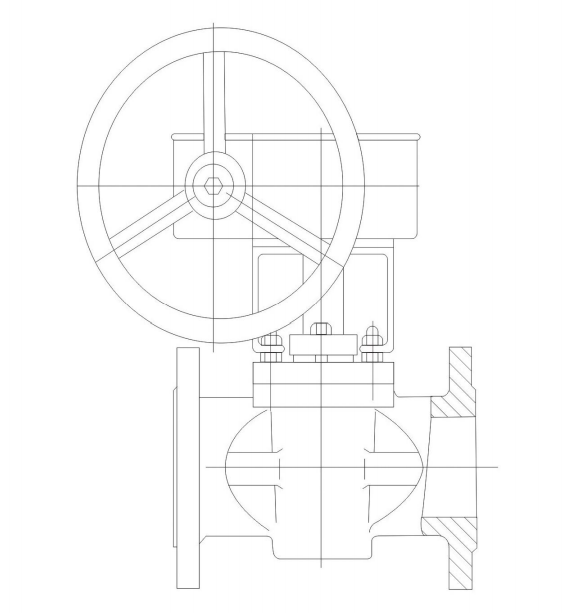
| No | Part Name | Carbon steel to ASTM | Stainless steel to ASTM | ||||
| WCB | LCB | CF8 | CF8M | CF3 | CF3M | ||
| 1 | Body | A216 WCB | A350 LCB | A351 CF8 | A351 CF8M | A351 CF3 | A351 CF3M |
| 2 | Bonnet | A216 WCB | A350 LCB | A351 CF8 | A351 CF8M | A351 CF3 | A351 CF3M |
| 3 | Plug | A105 | A182 F304 | A351 CF8 | A351 CF8M | A351 CF3 | A351 CF3M |
| 4 | Stem | A182 F6 | A182 F6 | A182 F304 | A182 F316 | A182 F304L | A182 F316L |
| 5 | Seat Ring | PTFE | |||||
| 6 | Gasket | PTFE or Stainless Steel and Graphite | |||||
| 7 | Stem Seat | PTFE | PTFE | PTFE | PTFE | PTFE | PTFE |
| 8 | Small spring | 17-17PH | |||||
| 9 | Small ball | A182 F304 or A182 F316 | |||||
| 10 | Gland | A182 F6 | A182 F6 | A182 F304 | A182 F316 | A182 F304L | A182 F316L |
| 11 | Gland Flange | A216 WCB | A350 LCB | A351 CF8 | A351 CF8M | A351 CF3 | A351 CF3M |
| 12 | Stem packing | PTFE or Graphite | |||||
| 13 | Bonnet bolt | A193 B7 or A320 L7 or A320 B8 or A193 B8M | |||||
| 14 | Bonnet nut | A194 2H or A194 4 or A194 8 | |||||
|
Class 150 |
|||||||||||||
| DN | mm | 15 | 20 | 25 | 40 | 50 | 65 | 80 | 100 | 150 | 200 | 250 | 300 |
| NPS | in | 1/2 | 3/4 | 1 | 1 1/2 | 2 | 2 1/2 | 3 | 4 | 6 | 8 | 10 | 12 |
| L(RF) | mm | 108 | 117 | 127 | 165 | 178 | 191 | 203 | 229 | 394 | 457 | 533 | 610 |
| in | 4.25 | 4.6 | 5 | 6.5 | 7 | 7.5 | 8 | 9 | 15.5 | 18 | 21 | 24 | |
| L1(BW) | mm | 140 | 152 | 165 | 190 | 216 | 241 | 283 | 305 | 457 | 521 | 559 | 635 |
| in | 5.5 | 6 | 6.5 | 7.48 | 8.5 | 9.5 | 11.13 | 12 | 18 | 20.5 | 22 | 25 | |
| L2(RTJ) | mm | 119 | 129.7 | 139.7 | 178 | 191 | 203 | 216 | 241 | 406 | 470 | 546 | 622 |
| in | 4.69 | 5.11 | 5.5 | 6.9 | 7.5 | 8 | 8.5 | 905 | 16 | 18.5 | 21.5 | 24.5 | |
| H | mm | 59 | 63 | 75 | 92 | 153 | 165 | 195 | 213 | 272 | 342 | 495 | 580 |
| in | 2.3 | 2.5 | 2.95 | 3.74 | 6.02 | 6.5 | 7.68 | 8.39 | 10.7 | 13.5 | 19.5 | 22.85 | |
| D(W) | mm | 130 | 130 | 160 | 230 | 400 | 400 | 600 | 850 | 1100 | 1500 | 350* | 350* |
| in | 5.1 | 5.1 | 6.3 | 9 | 15.74 | 15.74 | 23.62 | 33.46 | 43.3 | 59 | 13.8 | 13.8 | |
| Weight (Kg) | RF | 2.3 | 3 | 4.5 | 7 | 15 | 20 | 25 | 40 | 97 | 160 | 240 | 390 |
| BW | 2.0 | 2.5 | 3.8 | 5.8 | 12 | 17 | 21 | 36 | 92.8 | 154 | 227 | 365 | |
If you are interested in our products and want to know more details,please leave a message here,we will reply you as soon as we can.
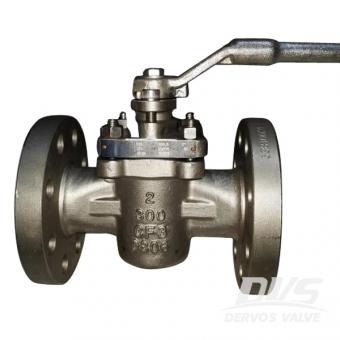
The PTFE sleeved plug valve is made of CF3 body and plug as per API 6D. The valve owns the feature of reduced port and good sealing performance. We call this type of valve as non lubricated plug valve or self lubricated plug valve. Quick Detail Type Plug Valve Size 2'' DesignPressure 300LB Construction Sleeved Type, Non Lubricated Type, Soft Seat ConnectionType Flange Operation Lever Operation Design Code API 599, API 6D Face to Face ASME B16.10 End Connection ASME B16.5 Pressure & Temp ASME B16.34 Test & Inspection API 598 Body Material CF3 Temperature Range -29℃~+120℃ Application Water, Oil, Gas Dimension Checking Hydrostatic Testing
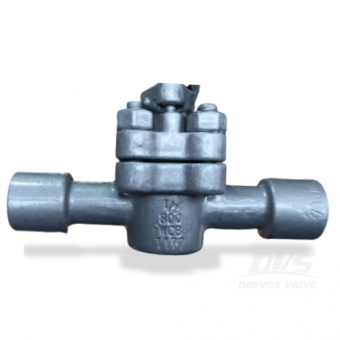
This 1/2 Inch plug valve is made of A216 WCB, according to API598.With little required maintenance and trouble-free operation, a high integrity bubble-tight seal is provided both in-line and to atmosphere.
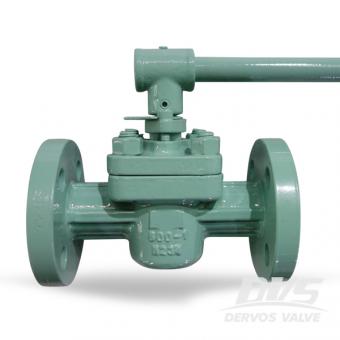
The 1 inch sleeved type plug valve is made of A216 WCB as per API 599. Thanks to its PTFE seat, the valve has excellent sealing and anti-corrosion performance. The valve is capable in working condition lower than 180 degree.
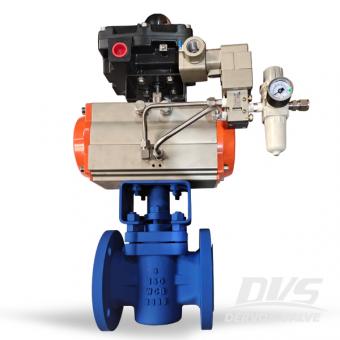
Non-Lubricated, Sleeved Plug Valves incorporate state-of-the-artPPL seat design. With little required maintenance and trouble-free operation, the 3 inch 150 LB valve will ensure a high integrity bubble-tight seal.
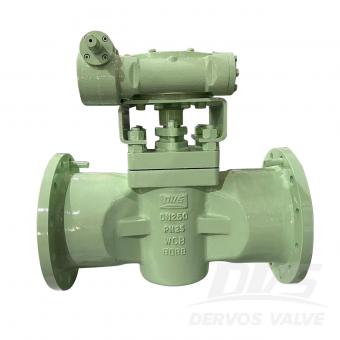
DN250 PN25 plug valve is made according to API599 standard. The valve body is made of A216 WCB. It has the structural characteristics of soft sealing plug valve. Its connection mode is RF. And it has turbine operation mode.
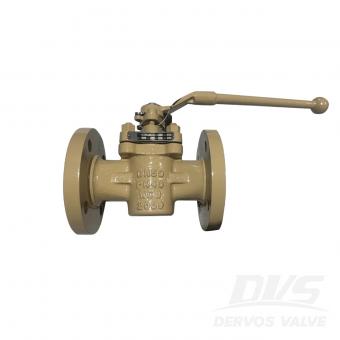
DN50 PN40 plug valve is made according to API 599 standard. The valve body is made of A216 WCB. It has the structural characteristics of ferrule type, reduced diameter. Its connection mode is RF. And it has lever operation mode.
Copyright © 2015-2026 DERVOS VALVE CO.,LTD.All Rights Reserved Blog / Sitemap / XML / Privacy Policy