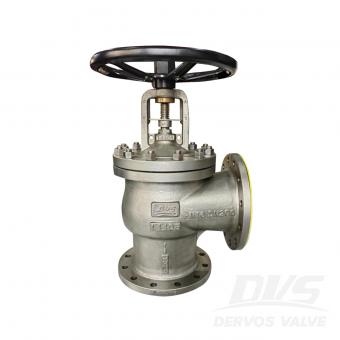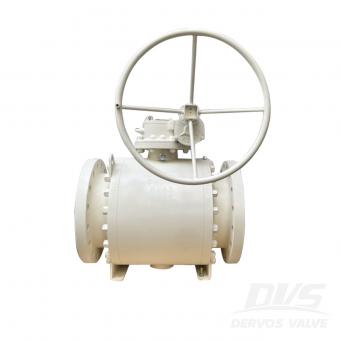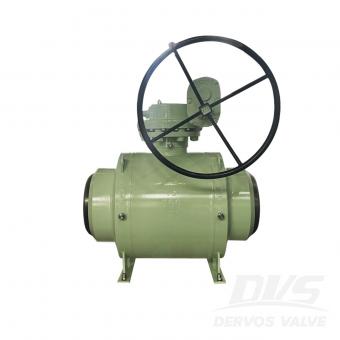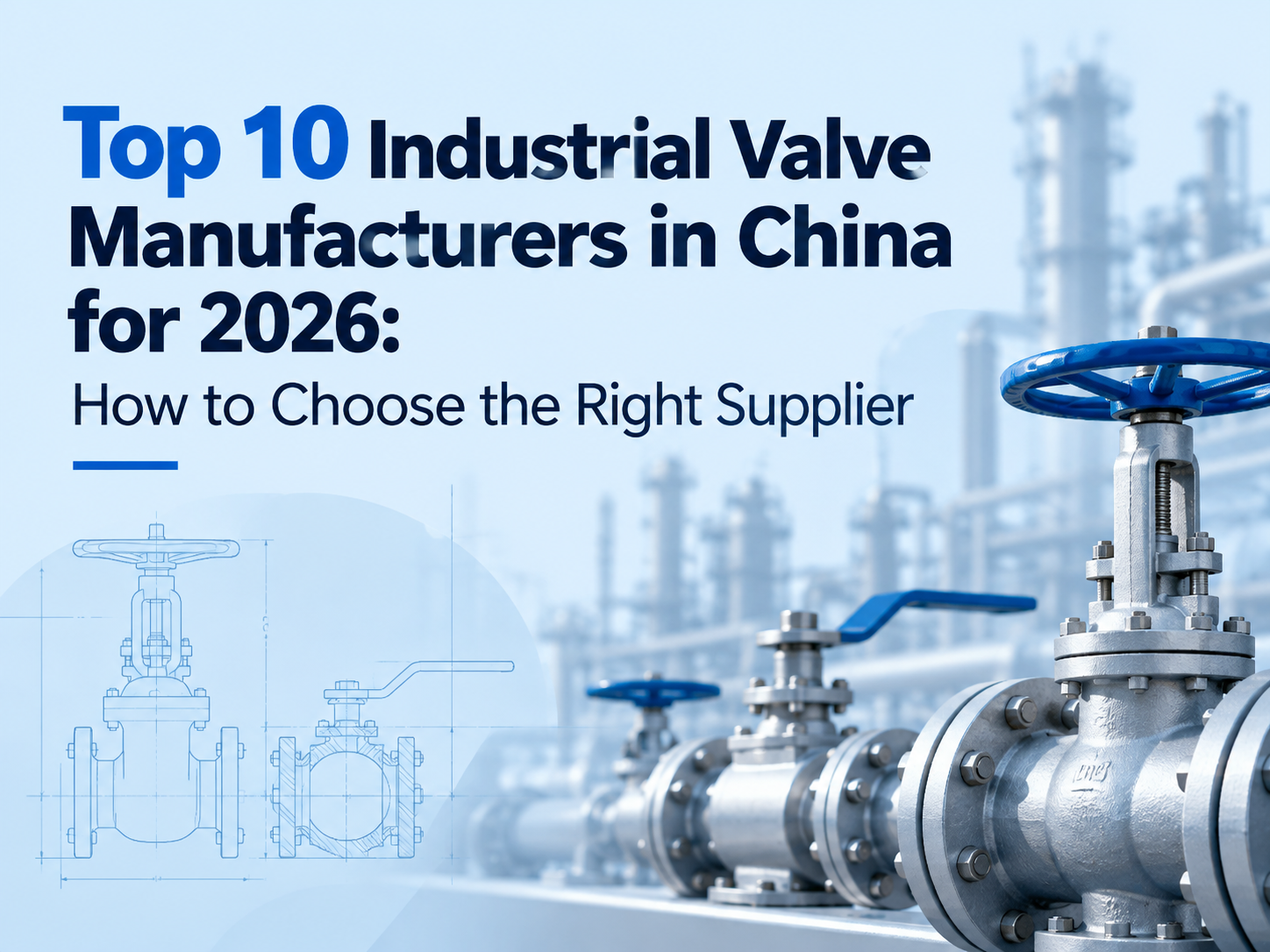
1. Suzhou Neway Valve Co., Ltd. — NEWAY NEWAY is one of China's most internationally recognized industrial valve manufacturers. Its product range includes ball valves, gate valves, globe valves, check valves, butterfly valves, cryogenic valves, subsea valves, and other engineered valve solutions. The company has strong experience in oil and gas, LNG, petrochemical, offshore, and power applications. Best suited for: large-scale energy projects and severe-service applications. 2. CNNC Sufa Technology Industry Co., Ltd. CNNC SUFA is well known for its experience in nuclear power and other high-integrity industrial applications. The company has strong capabilities in material traceability, engineering control, testing, and specialized valve manufacturing. Its products are also used in petroleum, petrochemical, power, and chemical industries. Best suited for: nuclear power, high-integrity systems, and technically demanding projects. 3. DERVOS VALVE DERVOS VALVE supplies industrial valves to customers in oil and gas, petrochemical, power generation, water treatment, marine, and general industrial applications. Its main products include ball valves, gate valves, globe valves, check valves, butterfly valves, plug valves, knife gate valves, line blind valves, and strainers. DERVOS supports international standards such as API, ASME, EN, and DIN, and can provide carbon steel, stainless steel, alloy steel, duplex stainless steel, low-temperature steel, and other materials. One of its key strengths is flexibility. DERVOS can support mixed valve packages, small-to-medium quantities, customized specifications, and project-specific documentation. Best suited for: overseas distributors, EPC projects, customized valves, mixed orders, and flexible sourcing requirements. 4. Yuanda Valve Group Yuanda Valve Group is one of China's large-scale valve manufacturers with broad production capacity. Its product range includes gate valves, globe valves, check valves, butterfly valves, ball valves, and other general industrial valves. The company is widely involved in water supply, HVAC, municipal infrastructure, power, and industrial pipeline projects. Best suited for: large-volume standardized valve procurement and general industrial applications. 5. Jiangsu Shentong Valve Co., Ltd. Jiangsu Shentong focuses strongly on specialized valve applications in metallurgy, energy, nuclear power, and chemical industries. Its strength lies in engineered products for demanding operating conditions rather than only standard valve production. Best suited for: metallurgy, energy, chemical processing, and specialized industrial applications. 6. Chaoda Valves Group Co., Ltd. Chaoda Valves Group serves petroleum, chemical, natural gas, power, and other process industries. Its product range includes ball valves, gate valves, globe valves, check valves, butterfly valves, and special-purpose industrial valves. The company has experience with corro...
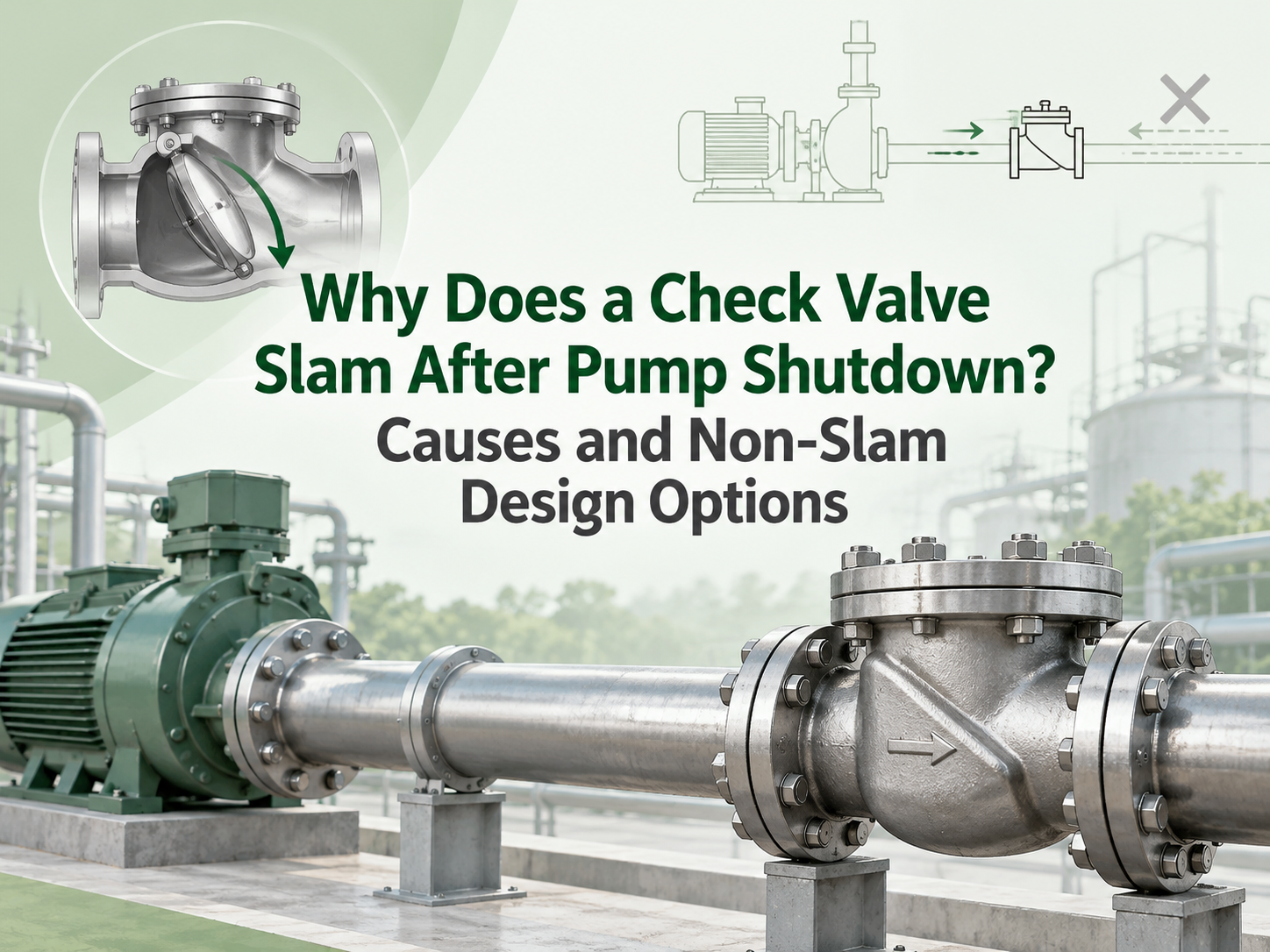
A check valve slams after pump shutdown when flow reverses before the closure member reaches its seat. The valve then stops that reverse velocity abruptly, creating a pressure wave through the piping. The damaging event is usually the rapid arrest of the liquid column, not simply the disc hitting the seat. A “non-slam” label alone is not a solution; the valve response must suit the system's flow deceleration. The Valve Is Closing Too Late for the Shutdown Transient When pump torque disappears, forward velocity falls. Static head, a pressurised common header or another running pump may then drive liquid back toward the stopped pump. If inertia and hinge friction keep a conventional swing disc open through zero flow, reverse velocity develops before the disc reaches its seat. High static lift, a steep rising main, short pump coast-down, parallel pumps and high initial velocity can accelerate this reversal. A long-stroke or high-inertia valve is more likely to lag. This is why the same valve may run quietly in one system and slam in another: nominal size and pressure class do not define shutdown behaviour. Confirm the Event Before Changing the Valve A single hard bang after shutdown points toward check-valve closure or another surge event. Continuous clicking during forward flow is chatter, which more often indicates unstable partial opening, pulsation or poor hydraulic sizing. Record the stop command, motor speed decay, flow direction and pressures on both sides of the valve on a common time base. A high-speed video of an external lever or position indicator can help show when the valve closes. For consequential systems, fast pressure logging is more reliable than sound alone. Inspect the hinge, shaft, spring and seat for friction, wear, deposits or damage, and verify the permitted installation orientation. Check pipe supports as well; the pressure wave may produce its loudest noise away from the valve. Non-Slam Designs Use Different Closing Strategies An axial-flow or nozzle check valve uses a light, centrally guided disc, short travel and spring assistance. It begins closing as forward flow falls, ideally seating before appreciable reversal. It is a strong candidate for rapid pump trips, but pressure loss, cracking pressure, minimum stable flow, orientation and tolerance of solids still matter. A spring-assisted dual-plate valve uses two lighter plates and shorter travel than a conventional swing disc. Its compact construction can improve response, but “dual plate” does not mean slam-free. Plate inertia, spring torque, size and mounting position remain relevant. Tilting-disc, resilient-hinge and spring-assisted swing designs reduce travel or assist closure while retaining a relatively open flow path. They can suit large water lines where energy loss matters, provided dynamic data supports the selected design and size. Large pumping mains ma...
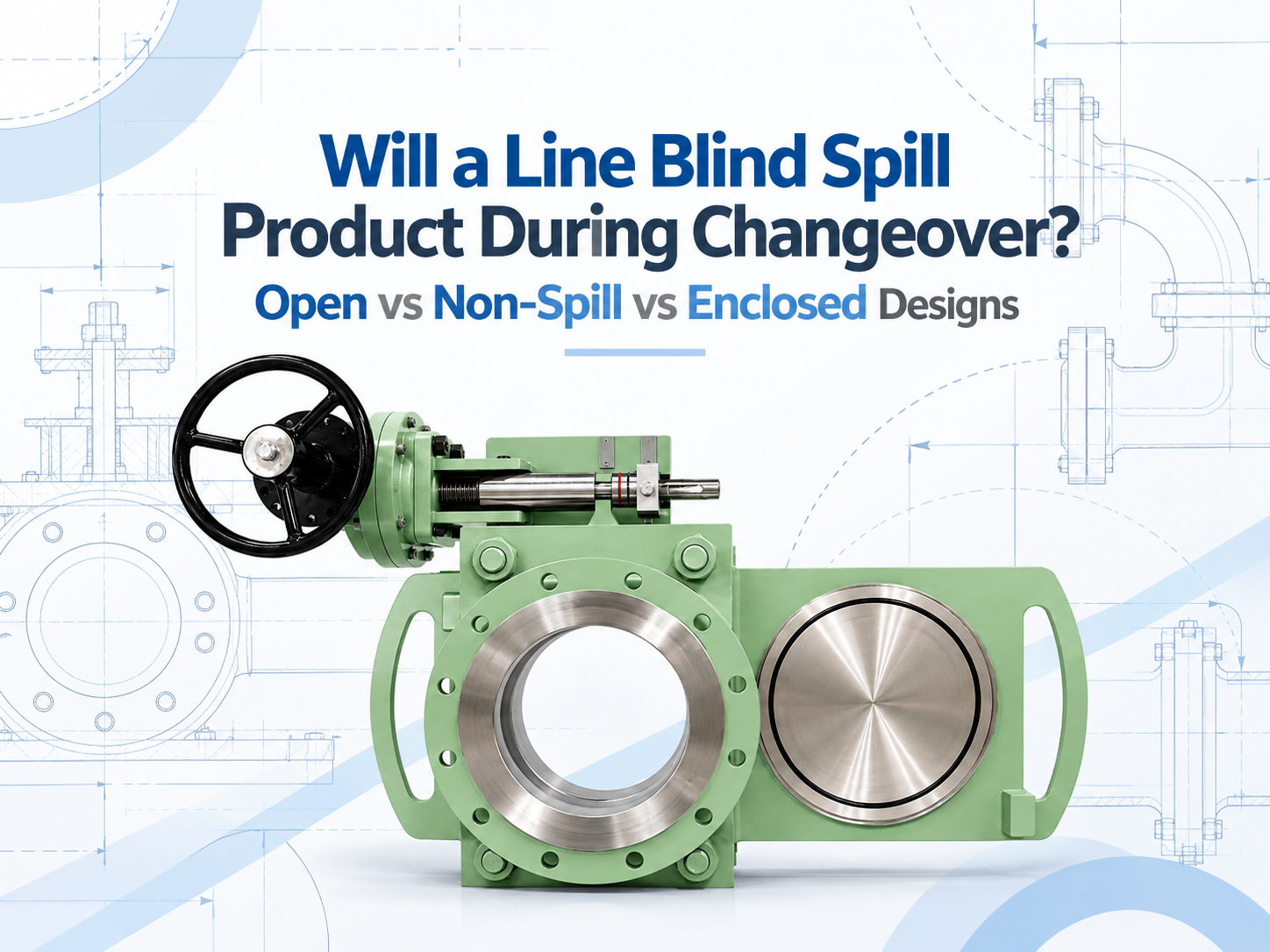
Yes, an open-body line blind can release residual product when it changes between the open and blind positions. A non-spill design does not make that residue disappear; it catches the liquid in a partial enclosure and directs it to a drain. An enclosed design can provide better control of liquid and vapour, but only when its housing, drain, vent and purge connections are engineered for the service. None of these labels should be read as permission to move the blind under live line pressure. Why Product Can Escape During Changeover When a line blind is fully clamped, its seals contain the process and the solid plate provides positive isolation in the blind position. Changeover is different. The sealing faces must separate before the spectacle or sliding plate can move. During that interval, the body cavity and plate path may be open to the surrounding area. The line should already be isolated, depressurised and drained, but “drained” rarely means perfectly dry. Liquid can remain as a film on the plate, collect in the lower body, or sit in a poorly drained pipe pocket. Gas service may leave flammable, toxic or odorous vapour. The amount released therefore depends as much on piping layout and the shutdown procedure as on the line blind itself. The Three Designs Manage Residue Differently Open-body design Residual liquid can drip from the exposed plate path into a temporary tray or the work area, while vapour disperses locally. This arrangement can suit water, steam condensate or other manageable media where easy access and visual inspection matter. It presents the highest potential for floor contamination and operator exposure. Non-spill design A bottom-and-side cover catches drips and sends them to a drain or recovery container; the top may remain open. This design is commonly considered for fuel terminals, marine service and liquid duties where ground or deck contamination must be controlled. It reduces dripping but may not contain vapour, and a blocked drain defeats its purpose. Enclosed design A housing surrounds more or all of the plate travel and may connect to a closed drain, purge, vent, flare or vapour-recovery system. It is better suited to toxic, flammable, odorous or environmentally sensitive service requiring controlled containment. The tradeoff is greater complexity in purging, inspection and maintenance, together with the need to manage trapped pressure deliberately. These names are not perfectly standardised across manufacturers. One supplier's “non-spill” model may be open at the top, while another product described as enclosed may use a more complete casing. The RFQ should show the enclosure arrangement and identify every opening rather than relying on the product name. Non-Spill Does Not Automatically Mean Zero Release For a liquid with low volatility, catching the remaining drops and routing them into a closed contai...
Payment:
30% T/T When Order, 70% T/T Before ShipmentProduct Origin:
ChinaColor:
CustomizationShipping Port:
Shanghai ChinaLead Time:
30~55 days Ex Works After Order ConfirmationMaterial:
Stainless Steel Butterfly ValveMethod of Operation:
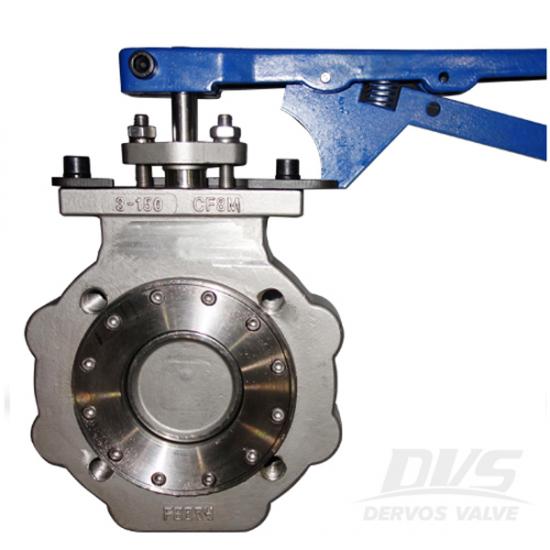
Lever Butterfly Valve, Manual Butterfly ValveThe double offset high performance butterfly valve, with lever operation and lug body, is designed per API 609. The CF8M body and PTFE seat butterfly valve is more durable in serving the application.
Quick Detail
|
Type |
Butterfly Valve |
|
Size |
3'' |
|
Design Pressure |
150LB |
|
Construction |
Double Eccnetric, Soft Seat |
|
Connection Type |
Lug |
|
Operation |
Wrench Operated |
|
Design Code |
API 609 |
|
Face to Face |
ASMEB16.10 |
|
End Connection |
ASMEB16.5 |
|
Test & Inspection |
API 598 |
|
Body Material |
Stainless Steel CF8M |
|
Temperature Range |
-29℃~+150℃ |
|
Application |
Water, Oil, Gas |
Dimension
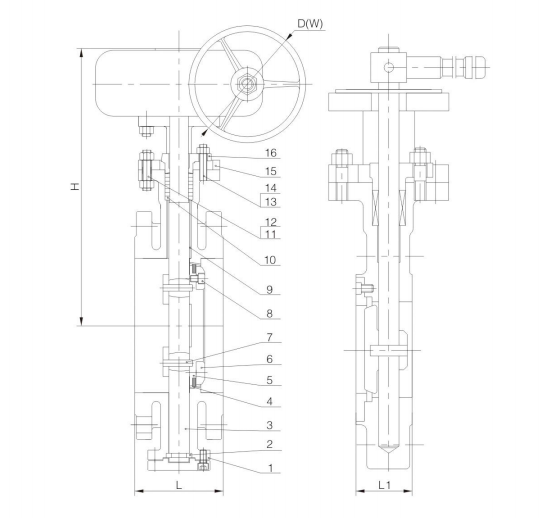
| Class 150 | |||||||||||||
| DN | mm | 40 | 50 | 65 | 80 | 100 | 125 | 150 | 200 | 250 | 300 | 350 | 400 |
| NPS | in | 1 1/2 | 2 | 2 1/2 | 3 | 4 | 5 | 6 | 8 | 10 | 12 | 14 | 16 |
| L | mm | 127 | 127 | 127 | 127 | 152 | 203.2 | 203.2 | 203.2 | 203.2 | |||
| in | 5 | 5 | 5 | 5 | 6 | 8 | 8 | 8 | 8 | ||||
| L1 | mm | 38.1 | 46 | 50.8 | 48 | 54 | 63.5 | 57 | 63.5 | 71.5 | 81 | 92 | 101.5 |
| in | 1.5 | 1.81 | 2 | 1.88 | 2.13 | 2.5 | 2.25 | 2.5 | 2.81 | 3.19 | 3.62 | 4 | |
| H | mm | 185 | 190 | 220 | 229 | 239 | 252 | 284 | 307 | 337 | 392 | 435 | 481 |
| in | 7328 | 7.48 | 8.7 | 9 | 9.4 | 9.9 | 11.2 | 12 | 13.3 | 15.4 | 17.1 | 19 | |
| D(W) | mm | 160 | 160 | 160 | 160 | 160 | 160 | 160 | 200 | 200 | 250 | 250 | 300 |
| in | 6.3 | 6.3 | 6.3 | 6.3 | 6.3 | 6.3 | 6.3 | 7.9 | 7.9 | 9.8 | 9.8 | 11.8 | |
| Weight (Kg) | mm | 12.5 | 13.5 | 17 | 38 | 72 | 105 | 148 | 182 | 230 | |||
| in | 8 | 9 | 10 | 10 | 11 | 14.5 | 34.2 | 66 | 98 | 134 | 168 | 200 | |
Related Knowledge
What is a high performance butterfly valve?
A high performance butterfly valve is often designed with double offset and PTFE seat, to handle everything from general applications to viscous and corrosive liquids; corrosive gases and steam.
Compared to concentric resilient seat butterfly valve, the disc of the high performance butterfly valve is arranged and positioned off the center of the pipe bore, which could reduce wear and tear to the valve during operation and increase sealing performance.
In conlusion, high performance butterfly valve is applicable for higher pressure and temperature applications. Meanwhile, it has longer cycle life and better sealing ability.
If you are interested in our products and want to know more details,please leave a message here,we will reply you as soon as we can.
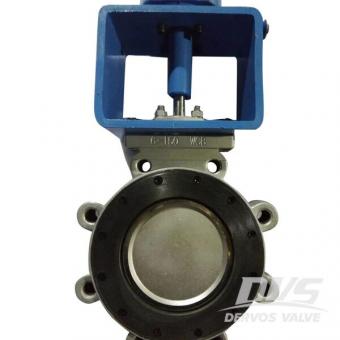
The high performance butterfly valve is designed with double eccentric or double offset structure. The valve has cast steel WCB body, stainless steel disc and stem along with RPTFE soft seat. Quick Detail Type Butterfly Valve Nominal Size 6 Inch Nominal Pressure Class 150 Structure Double Offset, Double Eccentric, Soft Seat Connection Type Lug Type Operation Gear Operated Design Code API 609 Face to Face ASME B16.10 End Connection ASME 16.5 Test & Inspection API 598 Body Material Cast Steel WCB Trim Material CF8M Disc, 17-4PH Stem, RPTFE Seat Application Water, Oil, Gas Dervos Inspection Report
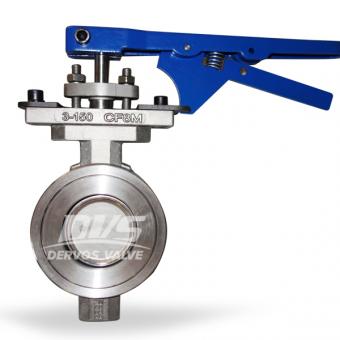
The 3 inch 150LB butterfly valve has a double-offset disc design that allows the disc to move off the seat reducing running torque and seat wear. The Wafer type valve can be driven by a gearbox and handwheel or by electric, pneumatic or hydraulic actuator.
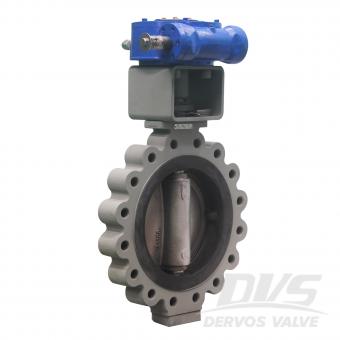
12" 300LB butterfly valve is made according to API 609 standard. The valve body is made of WCB. It has the structural characteristics of high performance and double eccentric. Its operation is turbine operation and packing is graphite.
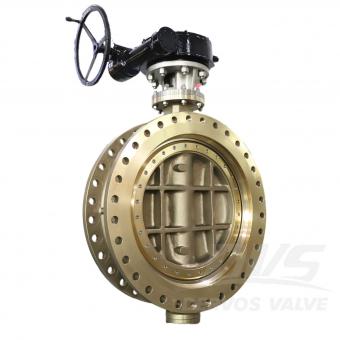
DN900 150LB Triple Offset Metal Seated Butterfly Valve is made according to API609 standard. The valve body is made of C95500. It has the structural characteristics of Triple offset, bidirectional equal pressure zero leakage. Its connection mode is FF double flange. And it has Turbine operation mode.
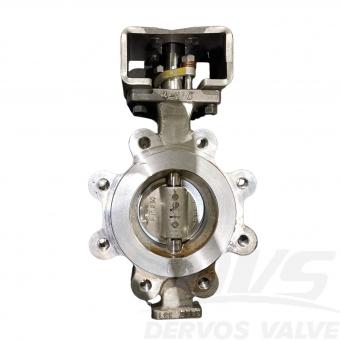
4” 150LB Butterfly Valve is made according to API609 standard. Its connection mode is RF. Product Parameters Type Lug Butterfly Valve Size 4” Pressure 150LB Connection RF Body Material ASTM A352 LCC Design Norm API 609 Face to Face API 609 Flange dimension ASME B16.5 Test & Inspection Code API 598 Temperature -40~ 120°C Applicable Medium Water,Steam,Oil etc Features 1.Lug-style design allows easy installation between flanges and supports downstream piping during maintenance. 2.Constructed from LCC carbon steel, rated 150LB with RF flange, and compliant with API 609 for reliable sealing and durability. Technical Drawing Dimension Checking Pressure Testing Spectrum Inspection Report
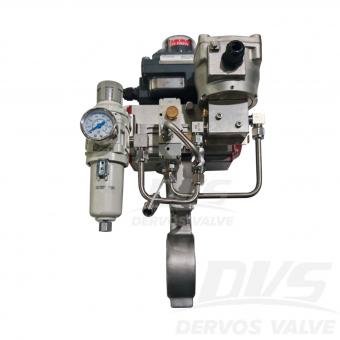
DN65 PN16 High Performance Double Offset Butterfly Valve is made according to EN 593. standard. The valve body is made of CF8M. It has the structural characteristics of High Performance, Double Offset and structural length of 49 mm. Its connection mode is Wafer Type (EN 1092-1, Type A/B). And it has G.O operation mode. Product Parameters Type High Performance Double Offset Butterfly Valve Size DN65 Pressure PN16 Connection Wafer Type (EN 1092-1, Type A/B) Operation Lever Operated Body Material A351 CF8M Design Norm EN 593. End to End API609 Flange dimension EN1092-1 Test & Inspection Code EN12266-1 Temperature -29 ~ 150°C Applicable Medium NaturalGas,Gas,Water,Steam,Oil,etc Features 1. High-performance double offset design reduces seat wear and provides reliable bidirectional sealing with low operating torque. 2. CF8M stainless steel body offers excellent corrosion resistance and dependable performance in PN16 industrial applications. Technical Drawing Dimension Checking Pressure Testing Spectrum Nameplate & Packing Inspection Report
Copyright © 2015-2026 DERVOS VALVE CO.,LTD.All Rights Reserved Blog / Sitemap / XML / Privacy Policy