-
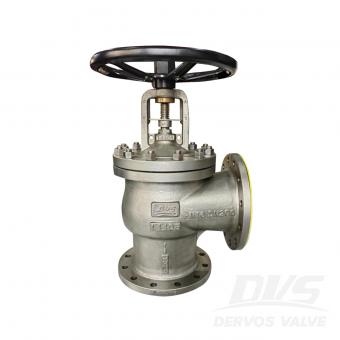
A bellows seal globe valve (also known as a bellows-sealed globe valve) uses an automatically roll-welded metal bellows to form a metallic barrier between the process medium and the atmosphere, achieving a zero-stem-leakage design. Inside the valve, the stainless-steel bellows assembly is welded to the stem at its lower end to prevent the process fluid from contacting and corroding the stem...
View More
-
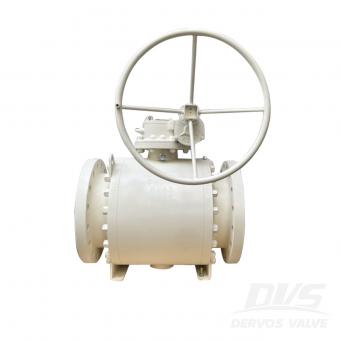
A ball valve is a widely used fluid control valve in industrial applications. A ball valve with a balance hole is a special design that offers distinct functional characteristics and is suitable for specific operating conditions. This article provides a comprehensive introduction to ball valves equipped with balance holes. 1. Structure of Ball Valves with Balance Holes Compared with standar...
View More
-
1. What Is a Valve Welding Electrode? A valve welding electrode refers to a category of welding consumables specifically used for hardfacing, repair welding, and overlay welding of valve components, including the valve body, sealing surfaces (such as valve seats and valve discs), as well as welding joints between valves and pipelines. It is not a single product, but rather a general ...
View More
-
The differences between butterfly check valves and swing check valves lie not only in their structural design but also in their typical applications. Although both valve types share the same functions—preventing backflow, enabling light-load pump starting, and reducing water hammer—their design characteristics and operational ranges differ. Both valve types feature a disc-shaped...
View More
-
Both V-port ball valves and O-port ball valves are important types of ball valves, with clear differences in design, applicable media, and control performance. Understanding these differences helps engineers make more appropriate selections for specific applications. Design and Characteristics of V-Port Ball Valves V-port ball valves feature a distinctive partial-sphere ball design w...
View More
-
The primary function of a check valve is to prevent backflow of the medium. However, in practical engineering, after installation and commissioning, issues such as flow obstruction, abnormal pressure drop, or even backflow may still occur. These problems are generally not caused by valve quality, but by incorrect installation orientation, system operating conditions, or improper valve selec...
View More
-
PTFE-Lined Butterfly Valves are commonly used in piping systems to achieve flow shut-off and regulation, and they are widely applied in industries such as petroleum, chemical, metallurgy, and hydropower. In existing butterfly valve technology, the valve’s sealing primarily relies on soft sealing materials, such as rubber or polytetrafluoroethylene (PTFE). These valves feature a seat s...
View More
-
As one of the most widely used shut-off valves in industrial pipeline systems, the gate valve is valued for its simple structure, low flow resistance, and broad applicability across oil and gas, chemical processing, power generation, water treatment, and other industries. However, like any type of valve, a gate valve has both strengths and inherent limitations. Understanding these advantages and d...
View More
-
Gate valves are among the most commonly used shut-off valves in industrial piping systems. With their simple structure, low flow resistance, and reliable sealing performance, they are widely applied in the energy, petrochemical, water treatment, and metallurgical industries. However, a gate valve is not a “universal solution.” Using the wrong medium, incorrect installation, or operatin...
View More