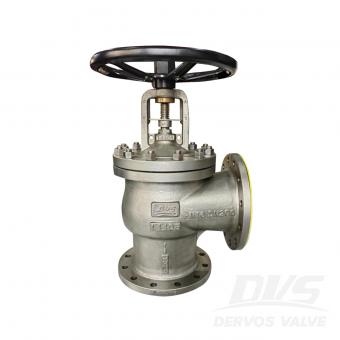
In seawater piping systems, globe valves can be used to control and isolate fluid flow, provided that the materials and corrosion protection design are suitable for seawater service conditions.
Seawater contains a high concentration of chloride ions and dissolved oxygen. If the valve material is not properly selected, corrosion can occur rapidly. Therefore, when globe valves are used in seawater service, the key factor is not the valve structure but the material selection and corrosion-resistance level.
The conclusion is straightforward:
Seawater is a highly corrosive medium. If conventional carbon steel valves are exposed to seawater for extended periods, several problems may occur:
● If the material lacks resistance to chloride ions, pitting corrosion may develop.
● If electrochemical potential differences exist between metals, galvanic corrosion may occur.
● If seawater flow velocity is high, the seat area may experience erosion-corrosion.
For this reason, when globe valves are installed in seawater pipelines, corrosion resistance must be considered for the valve body, seat, disc, and fasteners.
In seawater systems, the following materials are commonly used.
For seawater cooling systems or seawater transfer pipelines, aluminum bronze (such as C95800 or C95500) is a widely used option because of its strong resistance to seawater corrosion.
For moderately corrosive environments, duplex stainless steel (for example ASTM A890 Grade 4A / 5A) is also frequently applied due to its improved resistance to chloride-induced corrosion.
If the budget is limited but a certain level of corrosion resistance is still required, 316 stainless steel (CF8M) may be used.
However, it should be noted that when chloride concentration is high, 316 stainless steel may still be susceptible to pitting corrosion.
A simplified selection guideline is:
● If the valve will be continuously exposed to seawater, aluminum bronze or duplex stainless steel is generally preferred.
● If the valve only occasionally contacts seawater or operates in diluted seawater conditions, 316 stainless steel may be acceptable.
In seawater applications, material selection alone is often not sufficient, and additional corrosion protection measures are usually required.
If the valve body is made of carbon steel, heavy-duty epoxy coatings or marine-grade coatings are typically applied.
If the valve is installed in seawater pipelines, cathodic protection may be considered to reduce the risk of electrochemical corrosion.
If the system operates at high flow velocity, the seating surfaces are often designed with hardfacing alloys or wear-resistant materials to mitigate erosion.
A common engineering principle is:
● If seawater directly contacts the metal surface, the material must have chloride corrosion resistance.
● If complete corrosion resistance cannot be guaranteed by the base material, additional protection measures must be implemented.
In practical projects, globe valves are often used in the following seawater systems:
● When the pipeline requires precise flow regulation, globe valves are generally more suitable than gate valves.
● In seawater cooling systems, globe valves are often used for branch line control.
● In desalination plants or offshore platforms, corrosion-resistant globe valves are commonly installed.
However, if the system requires large flow capacity with minimal pressure drop, gate valves or butterfly valves are typically preferred over globe valves.
Globe valves can be used in seawater service, provided that the materials and corrosion protection level meet marine environment requirements.
If the valve is exposed to seawater for long periods, aluminum bronze or duplex stainless steel should be prioritized.
If conventional stainless steel or carbon steel is used, protective coatings or cathodic protection must be applied.
With proper material selection, globe valves can operate reliably in seawater systems.
If the wrong materials are selected, corrosion problems will occur quickly.
Q1: Are globe valves suitable for seawater systems?
Yes. If seawater-resistant materials such as aluminum bronze or duplex stainless steel are used, globe valves can be applied in seawater systems.
Q2: Can 316 stainless steel globe valves be used in seawater?
If chloride concentration is high, 316 stainless steel may experience pitting corrosion, so it is generally not the preferred material for long-term seawater service.
Q3: What is the most common material for seawater globe valves?
In seawater cooling systems and marine engineering projects, aluminum bronze is one of the most commonly used materials.
Q4: Can carbon steel globe valves be used in seawater?
If the valve body is carbon steel, heavy-duty coatings or cathodic protection are required; otherwise corrosion will occur rapidly.
Q5: Why do seawater systems require higher material standards?
Because seawater contains chloride ions and dissolved oxygen. If the material is not corrosion-resistant, metals may rapidly suffer pitting corrosion or electrochemical corrosion.
Copyright © 2015-2026 DERVOS VALVE CO.,LTD.All Rights Reserved Blog / Sitemap / XML / Privacy Policy