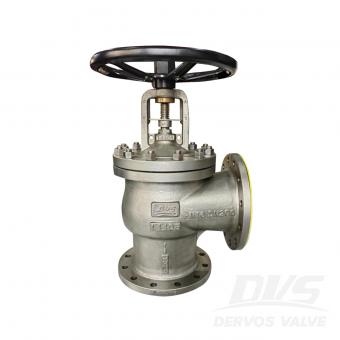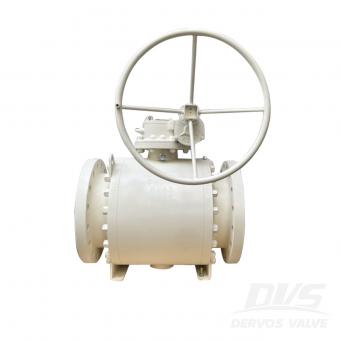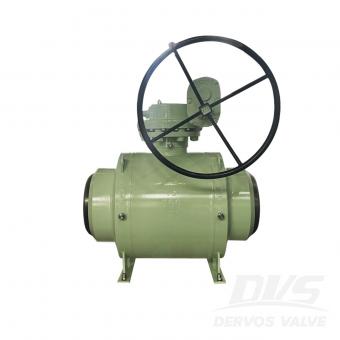
An API 602 forged gate valve is used for compact, small-bore gate valve service in petroleum, natural gas, chemical, power, and industrial piping. To specify the right design, confirm size, pressure class, material, bonnet type, end connection, port type, trim, seat, testing standard, and service conditions. What Is an API 602 Forged Gate Valve? An API 602 forged gate valve is a compact steel gate valve manufactured to API 602 requirements. API 602 covers gate, globe, and check valves for sizes DN 100 / NPS 4 and smaller in petroleum and natural gas industry applications. Unlike large cast steel gate valves, forged gate valves are usually selected for smaller piping systems where pressure, temperature, vibration, or compact installation matters. Forged construction provides a dense material structure, which is useful for high-pressure and critical service. In simple terms, API 602 is often the better fit when the line is small but the service is demanding. When Should You Use an API 602 Forged Gate Valve? Use an API 602 forged gate valve when the application requires reliable isolation in a compact piping system. It is commonly used in refineries, chemical plants, power plants, oil and gas facilities, steam lines, vents, drains, and utility systems. Typical use cases include: ● Small-bore high-pressure lines ● Steam and condensate service ● Process isolation ● Skid-mounted systems ● Drain and vent connections ● Instrument and auxiliary piping ● Oil, gas, and petrochemical service For larger line sizes or heavy-duty cast steel applications, API 600 may be more appropriate. API 602 and API 600 should not be treated as interchangeable standards. Key Design Choices to Specify Do not specify an API 602 forged gate valve only by size and pressure class. The purchase requirement should define the full valve design. Important items include: Item What to Confirm Size DN / NPS size and bore requirement Pressure class Class 800, 1500, 2500, or project requirement Material A105, F304, F316, F11, F22, LF2, or other grade Bonnet type Bolted bonnet, welded bonnet, or pressure seal End connection Socket weld, threaded, butt weld, or flanged Port Full port or regular port Trim Stem, wedge, seat, and hardfacing material Operation Handwheel, gearbox, or actuator if required Testing API 598 or project-specified testing These details affect sealing, pressure capability, maintainability, and installation. Bonnet and End Connection Selection Bonnet type should match pressure, temperature, and maintenance needs. Bolted bonnet designs are common and easier to service. Welded bonnet designs reduce potential leakage paths but are less convenient to disassemble. Pressure seal bonnets may be considered for higher-pressure service, depending on the design and project requirement. End connection is equally important. Socket weld ends are common for small-bore forged valves. Threaded ends may be...
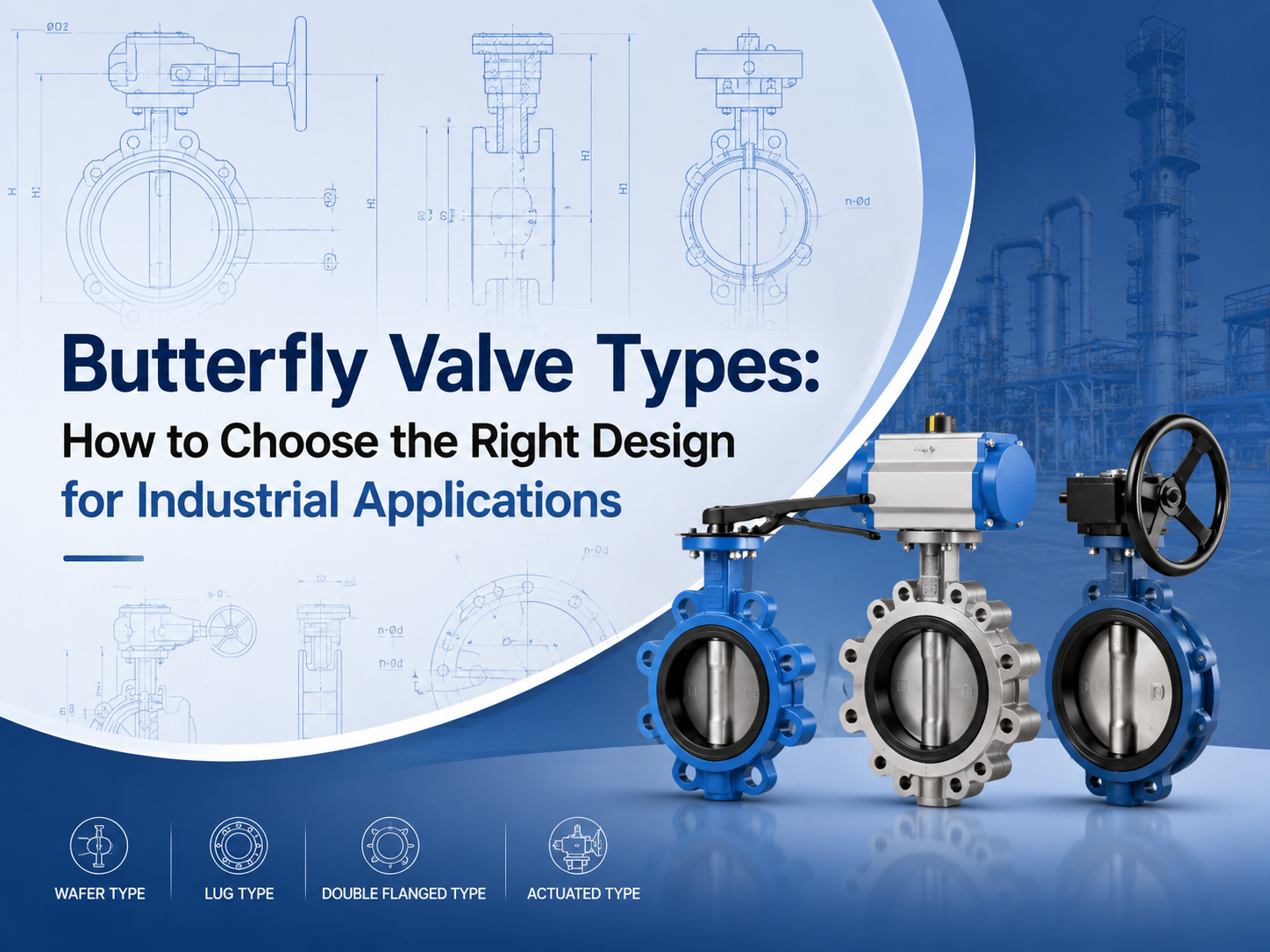
The main butterfly valve types include concentric, double offset, triple offset, wafer, lug, flanged, soft-seated, metal-seated, manual, pneumatic, and electric butterfly valves. The right choice depends on pressure, temperature, media, leakage requirement, installation space, and operation frequency. What Are the Main Butterfly Valve Types? Butterfly valves are usually classified by disc design, body connection, seat material, and actuation method. This classification is important because two valves may both be called butterfly valves, but their service limits can be very different. A butterfly valve uses a rotating disc to isolate or regulate flow. Because of its compact structure, light weight, and quarter-turn operation, it is widely used in water treatment, power plants, chemical processing, HVAC, marine systems, and general industrial pipelines. For buyers, the key question is not simply “which type is cheaper?” It is “which type can handle the actual pressure, temperature, media, and sealing requirement?” Concentric Butterfly Valve A concentric butterfly valve has the stem located on the centerline of the valve body and disc. It is also called a centerline butterfly valve. This type is commonly used for low-pressure and general-service applications, especially with water, air, and non-aggressive fluids. It is simple, economical, and easy to maintain. The limitation is seat wear. During opening and closing, the disc stays in contact with the soft seat for much of its movement. For higher pressure, higher temperature, or stricter shutoff requirements, double offset or triple offset designs are often more suitable. Double Offset Butterfly Valve A double offset butterfly valve uses two offsets to reduce friction between the disc and seat. This improves sealing performance and helps extend service life compared with a basic concentric design. Double offset butterfly valves are often selected for medium-pressure industrial service, including oil and gas, water supply, power generation, and chemical systems. They are useful when the application needs better durability but does not require a full metal-seated triple offset design. This type is also commonly called a high-performance butterfly valve. Before selection, buyers should confirm the pressure class, seat material, shaft sealing design, and expected operation frequency. Triple Offset Butterfly Valve A triple offset butterfly valve adds a third geometric offset to create a more advanced sealing structure. It is typically used for high-temperature, high-pressure, or severe-service applications. The design reduces rubbing between the sealing surfaces during operation. Many triple offset butterfly valves use metal seats, making them suitable for steam, oil and gas, chemical, and other demanding media. For these applications, standards and testing matter. Buyers often need t...
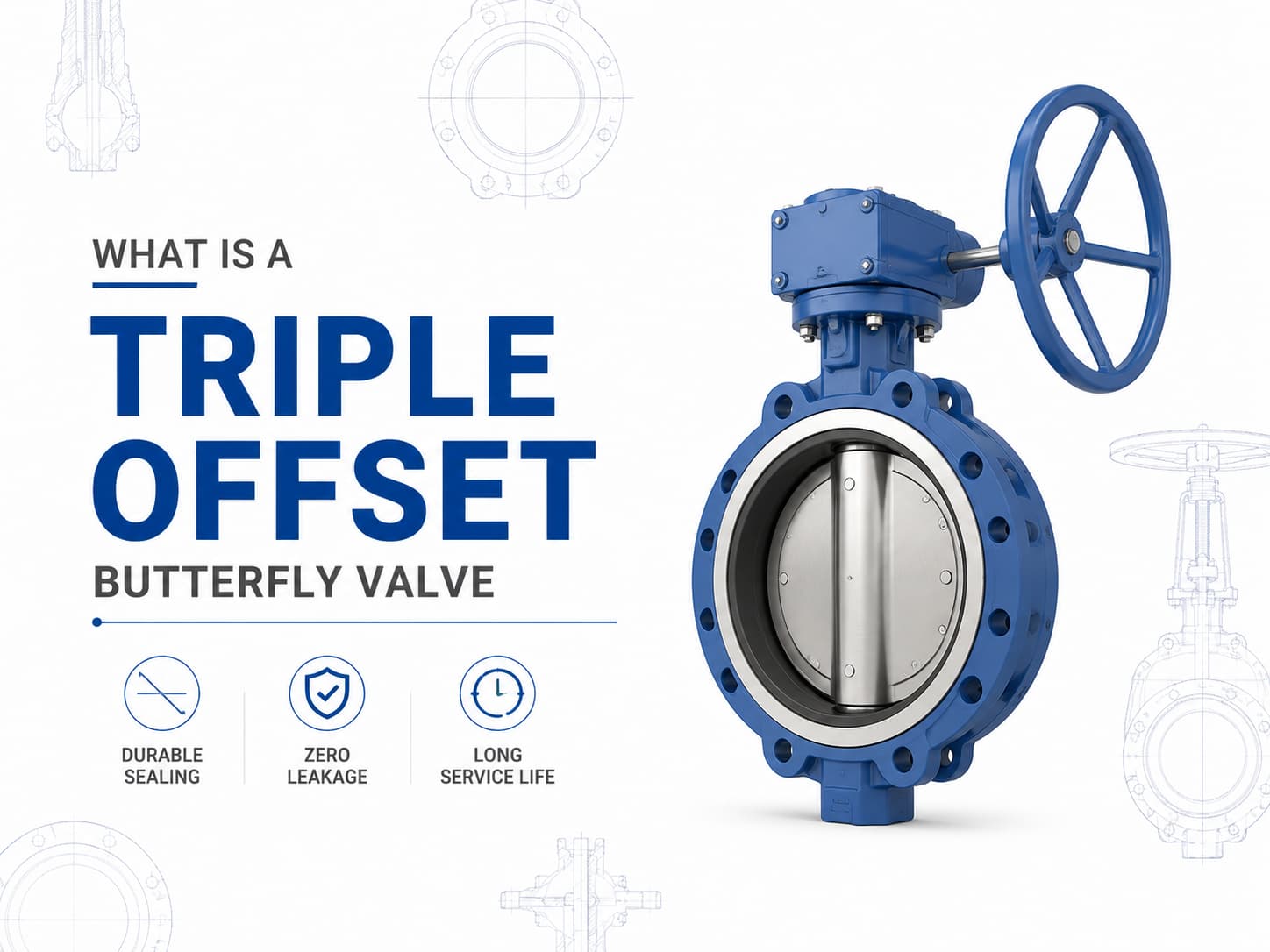
A triple offset butterfly valve is a high-performance isolation valve designed for applications where conventional resilient-seated or double offset butterfly valves cannot meet pressure, temperature, or leakage requirements. By using a three-offset sealing design, the valve achieves a metal-to-metal sealing mechanism with reduced friction between the disc and seat during operation, making it suitable for demanding services such as oil and gas, petrochemical, power generation, LNG, steam, and industrial process systems. Triple Offset Butterfly Valve Design and Working Principle Unlike a concentric butterfly valve, where the shaft is positioned at the centerline of the disc and seat, a triple offset butterfly valve incorporates three independent geometric offsets. The first offset moves the shaft away from the centerline of the valve body, the second offset shifts the shaft from the pipeline centerline, and the third offset introduces a conical sealing surface instead of a circular sealing profile. This geometry allows the disc to move away from the seat immediately after rotation begins, eliminating rubbing between sealing surfaces. The main advantage of this design is that the sealing force is generated by torque rather than continuous compression of soft materials. If the application requires high-temperature service, then a metal-seated triple offset butterfly valve is often preferred because elastomer seats may degrade under elevated temperatures. If the medium contains abrasive particles or aggressive chemicals, then material selection for the disc, seat, and body becomes critical to prevent erosion, corrosion, and leakage during long-term operation. Triple Offset Butterfly Valve Standards and Materials A triple offset butterfly valve is commonly manufactured according to standards such as API 609, EN 593, and ISO 5752, with pressure ratings ranging from Class 150 to Class 600 and higher depending on design requirements. Typical materials include carbon steel, stainless steel, duplex stainless steel, aluminum bronze, and nickel-based alloys. For corrosive seawater applications, aluminum bronze alloys such as C95500 or C95800 may be selected, while sour service applications may require materials compliant with NACE MR0175/ISO 15156 requirements. Triple Offset Butterfly Valve Sealing Performance and Leakage Control The sealing performance of a triple offset butterfly valve depends on the interaction between the sealing ring, seat surface finish, operating torque, and material compatibility. Since the sealing surfaces contact only at the final closing position, mechanical wear is significantly reduced compared with traditional butterfly valve designs. If zero leakage is required for critical isolation, then the valve design, pressure class, and applicable leakage standard, such as API 598 or ISO 5208, must be considered during specification. Triple Offset Butterfly Valve Applications and S...
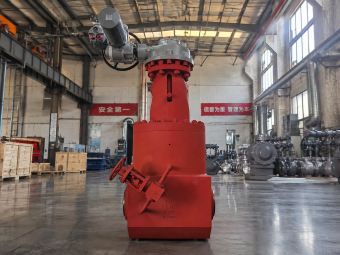
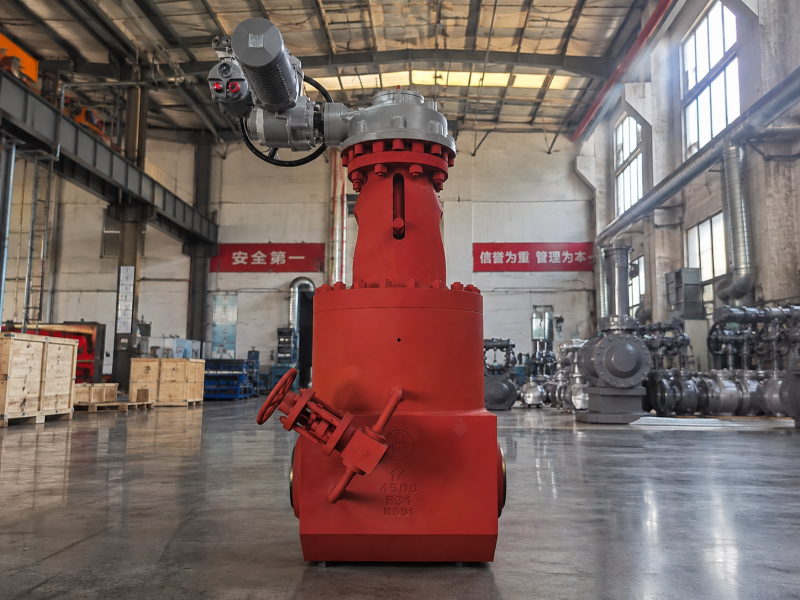
High-Temperature Boiler Project: 14" 4500LB F91 Pressure Seal Gate Valve
This application case focuses on a 14" 4500LB F91 pressure seal gate valve used in high-temperature boiler service, where the valve must withstand severe pressure, elevated temperature, and reliable shut-off requirements. The supplied valve adopts a pressure seal bonnet, parallel double disc structure, rising stem, full-bore design, BW ends, and electric actuation.
The key selection purpose was to provide stable isolation for a high-pressure and high-temperature boiler pipeline. With ASTM A182 F91 Type 2 high-temperature material and a bypass valve for pressure equalization, the valve is designed to support safer operation during opening and closing under demanding service conditions.
The project required a gate valve for high-temperature boiler service. According to the available project information, the operating condition involved high pressure and high temperature, with a 4500LB pressure class and a design temperature of 593°C. For this type of service, ordinary carbon steel valves or low-pressure gate valves cannot provide sufficient material strength, thermal stability, or sealing reliability.
A pressure seal gate valve was selected because its bonnet sealing performance becomes more effective as internal pressure increases. This makes the structure suitable for severe high-pressure steam and boiler pipeline applications.
1) Severe pressure and temperature: The valve is designed for Class 4500 service, with a design pressure of 184.40 bar and design temperature of 593°C. The material must maintain strength and creep resistance at elevated temperature.
2) Reliable shut-off requirement: Boiler isolation valves must provide stable sealing performance during start-up, shutdown, and operating transitions. Leakage or unstable disc seating may affect system safety and maintenance planning.
3) Operation under high differential pressure: Large high-pressure gate valves can be difficult to operate when pressure is not balanced across the disc. A bypass valve is therefore used for pressure equalization before main valve operation.
4) Welded-end pipeline connection: BW ends are suitable for severe service pipelines where flange leakage risk needs to be reduced. The project required connection according to ASME B16.25, with SMLS pipe wall thickness MW 46 mm.
To meet these requirements, DERVOS supplied a 14" Class 4500 pressure seal gate valve manufactured from ASTM A182 F91 Type 2 material. F91 is a chromium-molybdenum high-temperature alloy steel commonly selected for boiler, power generation, and high-temperature steam systems because of its high-temperature strength and creep resistance.
The valve adopts a parallel double disc design with full-bore flow passage. Compared with a conventional wedge gate design, the parallel double disc structure can help achieve stable seating performance in high-pressure service. The pressure seal bonnet improves bonnet sealing reliability as line pressure increases, making the structure suitable for high-pressure boiler isolation.
An AOX electric actuator was selected for controlled operation. In addition, the valve is equipped with a bypass valve, allowing pressure equalization before the main valve is opened or closed. This reduces operating load and supports safer operation in high-pressure service.
|
Valve Type |
Pressure Seal Gate Valve |
|
Structure |
Parallel Double Disc, Rising Stem, Full Bore |
|
Size |
14" / DN350 |
|
Pressure Rating |
Class 4500 / 4500LB |
|
Body / Bonnet Material |
ASTM A182 F91 Type 2 |
|
Disc / Seat |
F91 + STL |
|
Stem |
F6A 2 + N |
|
Trim |
Trim #5 |
|
Connection |
BW, ASME B16.25 |
|
Pipe Wall Thickness |
SMLS MW 46 mm |
|
Operation |
AOX Electric Actuator |
|
Design Standard |
ASME B16.34 |
|
Test & Inspection |
API 598 |
|
Design Pressure |
184.40 bar |
|
Design Temperature |
593°C |
|
Shell Test Pressure |
116.4 MPa |
|
Seat Test Pressure |
47.4 MPa |
|
Additional Feature |
Bypass valve for pressure equalization |
|
L |
951 mm |
|
d |
Ø173 mm |
|
A |
Ø355.6 mm |
|
B |
Ø263.6 mm |
|
H≈ |
1435 mm |
|
D1 |
Ø475 mm |
|
D2 |
Ø406 mm |
|
D3 |
Ø300 mm |
|
T |
50 mm |
|
n-Ød |
8-Ø39 |
The main material of the valve is ASTM A182 F91 Type 2. For high-temperature boiler and steam pipeline applications, F91 material provides better high-temperature strength than ordinary carbon steel. This helps the valve body and pressure-containing parts maintain structural reliability under thermal stress and long-term elevated-temperature operation.
The disc and seat use F91 + STL, supporting wear resistance and sealing durability. The stem is specified as F6A 2 + N, and the valve uses Trim #5 according to the project requirement.
For a large-size Class 4500 gate valve, pressure differential across the disc can create high operating torque and additional stress during opening. The bypass valve helps equalize pressure between the upstream and downstream sides before the main valve is operated.
This configuration is especially useful in high-pressure boiler service because it reduces actuator load, improves operation stability, and helps avoid sudden pressure impact during valve opening.
The valve was specified according to ASME B16.34 and tested according to API 598. The drawing data shows a shell test pressure of 116.4 MPa and seat test pressure of 47.4 MPa. These tests are important for confirming pressure-containing integrity and sealing performance before shipment.
For similar high-pressure boiler valve projects, recommended inspection items include material certificate review, dimensional inspection, visual inspection, pressure testing, seat leakage testing, actuator function checking, nameplate verification, and final document review.
This project demonstrates the importance of selecting the correct valve structure, material, and operation method for high-temperature boiler service. The combination of F91 high-temperature material, pressure seal bonnet, parallel double disc structure, BW ends, electric actuation, and bypass pressure equalization provides a practical solution for severe high-pressure isolation applications.
For power plants, boiler systems, and high-temperature steam pipelines, this type of pressure seal gate valve can help improve shut-off reliability, reduce operating difficulty, and support safer maintenance planning under demanding service conditions.
The 14" 4500LB F91 pressure seal parallel double disc gate valve was selected for a high-temperature boiler application where pressure, temperature, sealing reliability, and operation safety were all critical. This case provides a reference for engineers selecting high-pressure gate valves for boiler, steam, and power generation systems.
If you are interested in our products and want to know more details,please leave a message here,we will reply you as soon as we can.

The refinery of MOL, located in Hungary, requires regular ball valve and check valve replacements to maintain optimal performance. As a trusted check and ball valve supplier of MOL, DERVOS continues to provide ball valves for their operations. In this project, DERVOS supplied a batch of high-performance ball valves and check valves for fluid control in oil and gas applications. They required various types and specifications of ball and check to meet the operational and sealing requirements of different pipeline systems.
In 2017, DERVOS contributed to an innovative environmental initiative led by ECOFUEL, an emerging canadian player in clean technology. This groundbreaking project aimed to produce sustainable diesel from solid waste, setting a precedent in green energy solutions. DERVOS is proud to have provided 136 sets of premium valves to support this pioneering effort.
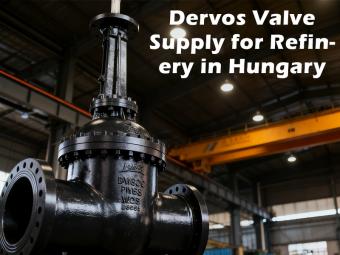
Project Background In 2024, DervosValve was selected as a trusted valve supplier for a refinery project in Hungary. The client required large-sized industrial valves capable of handling complex and high-pressure oil and gas media. With years of engineering experience and proven track records in the energy sector, Dervos was chosen to provide a complete valve solution tailored to the refinery’s operational needs. Scope of Supply ● 10 pcs Gate Valves ● 9 pcs Check Valves All valves were designed and manufactured according to API and ASME standards, ensuring compliance with international refinery safety and performance requirements. Product Design & Technical Highlights The supplied valves feature bolted bonnet design, flexible wedge, and rising stem with yoke support, which enhance sealing reliability and facilitate maintenance. Their large-scale structure was customized to fit the refinery’s pipeline system, allowing smooth fluid control and stable operation under high temperature and pressure. Performance in Refinery Conditions Refinery environments involve frequent temperature fluctuations and medium impurities. Dervos valves demonstrated outstanding sealing performance, corrosion resistance, and mechanical strength, ensuring long-term stability with minimal maintenance requirements. The bolted bonnet design also makes disassembly and inspection more convenient during scheduled shutdowns. Why the Client Chose Dervos The Hungarian client valued Dervos for: ● Proven experience in oil & gas valve solutions ● Strict material traceability and quality control system ● Flexible customization capabilities for large valve dimensions ● On-time delivery and complete documentation support Throughout the project, our technical and logistics teams worked closely with the client’s engineers, ensuring each valve was tested, packaged, and delivered to meet project timelines and refinery installation standards. Customer Feedback & Project Outcome After installation and commissioning, the refinery reported stable operation and precise flow control performance. The valves’ large design and robust construction fully met system pressure and flow requirements. The client expressed satisfaction with both the quality and Dervos’ technical responsiveness, laying a solid foundation for future cooperation. Conclusion This successful refinery project in Hungary once again highlights Dervos’ ability to deliver reliable, large-size valve solutions for the oil and gas industry. We continue to serve our global partners with precision engineering, professional service, and long-term reliability.
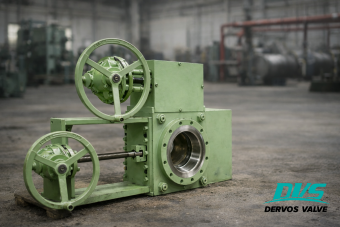
1. Challenges Faced by the Client An oil terminal operator in South Africa, handling multiple light petroleum products such as HSD, MA, and JET-A1 within its pipeline system, encountered the following key challenges: ● Volatile and complex media: Aviation fuels such as JET-A1 require extremely high sealing performance; even minor leakage poses significant safety risks. ● Frequent media switching: Reliable physical isolation is required during product changeover. Conventional valves cannot achieve absolute shut-off. ● Insufficient sealing performance: Standard gate valves and ball valves present a risk of internal leakage after prolonged service. ● Strict safety requirements: The client specified a clear requirement for “zero visible leakage.” 2. Our Solution To address these operating conditions, Dervos Valves supplied a Slide Blind Valve, with the following key configurations: Design Type: Slide Blind (Spectacle Blind / Line Blind) ● Switching between a solid plate and a spacer enables complete shut-off or full flow. ● Provides visual and verifiable positive isolation, meeting high safety requirements. Sealing Design: Drip-tight Construction ● Effectively prevents leakage and evaporation of light hydrocarbons. ● Suitable for stringent sealing requirements of aviation fuel service. Pressure Rating and Standards: ● Class 150, in accordance with ASME B16.34 ● Flanged connection: Raised Face (RF) Material: ASTM A105 Forged Steel ● Offers high mechanical strength and pressure resistance. ● Well-suited for petroleum service, balancing cost efficiency and reliability. Operation: Worm Gear (Turbine Drive) ● Suitable for large diameter (10") applications, reducing manual effort. ● Enhances operational stability and safety during switching. 3. Results Achieved In actual operation, the slide blind valve enabled reliable physical isolation between different petroleum products, ensuring a clearly verifiable disconnected state during media switching. This fundamentally eliminates the risk of internal leakage associated with conventional valves. The drip-tight design effectively controlled evaporation and leakage when handling light hydrocarbons such as HSD, MA, and JET-A1, significantly improving on-site safety performance. In addition, the worm gear operation provided smoother and more controlled switching, reducing manual effort and minimizing the risk of operational errors, even in large-diameter applications. Overall, the solution not only met the client’s stringent requirements for high sealing integrity and safety, but also improved the operational stability and maintenance reliability of the pipeline system.
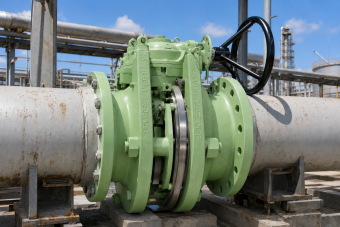
Zimbabwe National Oil Infrastructure Company (NOIC) Tank Farm Project This article is based on a tank farm project of the Zimbabwe National Oil Infrastructure Company (NOIC), focusing on practical challenges in pipeline isolation and maintenance switching, including flammable media, the requirement for pressurized operation, and high reliability under outdoor conditions. The solution involves a 10" 150LB swing type line blind valve, designed in accordance with ASME B16.34, with WCB cast steel body and metal sealing tested to API 598 zero leakage standards. Combined with worm gear operation and an anti-misoperation mechanism, the valve enables positive isolation switching without depressurization or shutdown. The implementation effectively improves operational safety, enhances maintenance efficiency, and reduces downtime losses. This case provides practical reference for engineers involved in pipeline isolation, valve selection, and online maintenance in the oil & gas industry. Project Background ● End User: Zimbabwe National Oil Infrastructure Company (NOIC) ● Installation Location: Petroleum storage terminal, Zimbabwe ● Medium: Petroleum ● Operating Requirement: The pipeline must reliably switch between normal operation and maintenance conditions, with strict requirements for safe isolation and zero leakage shut-off. Challenges Faced by the Client 1) Flammable Medium with High Safety RequirementsThe transported medium is petroleum. Any leakage may result in serious safety incidents. Therefore, high sealing integrity and operational reliability are required. 2) Requirement for Isolation Under PressureConventional valves cannot provide positive isolation without depressurization during maintenance. Depressurization leads to operational interruption, product loss, and additional restart costs. 3) Outdoor Installation with High Reliability DemandThe valve is installed in an outdoor station. It must withstand site environmental conditions and ensure stable operation with controlled risk of misoperation over long-term service. Solution To address the above conditions, Dervos Valve supplied a 10" 150LB swing type line blind valve with the following key design features: 1) Design Standard and MaterialThe valve is designed and manufactured in accordance with ASME B16.34. The body material is WCB cast carbon steel, suitable for petroleum service conditions, with a temperature range of -29°C to 150°C, offering adequate corrosion resistance and mechanical strength. 2) Sealing PerformanceThe sealing pair adopts a precision-machined soft sealing structure, tested in accordance with API 598. It achieves reliable zero leakage under petroleum service conditions, ensuring safe pipeline isolation. 3) Swing Type Blind StructureThe swing blind plate allows switching between flow and blind positions without pipeline disassembly or depressurization. This enables rapid transition and solves the limitation of conventional valves in achieving online positive isolation. Swing Type Blind Technical Drawing 4) Operation and Safety DesignEquipped with a worm gear operator and anti-misoperation device, the valve ensures smooth manual operation with clear position indication, minimizing the risk of incorrect operation in field conditions. Implementation Results After commissioning, the solution delivered the following benefits: 1) Reliable Isolation PerformanceThe valve meets API 598 leakage requirements. No leakage has been observed during operation, ensuring safe pipeline performance. 2) Improved Maintenance EfficiencyThe swing type structure enables online isolation without depressurization. Maintenance time is significantly reduced, minimizing production interruption. 3) Controlled Operational SafetyClear blind position indication and anti-misoperation design reduce risks for field operators, aligning with safety management practices in oil & gas facilities. Conclusion In this project, Dervos Valve provided a swing type line blind valve solution that achieves safe isolation under continuous operation in petroleum service. The solution ensures long-term sealing reliability and meets the project's requirements for safety, reliability, and operational efficiency in national oil infrastructure applications.
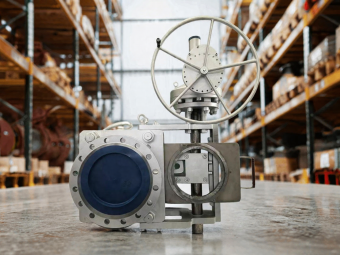
In an industrial steam system project in Hungary, a DN400 PN40 sliding blind valve was applied to achieve safe isolation and zero leakage shut-off under high-temperature conditions. What Challenges Are Commonly Encountered in Steam System Maintenance? In industrial steam systems, maintenance activities often face several practical challenges.In this project, the main issues included: ● The process medium was steam, with an operating temperature of approximately 250°C and a design temperature range from -39°C to 350°C, requiring the equipment to withstand both high-temperature and low-temperature conditions. ● The steam system required high sealing performance; conventional valves are prone to sealing failure under high-temperature steam conditions. ● During pipeline maintenance, safe isolation was required; traditional isolation methods could not achieve blind switching without depressurization. ● The valve was exposed to outdoor conditions, with ambient temperatures as low as -39°C, requiring high structural reliability and safe operation. How Can These Challenges Be Addressed in High-Temperature Steam Pipeline Systems? Based on the actual service conditions and technical requirements, Dervos Valve provided a customized DN400 PN40 forged sliding blind valve solution: 1. Material and Standards Designed in accordance with EN 12516, the valve body is made of ASTM A350 LF2 forged steel, offering both low-temperature impact toughness down to -40°C and stable strength at temperatures up to 350°C, suitable for wide temperature fluctuations. 2. Sealing Design The sealing pair adopts Stellite hardfacing with precision-machined metal sealing surfaces, meeting EN 12266-1 Leakage Class A requirements.Reliable zero leakage performance is maintained under 250°C saturated steam and thermal cycling conditions. 3. Structure and Operation The full-bore design reduces flow resistance, while a gear-operated mechanism ensures smooth operation for large-size PN40 valves. The sliding blind structure enables inline isolation switching without depressurization or pipeline disassembly, combined with: ● Mechanical interlock to prevent misoperation ● Visual position indication This significantly improves maintenance safety. Project Performance Since commissioning, the valve has completed more than 20 pressurized isolation operations, with sealing performance consistently meeting Class A requirements and no internal or external leakage observed. The switching time for each isolation operation is controlled within 10 minutes, significantly reducing maintenance time compared to traditional methods involving depressurization and manual blind insertion. Designed in accordance with EN 12516, the valve has an expected service life of 30 years, contributing to a substantially lower total lifecycle maintenance cost.
Project Type: Safety upgrade of an in-service high-pressure pipelineClient: A major oil & gas company in Russia (Siberia region)Application: Isolation and maintenance blind-off for high-temperature steam / hot oil pipelinesPressure Rating: 2600LB (Class 2600)Core Product: F22 Swing-Type Line Blind Valve (note: swing-type retained; see clarification below)Commissioning: Q3 2024Data Collection Period:12 months 1. Challenges Faced by the Client The pipeline system operates at pressures up to 2600LB, with media including high-temperature steam (up to 520°C) and hot oil. The valve is required to provide highly reliable sealing performance under high-pressure conditions. Maintenance isolation and blind-off operations must be carried out safely without shutting down the system. However, conventional line blind valves presented the following issues under large-diameter and high-pressure conditions: Difficult operation:Each blind-off operation required pipeline depressurization. The average operation time was approximately 45 minutes, requiring coordination of three operators. Leakage risk:Under high-pressure thermal cycling, sealing surfaces were prone to deformation. Two minor leakage incidents had previously resulted in unplanned shutdowns. Harsh environment:In Siberia, winter temperatures can drop to -45°C, while pipeline surface temperatures exceed 60°C in summer. Frequent industrial vibration places high demands on valve structural strength and durability. High maintenance cost:The existing valves required inspection and maintenance every three months, with annual maintenance costs exceeding USD 120,000. 2. Proposed Solution A swing-type line blind valve manufactured in F22 material was provided, designed in accordance with ASME B16.34, ensuring high-pressure and high-temperature resistance while accommodating mechanical stress in industrial environments. The valve adopts a swing-type mechanism, allowing the blind plate to rotate smoothly within the valve body during operation. This enables safe switching between isolation and flow positions without requiring pipeline depressurization, reducing operational risks. The valve body material can be selected as F11 or F22. With high-temperature alloy properties, stable sealing performance is maintained under high-temperature steam or hot oil service. An RTJ (Ring-Type Joint) flange connection is applied, facilitating installation in large-diameter pipelines. In addition, a mechanical interlock is incorporated to prevent misoperation and enhance on-site safety. 2.1 Key Technical Advantages Swing-Type Design for Online IsolationThe blind plate rotates smoothly within the valve body, eliminating the need for valve disassembly or pipeline depressurization. Each isolation / flow switching operation can be completed within approximately 10 minutes by a single operator. F22 High-Temperature Alloy for Extreme Service ConditionsF22 material (containing Cr 2.00–2.50% and Mo 0.90–1.10%) maintains high creep rupture strength at temperatures up to 520°C. It also meets low-temperature impact test requirements down to -46°C, making it suitable for the full annual temperature range in Siberia. Enhanced Sealing ReliabilitySpring-loaded sealing surfaces automatically compensate for dimensional changes caused by thermal cycling. After 500 thermal cycles, the leakage rate remains better than ISO 5208 Rate A (zero visible leakage). Anti-Misoperation DesignEquipped with a mechanical interlock and position indicator to prevent incorrect operation under pressurized conditions, improving on-site operational safety. 2.2 Performance Comparison with Conventional Line Blind Valves Compared with conventional line blind valves, the F22 swing-type solution demonstrates the following performance improvements: ● Operation time (per isolation): reduced from 45 minutes (with depressurization required) to 10 minutes (online switching) ● Personnel required: reduced from 3 operators to 1 operator ● Leakage rate (over 12 months of operation): from 2 recorded minor leakage incidents to zero leakage ● Maintenance interval: extended from every 3 months to ≥18 months ● Operating temperature range: expanded from -20°C ~ 400°C to -46°C ~ 520°C ● Annual maintenance cost: reduced from approximately USD 120,000 to below USD 20,000 3. Achieved Results 3.1 Key Operational Indicators Zero-leakage operation:Over 12 months of service, the valve maintained zero visible leakage, with no unplanned pipeline shutdowns. 78% improvement in operational efficiency:The time required for a single isolation operation was reduced from 45 minutes to 10 minutes, resulting in over 200 hours of annual labor time savings. ...

1. Project Background and Purpose of the Visit Previously, DERVOS supplied a batch of floating ball valves, trunnion-mounted ball valves, and swing check valves for the MOL refinery upgrade project in Hungary. Detailed specifications and technical data for this project are available in the previous case study. Recently, the DERVOS team visited Hungary to conduct a follow-up inspection at the same project site. The purpose of the visit was to evaluate the actual operating condition of the supplied valves, communicate directly with the client’s on-site engineering team, and collect feedback after several months of operation. 2. Current Project Status During the visit, it was confirmed that the MOL refinery is currently in a post-incident recovery phase. In October 2025, a fire occurred in the AV3 crude distillation unit, and repair work is ongoing. Full production capacity is expected to resume in Q3 2026. Despite this, in units that remain operational or are in maintenance intervals, all valves supplied by DERVOS are functioning normally. The client confirmed that no performance issues related to DERVOS valves have been reported. 3. Site Inspection Details The DERVOS team accessed the valve installation areas for on-site inspection. Particular attention was given to four trunnion-mounted ball valves equipped with 2-meter extended stems, a customized design to meet specific operating distance requirements. It was observed that the extended stem design allows operators to control the valves from a safe and accessible distance. The IP68-rated worm gear operators also demonstrated reliable sealing performance under local environmental conditions. The team also inspected floating ball valves and swing check valves installed in medium-pressure and high-temperature zones. No leakage or abnormal operation was identified. 4. Client Feedback During technical discussions, the client’s engineering team provided positive feedback. One project manager commented: “DERVOS clearly understands our operating conditions. The extended stem solution is exactly what we required. So far, the valves have operated reliably, with no unplanned downtime.” The client also acknowledged DERVOS for its prompt response during the delivery phase and the clarity of the technical documentation provided. 5. After-Sales Service Actions This visit was part of DERVOS’s standard after-sales follow-up. For each project, DERVOS provides an 18-month warranty from the date of shipment. Any quality-related issues are addressed promptly. During the visit, the team reviewed installation and maintenance records together with the client’s on-site maintenance personnel. No outstanding issues were identified. 6. Additional Project Context The MOL Danube Refinery, located in Százhalombatta south of Budapest, is one of the largest refineries in Central and Eastern Europe, with a processing capacity of 165,000 barrels per day. MOL Group is also advancing geothermal exploration around the refinery and has established a solar park and a green hydrogen facility. Although DERVOS valves are used in a conventional refinery upgrade project, this visit provided broader insight into the client’s transition toward low-carbon operations. 7. Conclusion and Outlook This site visit in Hungary was more than a routine follow-up. It reflects DERVOS’s commitment to the full product lifecycle—from engineering and delivery to post-commissioning support. Going forward, DERVOS will continue to provide reliable valve solutions and proactive field support for MOL and other refinery clients across Europe.
Copyright © 2015-2026 DERVOS VALVE CO.,LTD.All Rights Reserved Blog / Sitemap / XML / Privacy Policy