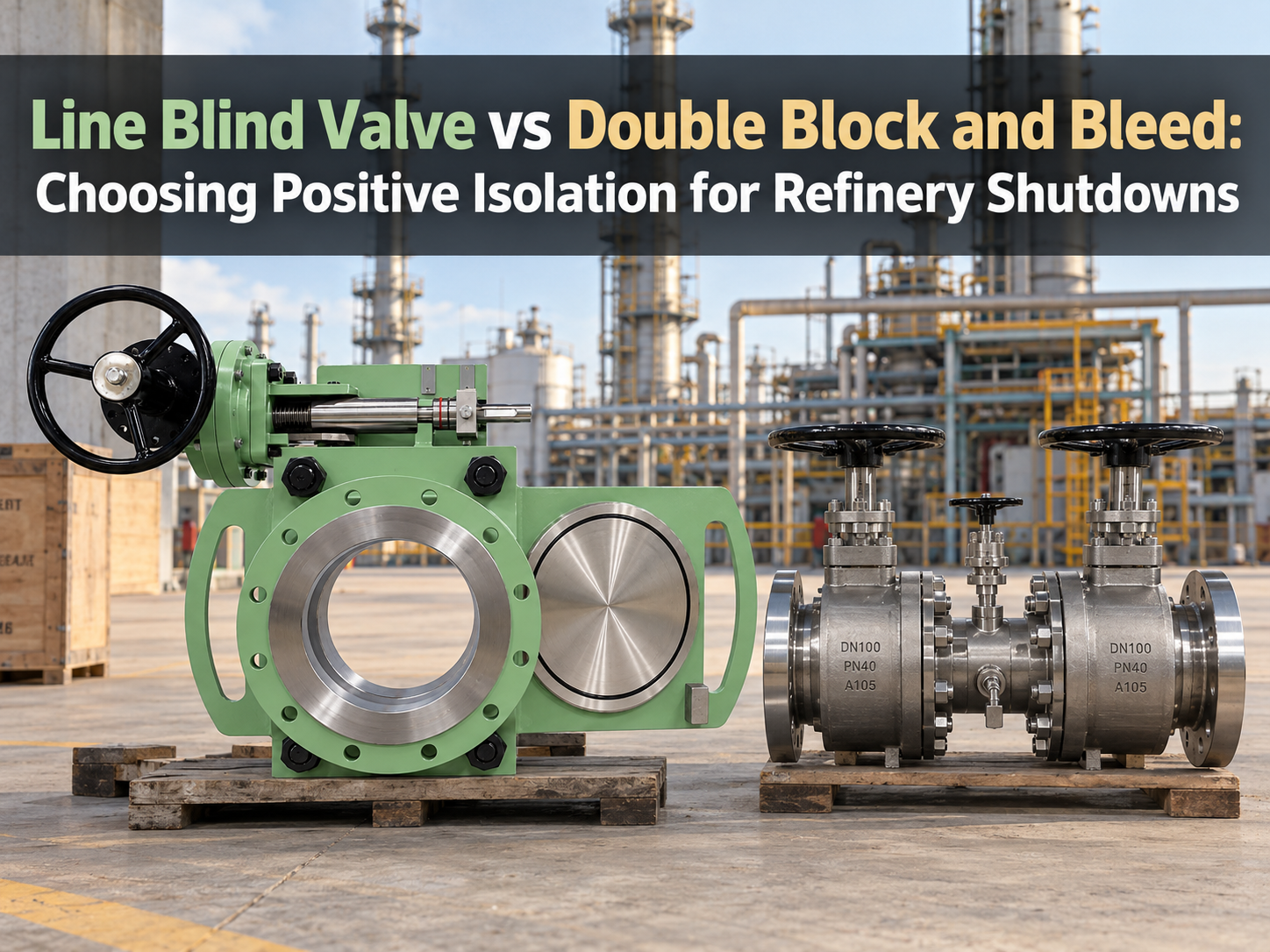
In refinery shutdowns, the choice between a line blind valve and double block and bleed is not a contest between one safe method and one unsafe method. Both can be valid isolation methods, but they control risk in different ways. A line blind valve creates isolation by moving a solid blind plate into the pipeline bore. The isolation is visible and mechanical. A double block and bleed arrangement isolates by closing two barriers and opening a bleed or vent between them, so trapped pressure or leakage can be released or monitored. The engineering question is not only “which one seals better?” It is “what work will happen after isolation, and how much reliance can the site accept on valve seats, bleed monitoring, and procedure control?” Shutdown Work Changes the Isolation Standard Routine instrument work, sampling maintenance, or short inspection tasks may justify a different isolation method from hot work, vessel entry, flange breaking, or long-duration turnaround maintenance. In a refinery, the same hydrocarbon line may be low-risk in one task and high-risk in another because the exposure changes. A DBB arrangement is useful when the work needs fast, verifiable valve isolation without moving a blind plate into the bore. The bleed point gives operators a way to confirm whether pressure is trapped between the isolation points or whether one of the seats may be passing. For many operating teams, that makes DBB practical for frequent or temporary isolation where breaking containment would add more work and more exposure. A line blind valve becomes stronger when the job needs visible physical separation from a live or potentially live system. If the isolated equipment will be opened, entered, welded, cleaned, or left out of service during a shutdown window, a solid blind plate reduces dependence on seat tightness. The valve still needs proper operation, locking, marking, and testing, but the core barrier is no longer only a seating surface. Where DBB Earns Its Place DBB is attractive because it can reduce downtime. A compact DBB valve or a two-valve DBB arrangement can isolate, bleed, and verify without removing a spool or installing a separate blind flange. For refinery units with many small-bore connections, drains, vents, sampling points, or instrument take-offs, that speed matters. The risk with DBB is that its safety case still depends on seat integrity, correct bleed routing, pressure monitoring, and disciplined lockout practice. If the bleed is not routed to a safe location, it may create a release hazard. If operators close two valves but do not prove the bleed, the system may only look isolated. If the valves have seat damage from coke, catalyst fines, thermal cycling, corrosion, or debris, the bleed point may reveal leakage rather than eliminate it. This is why DBB should be described clearly in the shutdown plan. Does the project mean two separate inline isolation valves with a drain...
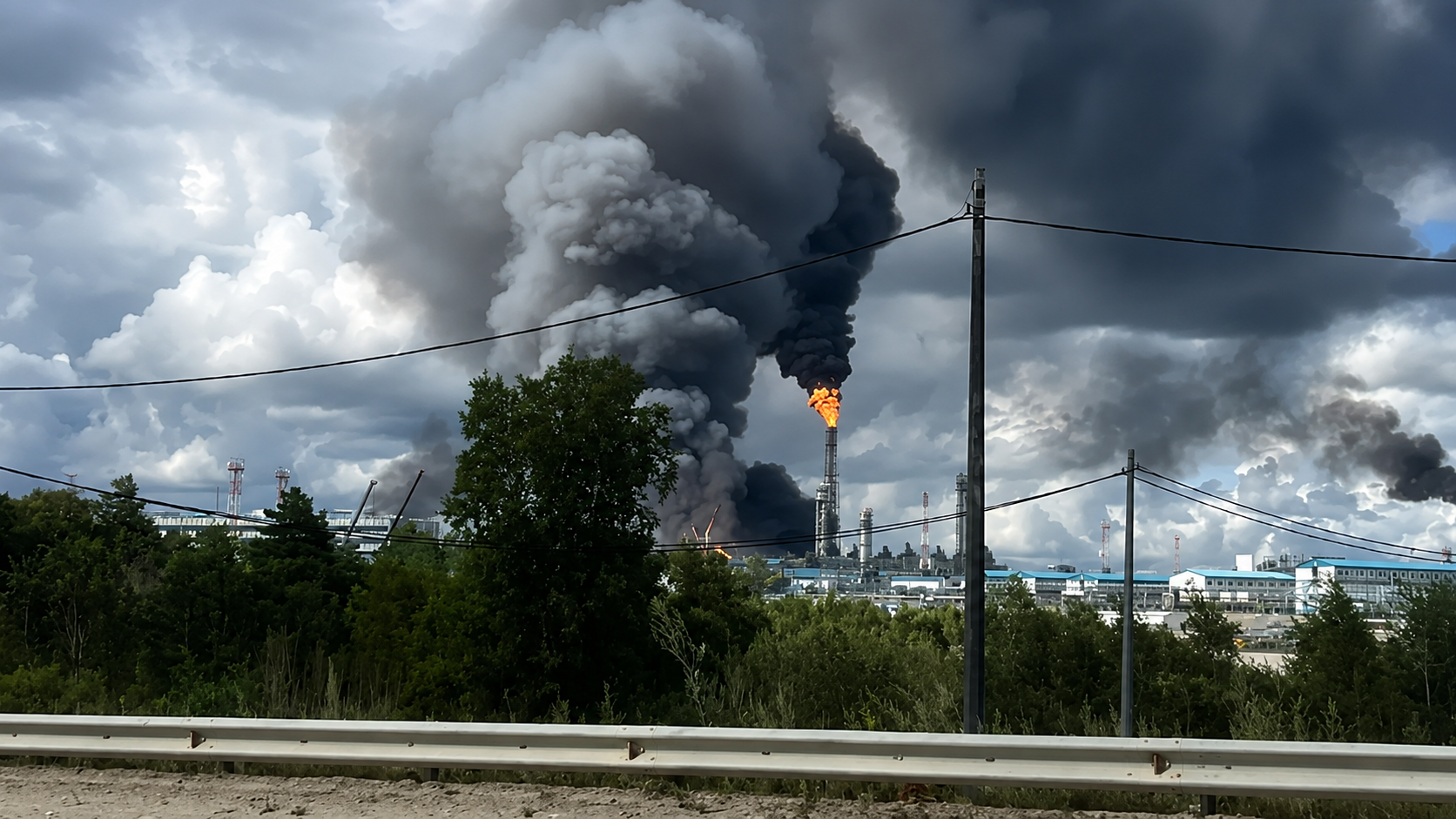
Fact Statement: The fire is still under investigation, and publicly available information has not yet confirmed the exact cause of the accident. Therefore, this article does not analyze the cause of the accident, nor does it attribute the accident to any specific valve, piping component, or equipment. Instead, it focuses on valve safety issues commonly involved in the commissioning of large-scale chemical facilities. On August 25, 2026, a serious fire occurred at the Amur Gas Chemical Complex (AGCC) in the Amur Region of Russia’s Far East. As of August 26, the accident had resulted in 7 deaths, 152 injuries, and 9 people missing. According to an official statement from AGCC, the fire occurred in the auxiliary process section of the plant’s pyrolysis unit, while the main project equipment was not damaged. This accident is deeply distressing and once again reminds us that, in natural gas chemical projects, the safety of auxiliary process sections, particularly the reliability of valves, is by no means an “auxiliary” issue. 1. What Is the Auxiliary Process Section of a Cracking Unit? An ethylene cracking unit is an extremely complex system with highly demanding process requirements. The cracking furnace is the heart of the unit, where natural gas or naphtha is cracked at temperatures above 800°C into basic chemical feedstocks such as ethylene and propylene. The Auxiliary Technological Section, although not located at the center of the high-temperature reaction like the cracking furnace, is responsible for providing stable utilities and various auxiliary media for the entire unit, ensuring the continuous and safe operation of the main unit. The auxiliary process section mainly includes the following seven subsystems: 1. Fuel Gas/Fuel Oil System: This includes fuel gas buffer vessels, knockout drums, fuel oil pumps, strainers, and burners, and is responsible for supplying stable and clean fuel to the cracking furnace. 2. Steam System: The core equipment is the Steam Drum, which generates and distributes the dilution steam, high-pressure steam, and other steam required by the unit. 3. Feedwater and Condensate System: This includes deaerators, boiler feedwater pumps, condensate recovery tanks, and other equipment responsible for supplying and treating qualified water for the steam system. 4. Compression and Refrigeration System: This includes multistage compressors, intercoolers, separators, and refrigeration compressors, which are used to compress and cool cracked gas and provide refrigeration for downstream separation. 5. Drying and Purification System: This mainly consists of molecular sieve dryers used to remove trace moisture from cracked gas and prevent freezing and blockage of downstream equipment at low temperatures. 6. Relief and Flare System: This includes flare knockout drums, flare tips, and other equipment used to safely burn and dispose of com...
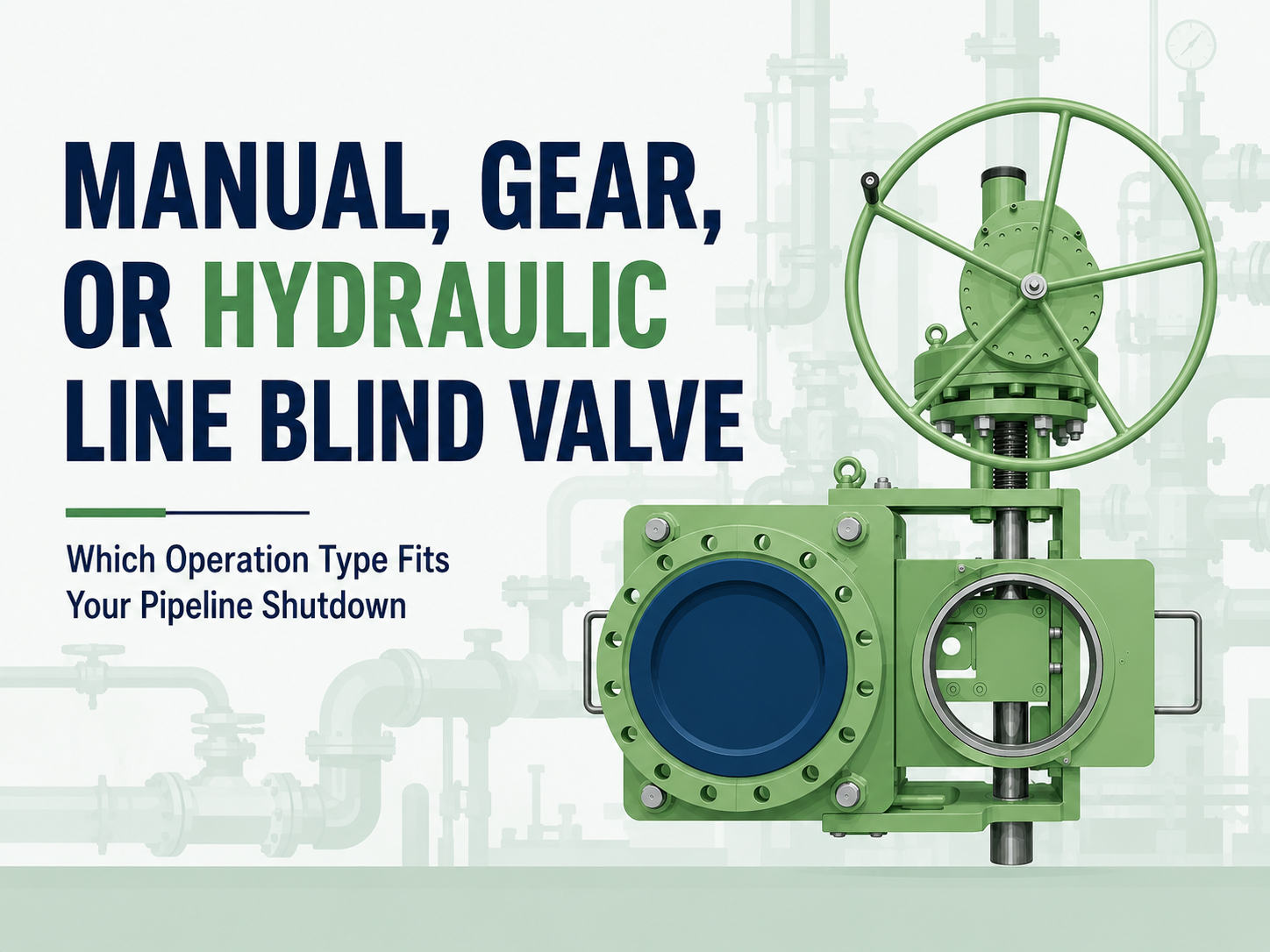
Operation Type Is a Shutdown Decision A line blind valve is chosen for positive isolation, but the operation type decides how practical that isolation will be during a shutdown. Manual, gear-operated, and hydraulic designs can all move the blind between open and closed positions, yet they do not create the same workload, speed, or safety margin. For shutdown planning, the right question is not only “Can the valve isolate the line?” It is “Can operators switch, verify, lock, and return the valve to service safely within the shutdown window?” Manual Operation: Simple, but Limited Manual operation is usually suitable for smaller line blind valves, lower pressure classes, infrequent switching, and sites where operators have clear access around the valve. It keeps the design simple and avoids dependence on hydraulic power units or control systems. The limitation is physical effort. As size, pressure class, seal load, and plate weight increase, manual operation becomes slower and more exposed to human error. If several operators, lifting tools, or extended handling time are needed, the valve may no longer be a good fit for a tight shutdown schedule. Manual operation is best treated as a low-complexity option for manageable sizes and low switching frequency. Gear Operation: Better Control for Medium-Duty Shutdowns A gear-operated blind valve gives operators more mechanical advantage and better control than direct manual operation. It is useful when the valve is too large or stiff for simple manual switching, but the site does not justify a hydraulic system. Gear operation often fits plant shutdowns where isolation is planned, access is available, and switching speed matters but is not the only priority. It can reduce operator strain and make the changeover more predictable. The buyer should still review gearbox location, handwheel access, operation turns, torque, locking method, and position indication. A gear operator that cannot be reached safely during shutdown is not a good solution, even if the valve design is correct. Hydraulic Operation: For Large, High-Pressure, or Time-Critical Lines Hydraulic operation is usually considered when the pipeline isolation valve is large, high-pressure, frequently switched, or located in a difficult operating area. It can reduce manual handling, shorten changeover time, and improve control during planned isolation. This makes hydraulic line blind valves attractive for refineries, gas systems, terminals, high-temperature service, and shutdowns where every hour of downtime has a cost. Hydraulic operation can also support safer distance between personnel and the moving mechanism, depending on the control arrangement. The tradeoff is system complexity. Hydraulic cylinders, hoses, power units, seals, and controls need inspection and maintenance. Buyers should ask how the valve is operated if hydraulic power is lost, how the pos...
Payment:
30% T/T When Order, 70% T/T Before ShipmentProduct Origin:
ChinaLead Time:
30~60 days Ex Works after order confirmationMaterial:
Carbon Steel Ball Valve ASTM A105Method of Operation:
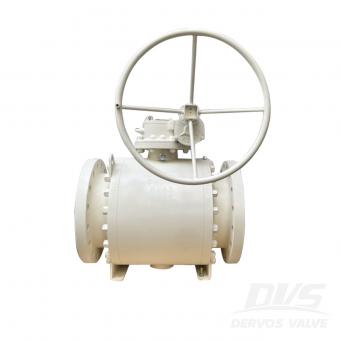
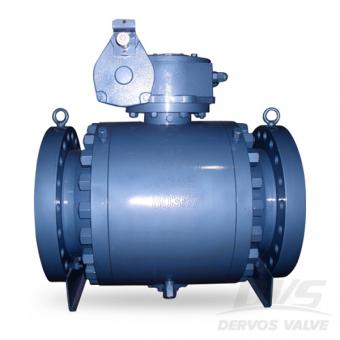
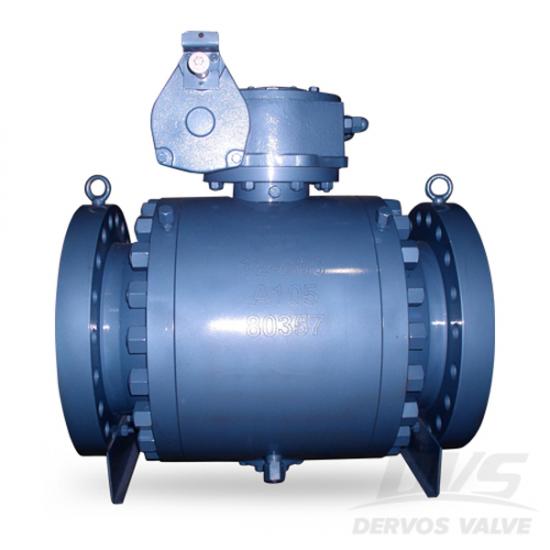
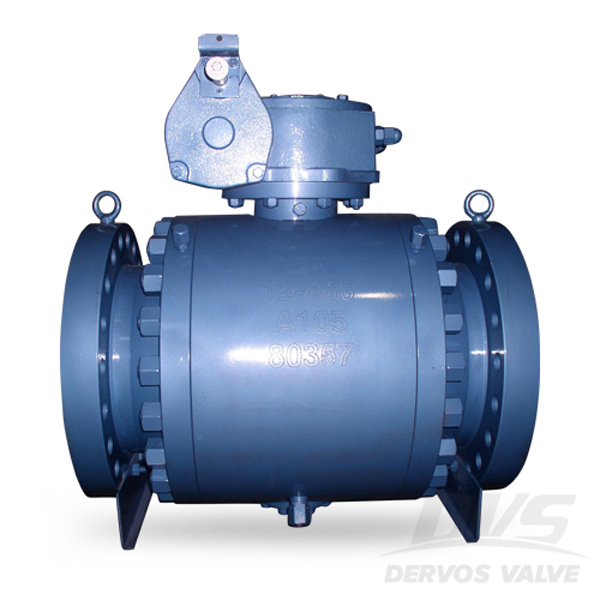
Gear Operated Ball ValveThe 12 inch 600LB trunnion mounted ball valve has gearbox, RTJ flange, fire safe design per API 607. The 3 piece ball valve is designed per API 6D.
Design Feature & Benefit
1.Small flow resistance means less pressure drop
2.Simple valve structure and light weight
3.Diversified sealing material available, from metal material TCC, satellite, stainless steel to soft material PTFE, Teflon, Nylon, Peek and etc
4.Good performance of both metallic sealing and soft sealing
5.Convenient and swift operation of the valve
6.Easy to maintain due to renewable seat ring
7.When fully opened or closed, the valve sealing face is isolated from medium corrosion.
8.Wide range of application in terms of size and pressure rating
Quick Detail
|
Type |
Ball Valve |
|
Size |
12" |
|
Pressure |
Class 600 |
|
Construction |
Trunnion Mounted Ball, Three-Piece Type, Side Entry |
|
Connection |
RF Flange |
|
Operation |
Gear Operated |
|
Body Material |
ASTM A105 |
|
Design & Manufacture |
API 6D |
|
Pressure & Temp |
ASME B16.34 |
|
Face to Face |
ASME B16.10 |
|
End Connection |
ASME B16.5 |
|
Test & Inspection Code |
API 598 |
|
Fire Safe |
API 607 |
|
Temperature Range |
-29℃~+200℃ |
|
Medium |
Water, Oil and Gas |
|
Origin |
China |
Material Specification
| No | Part Name | Carbon steel to ASTM | Stainless Steel to ASTM | ||||
| WCB | LCB | CF8 | CF8M | CF3 | CF3M | ||
| 1 | Underplate | WCB | LCB | CF8 | CF8M | CF3 | CF3M |
| 2 | Underplate Bolt | A193 B7 | A320 L7 | A193 B8 | |||
| 3 | Trunnion | A182 F6 | A182 F6 | A182 F304 | A182 F316 | A182 F304L | A182 F316L |
| 4 | Body | A216 WCB | A352 LCB | A351 CF8 | A351 CF8M | A351 CF3 | A351 CF3M |
| 5 | Bonnet Nut | A194 2H | A194 4 | A194 8 | |||
| 6 | Bonnet Bolt | A193 B7 | A320 L7 | A193 B8 | |||
| 7 | Cap | A216 WCB | A352 LCB | A351 CF8 | A351 CF8M | A351 CF3 | A351 CF3M |
| 8 | Gasket | SS Spiral Wound/graphite or SS Spiral Wound/PTFE | |||||
| 9 | Shaft Sleeve | SS/graphite | |||||
| 10 | Seat Ring | RPTFE or POM | |||||
| 11 | Ball | A105/Ep.Cr or F6 | A182 F6 | A351 CF8 | A351 CF8M | A351 CF3 | A351 CF3M |
| 12 | Seat | A105/Ep.Cr or F6 | A182 F6 | A182 F304 | A182 F316 | A182 F304L | A182 F316L |
| 13 | Spring | 17-17PH(inconel for NACE)Ni-cr Alloy | |||||
| 14 | O-Ring | Viton | |||||
| 15 | Stem | A182 F6 | A182 F6 | A182 F304 | A182 F316 | A182 F304L | A182 F316L |
| 16 | Sealing Cover | A182 F6 | A182 F6 | A182 F304 | A182 F316 | A182 F304L | A182 F316L |
| 17 | O-Ring | Viton | |||||
| 18 | Gear Actuator | ||||||
| The material is according to ASTM standard | |||||||
Related Knowledge
What is difference between floating and trunnion ball valve?
The ball part of floating ball valve is movable. Under the pressure of medium, the ball has a certain displacement and presses on the sealing surface of outlet end to ensure its tight sealing. The floating structure is suitable for ball valve with small size and low & medium pressure rating.
The ball part of trunnion mounted ball valve is fixed. Under the medium pressure, the floating seat will move towards the ball to ensure the sealing. The trunnion mounted ball valve is often with larger size and higher pressure.
If you are interested in our products and want to know more details,please leave a message here,we will reply you as soon as we can.
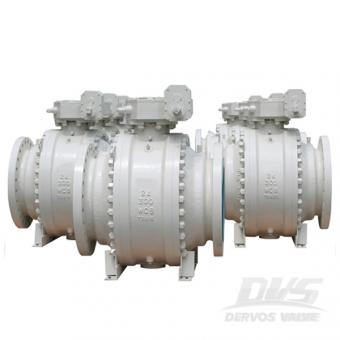
The Class 300 flanged ball valve has cast steel WCB body, stainless steel ball, stem, seat ring along with Devlon seat insert. We also supply more types of trunnion mounted ball valve, accept customized. Design Feature 1.Firesafe design as per API 607 2.With sealant injection for self lubricating 3.With antistatic design 4.With anti-blowout stem 5.With vent and drain port 6.Full bore design 7.Three-piece type and trunnion ball 8.Gear operated for easy operation Quick Detail Type Ball Valve Size 24" Pressure ANSI 300 Construction Trunnion Type Ball, 3-Piece Body, Side Entry, Full Bore Connection Flange Connection Operation Gearbox Operation Body Material ASTM A216 WCB Design Code API 6D Pressure & Temp Code ASME B16.34 Face to Face ASME B16.10 End Connection ASME B16.5 Test & Inspection Code API 598, API 6D Fire Safe API 607 Temperature Range -29℃~+200℃ Medium WOG Origin China Dimension CLASS 300 DN mm 50 65 80 100 150 200 250 300 350 400 450 500 600 700 NPS in 2 2.5 3 4 6 8 10 12 14 16 18 20 24 28 L (RF) mm 216 241 283 305 403 502 568 648 762 838 914 991 1143 1346 in 8.5 9.5 11.13 12 15.88 19.75 22.38 25.5 30 33 36 39 45 53 L1 (BW) mm 216 241 283 305 457 521 559 635 762 838 914 991 1143 1346 in 8.5 9.5 11.13 12 18 20.5 22 25 30 33 36 39 45 53 L2 (RTJ) mm 232 257 298 321 419 518 584 664 778 854 930 1010 1165 1372 in 9.13 10.13 11.75 12.63 16.5 20.38 23 26.13 30.63 33.63 36.63 39.75 45.89 54 H mm 153 165 195 213 272 342 495 580 625 720 790 840 1050 1150 in 6.02 6.5 7.68 8.39 10.7 13.5 19.5 22.85 24.6 28.35 31 33.1 41.34 45.3 Do(W) mm 400 400 600 850 1100 1500 *350 *350 *600 *600 *800 *800 *800 *800 in 15.74 15.74 23.62 33.46 43.3 59 13.8 13.8 23.6 23.6 31.5 31.5 31.5 31.5 RF(Kg) 18 27 47 80 118 200 365 530 740 1030 1320 1540 2600 3900 BW(Kg) 14 2 38 65 105 185 342 503 713 1000 1285 1498 2540 3825 *Worm Gear or Electric Actuator Operated Dervos Quality Checking System In Dervos, we control quality throughout the whole manufacturing process. Casting inspection: Though casting inspection, we can find out the problem of raw material, such as shoddy casting, unqualified wall thickness, chemical composition and so on, which ensure that you will not be cheated. Machining Inspection: On the one hand, we could ensure machining accuracy through this process. On the other hand, we can find out machining mistake as early as possible, to win more time for repairing and remaking Final Inspection: Final inspection activities include document and QC record review, visual examination, dimension check, pressure test, painting and packing check. You don’t need to come and inspect in person and all the documents could be provided as proof.
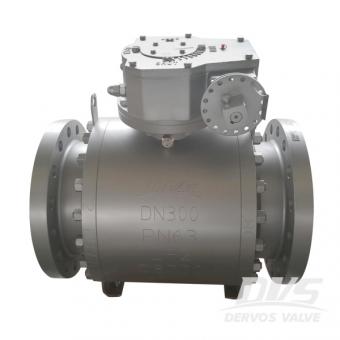
Trunnion mounted ball valve DN300 PN63 full bore Double Block and Bleed PMSS seal(metal seal+soft seal)blowout proof stem gearbox operation with LF2 body, LF2+ENP ball/seat and 410 stem. Quick Detail Type Ball Valve Size DN300 Design Pressure PN63 Construction DBB,Trunnion mounted ball valve ConnectionType Flange OperationType Gearbox Operated Body Material LF2 Ball Material LF2+ENP Stem Material 410 Seat Material LF2 +ENP Design Code API 6D Face to Face Dimension API 6D End Connection ASME B16.5 Pressure & Temp ASME B16.34 Medium Water, Oil and Gas Origin China
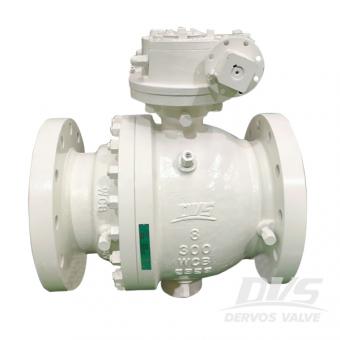
API 6D ball valve is designed with trunnion mounted ball and full bore structure. The flanged ball valve has 300LB design pressure and 8 inch nominal size with gearbox operation mode, conforming to NACE MR0175 requirement. Quick Detail Type Ball Valve Size 8” Pressure 300LB Construction Two-Piece Body, Full Bore, Trunnion Ball Connection RF Flange Operation Mode Gearbox Body Material A216 WCB Trim Material Ball/Stem F6a, Seat RPTFE Design & Manufacture API 6D Pressure & Temp Code ASME B16.34 End to End ASME B16.10 End Connection ASME B16.5 Inspection API 6D, API 598 Temperature Range -29℃~+200℃ Medium Oil, Water, Gas Dervos Packing Painting Test & Report Pressure Testing & Dimension Checking
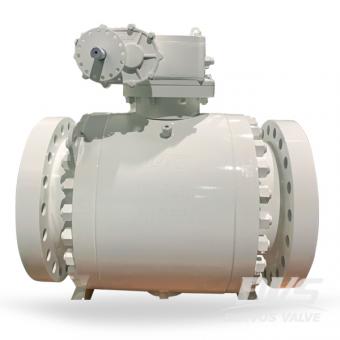
The API 6D ball valve is designed with trunnion mounted ball and full bore structure. The flanged ball valve has 600LB design pressure and 10 inch nominal size with gearbox operation mode, conforming to NACE MR0175 requirement.
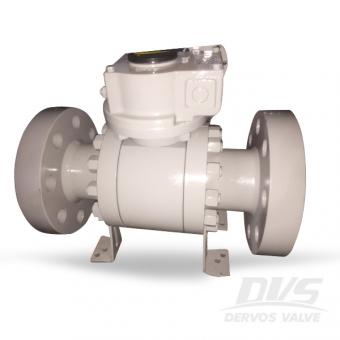
The 4 inch 150LB ball valve is a 3-piece one with reduced port, A105 body, F6A stem, ball and seat. The The valve is made as per API6D and is tested under API 598.
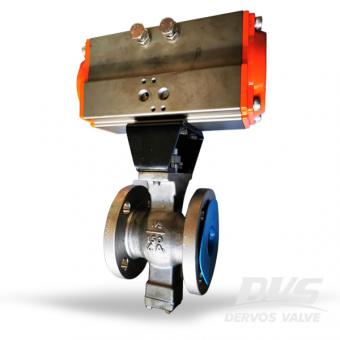
The 150LB ball valve, made of Duplex stainless steel 4A, has a special V port ball. The valve is particularly suitable for media containing fibers, tiny solid particles, slurry and so on.
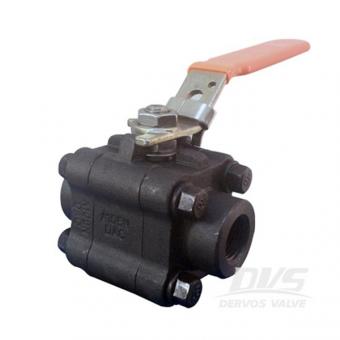
China Carbon Steel Ball Valve Provider Offers 3 Piece Position Type Ball Valve, ASTM A105N, Class 800, 1 Inch, Free Floating Ball, API 608, BS 5351.
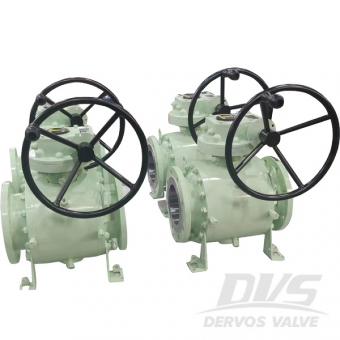
DN150 PN16 Ball Valve is made according to ISO 17292 standard. The fire resistance test meets the requirements of API 607 standard. The valve body is made of ASTM A105. Its operation mode is turbine operation. The trunnion mounted ball valve with a structural length of 400mm has the structural characteristics of full bore.
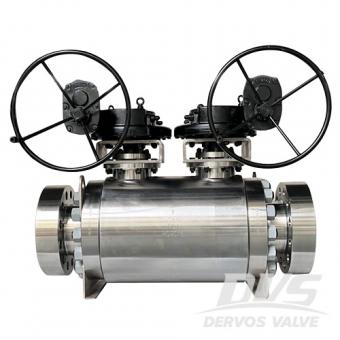
8" 2500LB ball valve is made according to API 6D standard. The valve body is made of F51. It has the structural characteristics of trunnion mounted ball, full bore. It also has the design of anti-fire, anti-static and anti-flying valve stem. In addition, it also meets NACE MR0175 requirements.
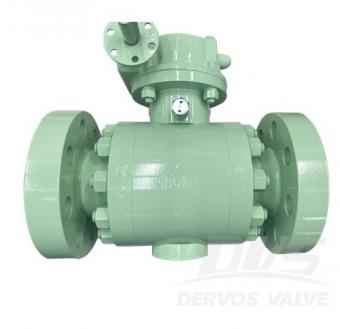
2" 1500LB ball valve is made according to API 6D standard. It also complies with the design standard of NACE MR0175. The valve body is made of ASTM-A105. It has the structural characteristics of full flow and trunnion mounted ball. It has RTJ connection mode and gearbox operation mode.
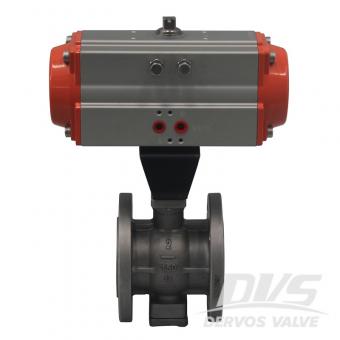
2" CL150 V-ball valve is made according to API 608 standard. The valve body is made of ASTM A995 4A. It has the structural characteristics of V type. It has RF connection mode, and its operation mode is polished rod torque.
Copyright © 2015-2026 DERVOS VALVE CO.,LTD.All Rights Reserved Blog / Sitemap / XML / Privacy Policy