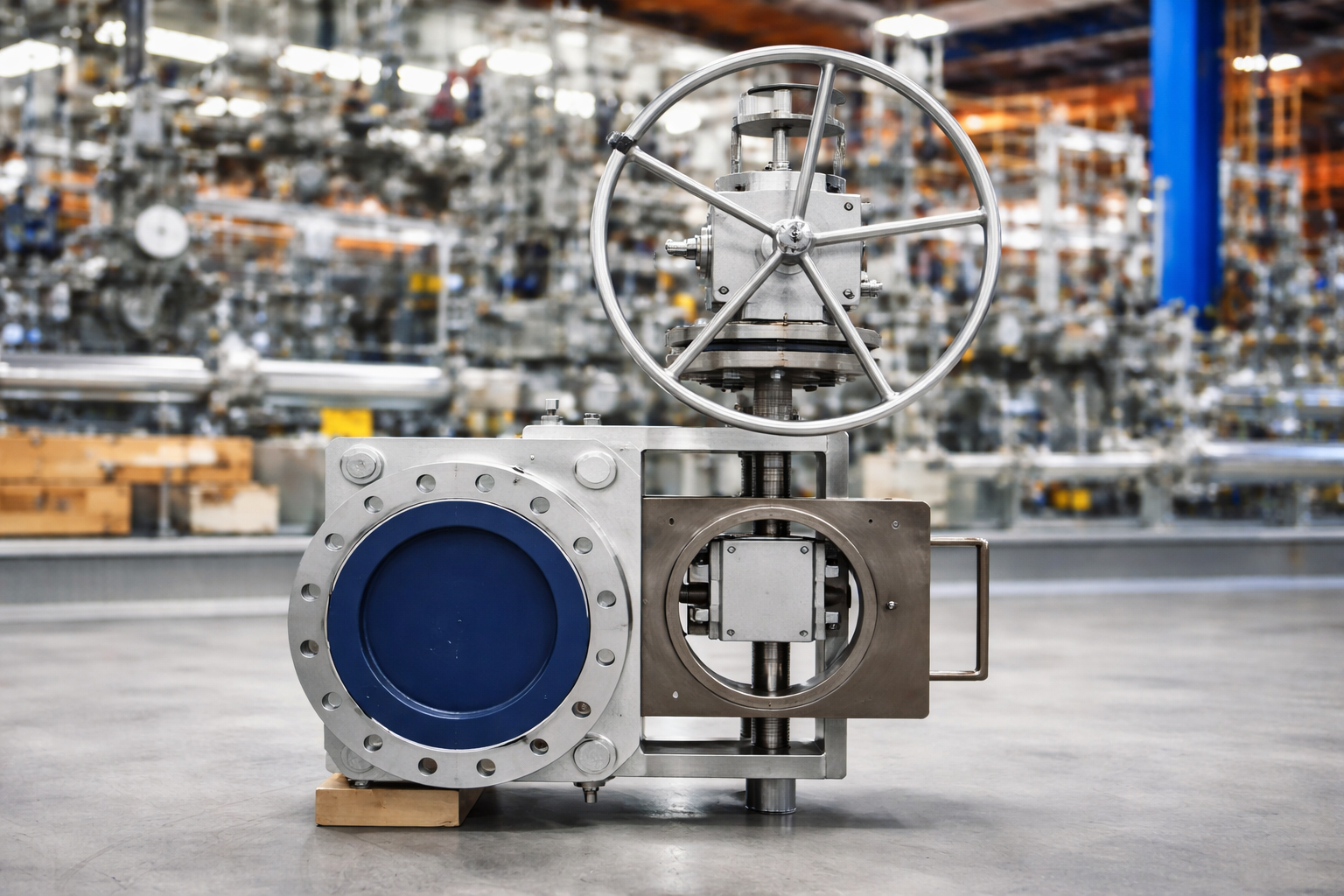
Gate valves and blind valves are both used for pipeline isolation, but they operate on fundamentally different principles.In industrial piping systems, if the objective is true physical isolation (positive isolation), then a blind valve (Blind Valve / Line Blind Valve) is generally more reliable than conventional valves. Instead of relying on seat sealing, it isolates the medium through a solid blind plate, which defines both its application scope and engineering value. The key features of a blind valve can be understood from an engineering perspective as follows: 1. Absolute Physical Isolation If zero leakage is required, then conventional valves (such as gate valves or ball valves) introduce risk, as their performance depends on sealing integrity. Blind valves follow a different logic: ▶ If a solid plate is inserted, then the flow is completely blocked▶ If the blind plate is correctly positioned, then sealing failure is no longer a concern This makes blind valves more suitable for: ● Oil & gas pipeline isolation ● Flammable media (petroleum, LNG, chemicals) ● High temperature steam systems Engineering conclusion:If the project requires verifiable isolation, then a blind valve should be prioritized over sealing-dependent industrial valves. 2. Inline Operation Capability Traditional spade and spacer blinds typically require flange disassembly, which increases operational complexity and introduces safety risks. Blind valves (such as sliding blind valves and swing blind valves) are designed with a different approach: ▶ If frequent switching between operation and maintenance is required, then manual intervention must be minimized▶ If shutdown is not permitted, then switching must be performed under pressurized pipeline conditions (subject to specific design) Therefore: ● Sliding Blind Valve: suitable for limited space and higher automation requirements ● Swing Blind Valve: simple structure, suitable for medium to low switching frequency ● Spectacle Blind Valve: suitable for low-frequency operation and cost-sensitive projects Engineering conclusion:If maintenance is frequent or shutdown is not feasible, then a blind valve with inline operation capability should be prioritized. 3. Mechanical Reliability The reliability of a blind valve does not depend on complex sealing systems, but on: ● Mechanical structural stability ● Material strength (such as A105, WCB, F22, LF2) ● Actuation method (manual, gear-operated, or hydraulic) ▶ If the service conditions involve high temperature, high pressure, or corrosive media, then sealing-based valves are more prone to failure▶ If...
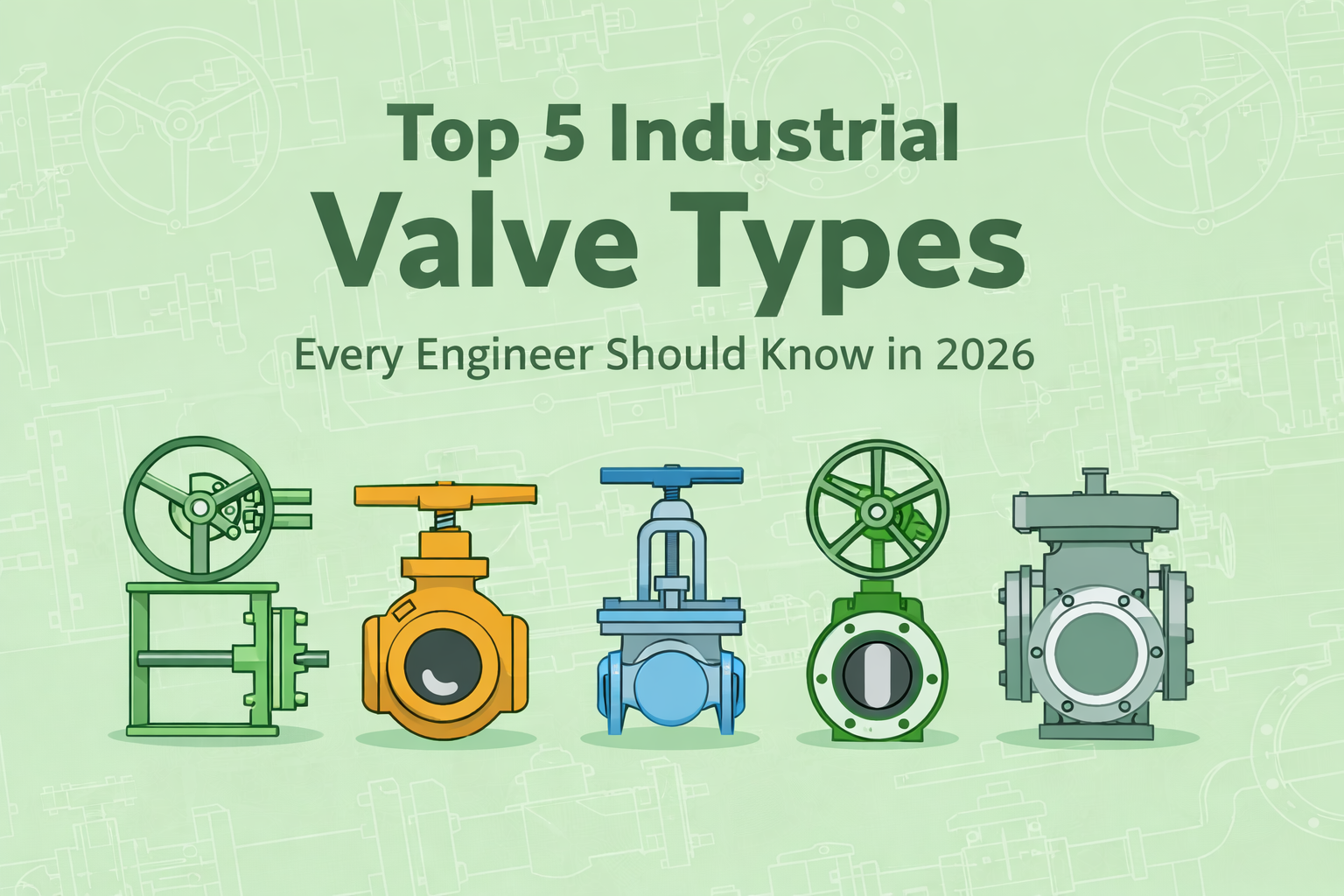
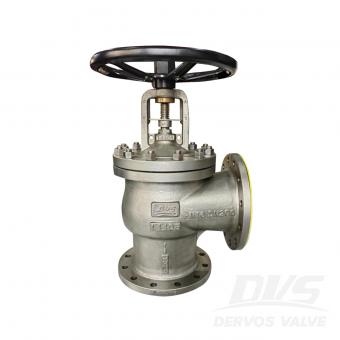
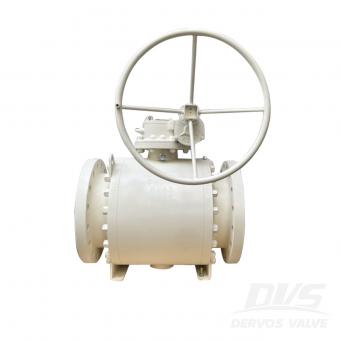
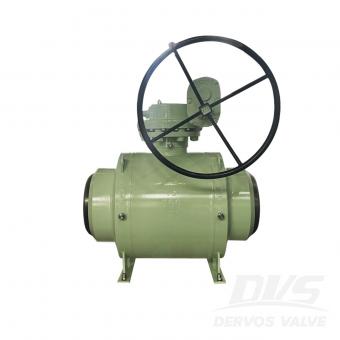
Choosing the right industrial valve type is one of the most critical decisions in system design. A poor selection—even when using high-quality valves—can lead to leakage, pressure loss, vibration, frequent maintenance, and long-term operational inefficiency. This guide covers the main industrial valve types, their applications, advantages, and limitations, along with practical insights to help you make the right valve selection for your project in 2026. What Are Industrial Valve Types? Industrial valve types refer to different valve designs used to control, regulate, or isolate fluid flow in piping systems. Each type is engineered for a specific function—such as shut-off, throttling, or backflow prevention—and selecting the correct type is essential for system safety and efficiency. 5 Main Industrial Valve Types and Their Applications 1. Ball Valve Best for: Quick shut-off and low pressure drop Ball valves use a rotating ball with a straight-through bore. When fully open, they provide minimal resistance, making them one of the most efficient options for fluid transmission. Common applications: ● Oil and gas pipelines ● High-pressure systems ● Frequent on/off operations Selection notes: ● Full-port designs minimize energy loss ● Metal-seated ball valves perform better in abrasive or high-cycle conditions Avoid if:Precise flow control is required. Throttling with a ball valve can damage sealing surfaces over time. 2. Gate Valve Best for: Isolation service with minimal flow resistance Gate valves operate by lifting a gate out of the flow path. They are widely used in large-diameter pipelines where full open or full close operation is required. Common applications: ● Long-distance transmission pipelines ● Water treatment systems ● High-temperature steam lines Selection notes: ● Near-zero pressure drop when fully open ● Wedge gate valves provide better sealing in high-temperature conditions Avoid if:Frequent operation or throttling is required. Gate valves are not designed for repeated cycling. 3. Globe Valve Best for: Precise flow regulation Globe valves force fluid through a controlled flow path, allowing accurate throttling and stable flow control. Common applications: ● Steam systems ● High-temperature processes ● Flow regulation applications Selection notes: ● Excellent throttling performance ● Stable operation under fluctuating flow conditions Avoid if:Pressure drop must be minimized. Globe valves inherently create higher flow resistance. 4. Check Valve Best for: Automatic backflow prevention Check valves operate automatically based on flow directi...
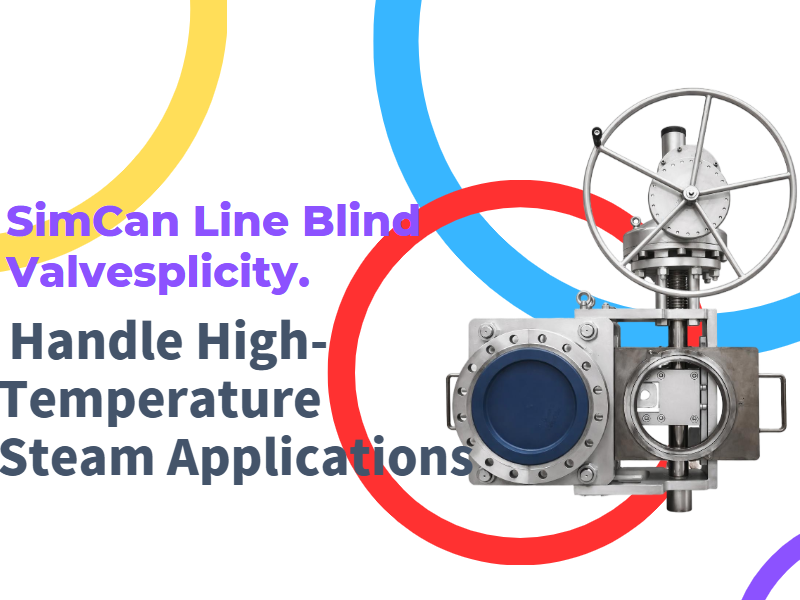
Recently, Dervos Valve helped a client in Hungary overcome a common challenge in industrial steam systems: how to safely isolate high-temperature pipelines without leakage or downtime. Operating with saturated steam at around 250°C and exposed to temperatures as low as -39°C, the client’s system demanded a solution that was both robust and reliable. Traditional valves often failed to maintain a tight seal under such conditions, and conventional isolation methods required depressurizing the line, increasing downtime and operational risk. To address these challenges, Dervos supplied a DN400 PN40 sliding line blind valve, engineered specifically for the project’s harsh conditions. The valve’s sliding blind mechanism allows operators to switch between flow and isolation positions without depressurizing the system, enhancing safety and efficiency during maintenance. Built with forged 20GML steel and a metal-to-metal stainless steel sealing structure, the valve delivers reliable performance under both high-temperature steam and extreme outdoor climates. Its full-bore design minimizes flow resistance, while the worm gear manual actuator ensures smooth and controlled operation even at large sizes and high pressure ratings. Safety features such as anti-misoperation devices and protective blind plate structures further reduce the risk of errors during handling. Since installation, the valve has enabled leak-free operation, safer maintenance procedures, and stable performance in extreme temperatures. Designed for a service life exceeding 30 years, it provides a long-term, low-maintenance solution, giving the client confidence in their steam system’s reliability and safety. This project highlights how a carefully engineered sliding line blind valve can solve critical isolation challenges in high-temperature steam applications, combining operational safety, durability, and efficiency in one solution.
Payment:
30% T/T When Order, 70% T/T Before ShipmentProduct Origin:
ChinaColor:
CustomizationShipping Port:
Shanghai ChinaLead Time:
30~55 days Ex Works After Order ConfirmationMaterial:
Stainless Steel Butterfly ValveMethod of Operation:
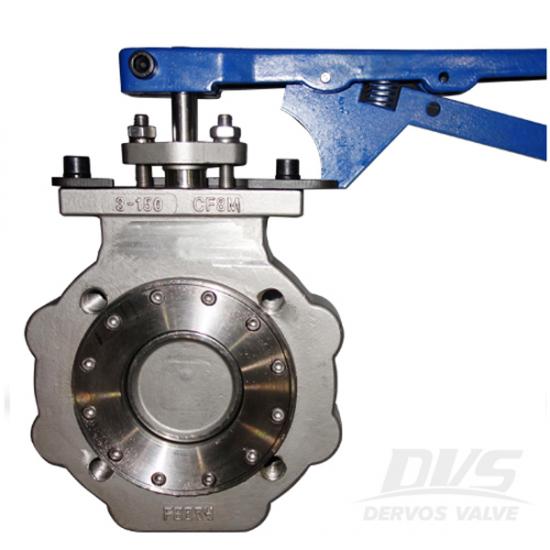
Lever Butterfly Valve, Manual Butterfly ValveThe double offset high performance butterfly valve, with lever operation and lug body, is designed per API 609. The CF8M body and PTFE seat butterfly valve is more durable in serving the application.
Quick Detail
|
Type |
Butterfly Valve |
|
Size |
3'' |
|
Design Pressure |
150LB |
|
Construction |
Double Eccnetric, Soft Seat |
|
Connection Type |
Lug |
|
Operation |
Wrench Operated |
|
Design Code |
API 609 |
|
Face to Face |
ASMEB16.10 |
|
End Connection |
ASMEB16.5 |
|
Test & Inspection |
API 598 |
|
Body Material |
Stainless Steel CF8M |
|
Temperature Range |
-29℃~+150℃ |
|
Application |
Water, Oil, Gas |
Dimension
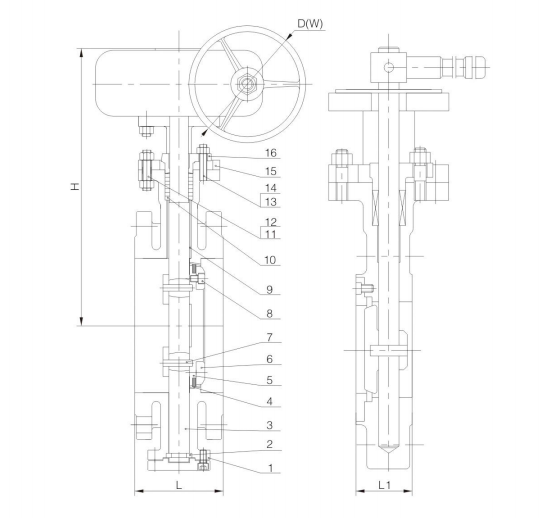
| Class 150 | |||||||||||||
| DN | mm | 40 | 50 | 65 | 80 | 100 | 125 | 150 | 200 | 250 | 300 | 350 | 400 |
| NPS | in | 1 1/2 | 2 | 2 1/2 | 3 | 4 | 5 | 6 | 8 | 10 | 12 | 14 | 16 |
| L | mm | 127 | 127 | 127 | 127 | 152 | 203.2 | 203.2 | 203.2 | 203.2 | |||
| in | 5 | 5 | 5 | 5 | 6 | 8 | 8 | 8 | 8 | ||||
| L1 | mm | 38.1 | 46 | 50.8 | 48 | 54 | 63.5 | 57 | 63.5 | 71.5 | 81 | 92 | 101.5 |
| in | 1.5 | 1.81 | 2 | 1.88 | 2.13 | 2.5 | 2.25 | 2.5 | 2.81 | 3.19 | 3.62 | 4 | |
| H | mm | 185 | 190 | 220 | 229 | 239 | 252 | 284 | 307 | 337 | 392 | 435 | 481 |
| in | 7328 | 7.48 | 8.7 | 9 | 9.4 | 9.9 | 11.2 | 12 | 13.3 | 15.4 | 17.1 | 19 | |
| D(W) | mm | 160 | 160 | 160 | 160 | 160 | 160 | 160 | 200 | 200 | 250 | 250 | 300 |
| in | 6.3 | 6.3 | 6.3 | 6.3 | 6.3 | 6.3 | 6.3 | 7.9 | 7.9 | 9.8 | 9.8 | 11.8 | |
| Weight (Kg) | mm | 12.5 | 13.5 | 17 | 38 | 72 | 105 | 148 | 182 | 230 | |||
| in | 8 | 9 | 10 | 10 | 11 | 14.5 | 34.2 | 66 | 98 | 134 | 168 | 200 | |
Related Knowledge
What is a high performance butterfly valve?
A high performance butterfly valve is often designed with double offset and PTFE seat, to handle everything from general applications to viscous and corrosive liquids; corrosive gases and steam.
Compared to concentric resilient seat butterfly valve, the disc of the high performance butterfly valve is arranged and positioned off the center of the pipe bore, which could reduce wear and tear to the valve during operation and increase sealing performance.
In conlusion, high performance butterfly valve is applicable for higher pressure and temperature applications. Meanwhile, it has longer cycle life and better sealing ability.
If you are interested in our products and want to know more details,please leave a message here,we will reply you as soon as we can.
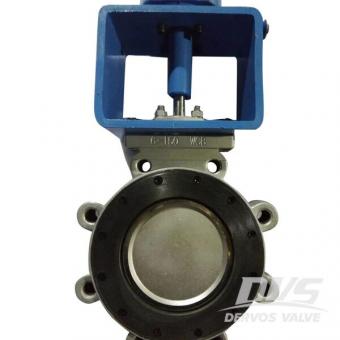
The high performance butterfly valve is designed with double eccentric or double offset structure. The valve has cast steel WCB body, stainless steel disc and stem along with RPTFE soft seat. Quick Detail Type Butterfly Valve Nominal Size 6 Inch Nominal Pressure Class 150 Structure Double Offset, Double Eccentric, Soft Seat Connection Type Lug Type Operation Gear Operated Design Code API 609 Face to Face ASME B16.10 End Connection ASME 16.5 Test & Inspection API 598 Body Material Cast Steel WCB Trim Material CF8M Disc, 17-4PH Stem, RPTFE Seat Application Water, Oil, Gas Dervos Inspection Report
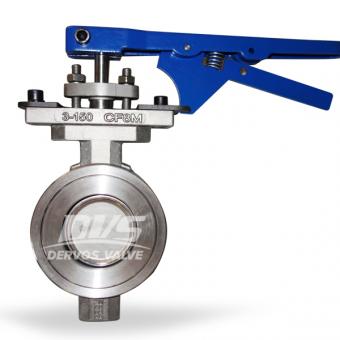
The 3 inch 150LB butterfly valve has a double-offset disc design that allows the disc to move off the seat reducing running torque and seat wear. The Wafer type valve can be driven by a gearbox and handwheel or by electric, pneumatic or hydraulic actuator.
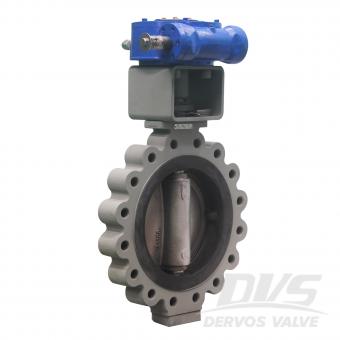
12" 300LB butterfly valve is made according to API 609 standard. The valve body is made of WCB. It has the structural characteristics of high performance and double eccentric. Its operation is turbine operation and packing is graphite.
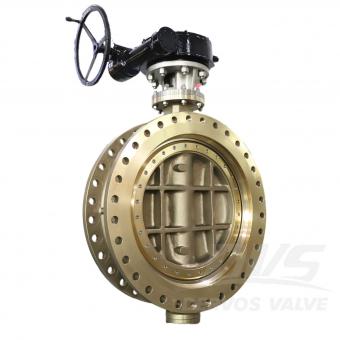
DN900 150LB Triple Offset Metal Seated Butterfly Valve is made according to API609 standard. The valve body is made of C95500. It has the structural characteristics of Triple offset, bidirectional equal pressure zero leakage. Its connection mode is FF double flange. And it has Turbine operation mode.
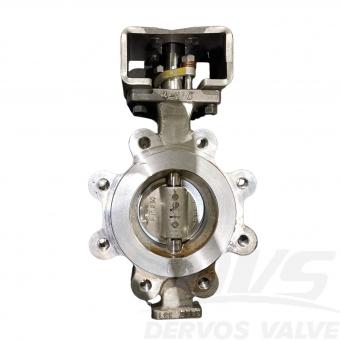
4” 150LB Butterfly Valve is made according to API609 standard. Its connection mode is RF. Product Parameters Type Lug Butterfly Valve Size 4” Pressure 150LB Connection RF Body Material ASTM A352 LCC Design Norm API 609 Face to Face API 609 Flange dimension ASME B16.5 Test & Inspection Code API 598 Temperature -40~ 120°C Applicable Medium Water,Steam,Oil etc Features 1.Lug-style design allows easy installation between flanges and supports downstream piping during maintenance. 2.Constructed from LCC carbon steel, rated 150LB with RF flange, and compliant with API 609 for reliable sealing and durability. Technical Drawing Dimension Checking Pressure Testing Spectrum Inspection Report
Copyright © 2015-2026 DERVOS VALVE CO.,LTD.All Rights Reserved Blog / Sitemap / XML / Privacy Policy