This year’s Dervos annual conference was noticeably more grand and well-organized than in previous years. In the morning session, each department delivered its annual work summary, reviewing key projects and achievements over the past year. Teams also openly shared the challenges encountered during implementation and the practical experience gained along the way. Through this cross-department exchange, everyone developed a clearer understanding of one another’s responsibilities and workflows, laying a stronger foundation for future collaboration and communication. In the afternoon session, the Outstanding Employee awards were presented. Each nominee shared their work achievements and practical experience, demonstrating a strong sense of responsibility and execution across different roles. It is precisely this proactive mindset, collaborative spirit, and down-to-earth working approach of Dervos employees that drives the team steadily toward its shared goals. Showing up on time every single day throughout the year — that’s quite an achievement. Ian has now received the Perfect Attendance Award for two consecutive years. During the annual conference, Dervos also presented medals and exclusive commemorative gifts to employees who have completed five years of service. Dervos values the long-term dedication and consistent commitment of its team members, and sincerely appreciates the trust and contributions they have made over the years. For many at Dervos, the company is not only a platform for professional growth, but also a stage where shared goals and collective efforts come to life. In the evening, the annual conference transitioned into the banquet segment. Performances and interactive games were seamlessly interspersed, creating a relaxed yet organized atmosphere. Laughter and cheers echoed throughout the venue, and in the moment the camera shutter clicked, the excitement and joy were captured in a single frame. Eric said: "Let’s dream together, DERVOS's dream. A dream where we all play a part, piece by piece, it becomes a reality." For Dervos, the annual meeting is not just about "summarizing the year," but about bringing our hearts together, strengthening our resolve in doing the same thing, and then continuing to move forward, step by step, with steady progress.
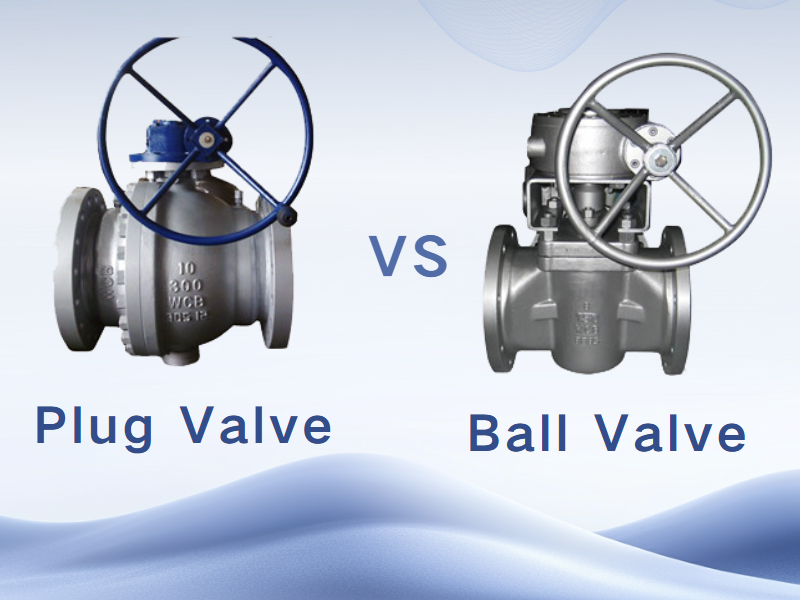
Ball valves and plug valves differ significantly in several aspects, including structure, operating principle, mode of operation, flow control capability, sealing performance, and application scenarios. These differences enable the two types of valves to perform distinct roles in their respective fields. Structural Differences The ball valve, a design evolved from the plug valve, utilizes a spherical element as its core component. By rotating the ball 90° around the stem axis, the valve can be opened or closed. Its structure is straightforward, consisting primarily of a spherical closure element with a through-bore housed within the valve body. In contrast, the structure of a plug valve is more complex. It comprises multiple components such as the valve body, bonnet, plug, seat, and stem. The closure element is a cylindrical or tapered plug that controls flow by rotating 90°, aligning or misaligning the port in the plug with the flow passage in the valve body to achieve opening or shutoff. Operating Principle The operating principle of a ball valve relies on the rotation of the ball to control the on-off flow of fluid. When the ball is in tight contact with the valve seat, the clearance between them is completely sealed, thereby preventing fluid leakage. When the ball rotates to a position disengaged from the seat, the fluid is allowed to flow freely through the passage inside the valve body. The operating principle of a plug valve differs in that it primarily controls the flow passage by rotating the plug element to open or close the valve. In a plug valve, the plug is connected to the stem and rotates together with it to achieve flow control. The closure element is a tapered plug with a port, and the flow passage is designed to be perpendicular to the axis of the plug. This configuration enables the plug valve to operate more efficiently and reliably during opening and closing. The operation of a ball valve is notably simple, requiring only a 90-degree rotation to achieve opening or closing. This design allows the flow passage to be opened or shut off quickly and smoothly when the ball is rotated by 90 degrees, providing both convenience and efficiency. In addition, ball valves offer relatively low flow resistance in the fully open or fully closed position, making them particularly suitable for applications that require rapid on-off operation. By contrast, the operation of a plug valve is comparatively more complex, as several turns are typically required to complete the opening or closing action. The valve plug is designed in a cylindrical or tapered form and regulates fluid flow through rotation. Nevertheless, plug valves demonstrate excellent performance in flow regulation, enabling precise adjustment of the flow passage diameter and accurate control of flow rate. However, due to the relatively complicated operating process, plug valves are not well suited for frequent operation...
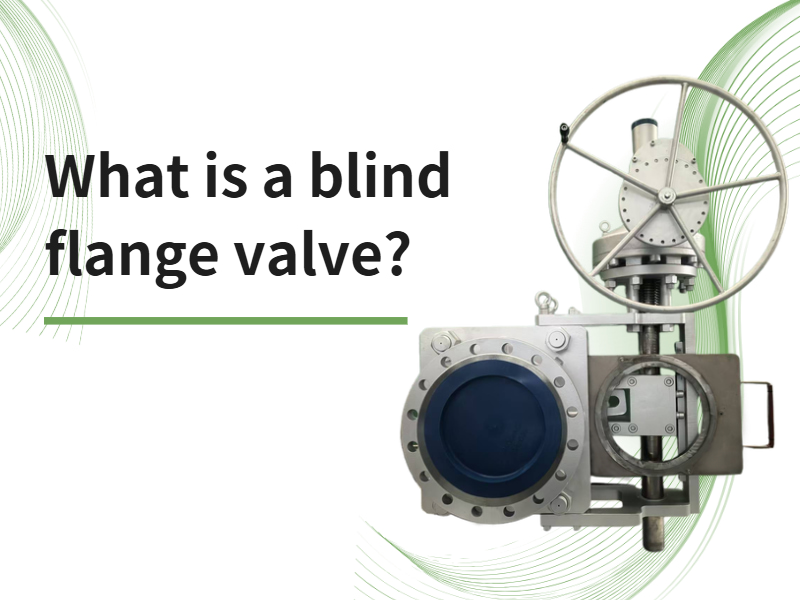
In industrial valve systems, a high-quality blind plate valve ensures safe and efficient operation of equipment. It is suitable for gas pipelines in metallurgy, chemical processing, petroleum, and municipal systems, serving as an effective device for positive gas isolation. Working Principle and Features The blind plate valve consists of left, center, and right valve bodies, a valve plate, shafts, a compensator, and two drive units (for clamping and travel respectively). The clamping mechanism uses a drive assembly to actuate a linkage system, enabling three lead screws to operate synchronously and press the valve bodies against the valve plate to achieve sealing. This design provides good synchronization and uniform sealing force distribution. Positioning rollers are installed along the outer lower edge of the valve plate to enhance sealing reliability and ensure overall stability and sealing accuracy during operation, thereby extending the service life of the valve. Valve Operating Sequence The clamping drive unit actuates the crank and linkage mechanism, causing the lead screws to rotate synchronously and retract the center body from the sealing surfaces (release condition). Guide wheels installed on the center body move laterally and simultaneously drive the valve plate. When the valve bodies are fully opened, the valve plate is positioned between the sealing faces of the left and right bodies, and the sealing surfaces are completely disengaged. The plate drive unit is then activated. Through a lever arm mechanism, the valve plate rotates, bringing the blind plate into the pipeline position. The clamping drive unit is started again to fully clamp the valve plate, completing valve closure. Valve Opening The clamping drive unit first fully releases the valve bodies. The turning drive unit then rotates the valve plate so that the through-port aligns with the pipeline. Finally, the clamping electric actuator presses the valve plate to complete the opening operation.
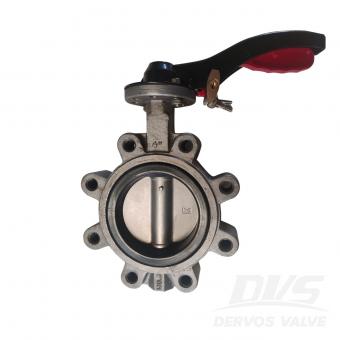
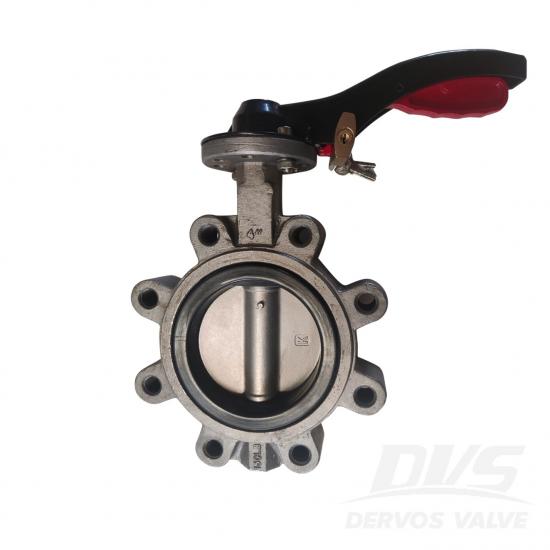
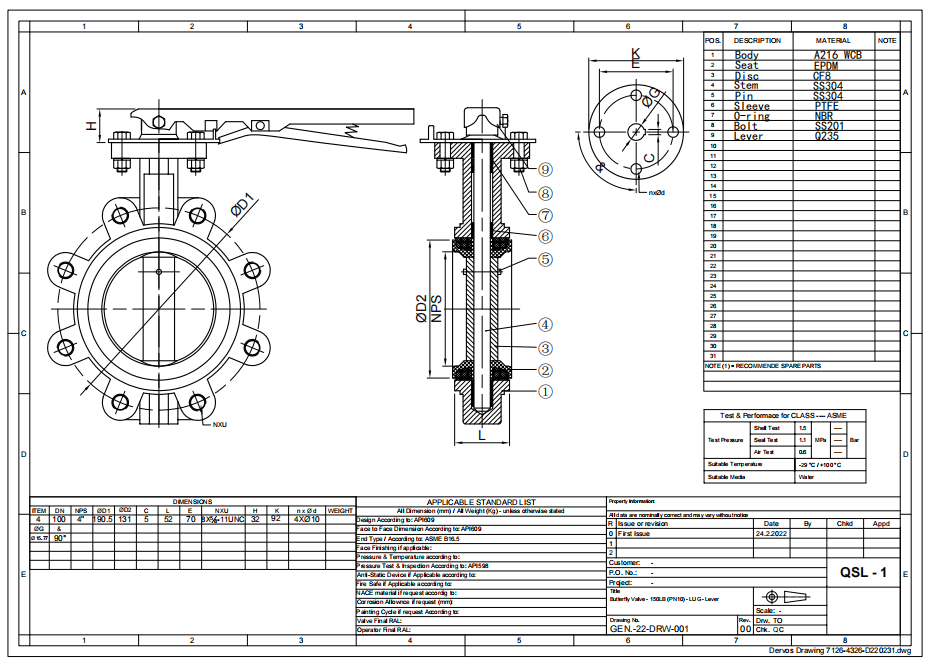
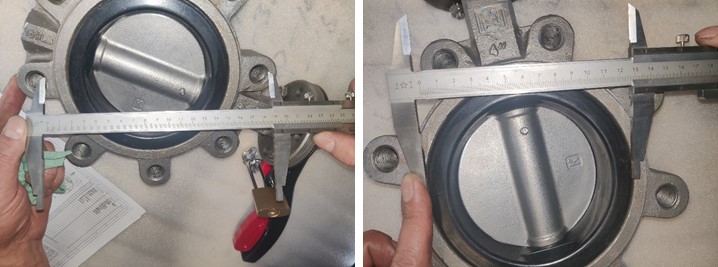
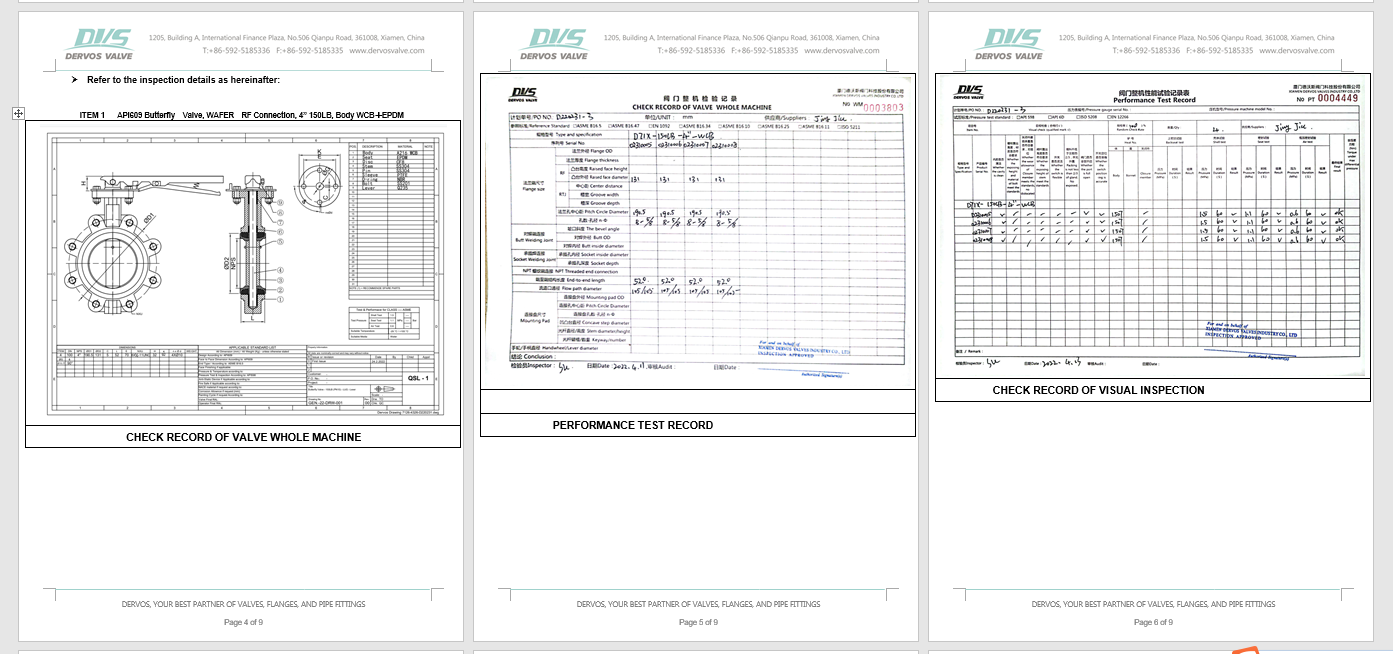
4" 150LB butterfly valve is made according to API 609 standard. The valve body is made of A216 WCB. It has the structural characteristics of center line. Its connection mode is lug (UNC threaded hole, RF 125-250AARH). And it has lever (locking device) operation mode.
Payment:
30% when order confirmed, 70% before shipmentProduct Origin:
ChinaColor:
CustomizationShipping Port:
Shanghai, ChinaLead Time:
30~60 days Ex Works after order confirmationMaterial:
A216 WCBMethod of Operation:
Lever (locking device)Product Description
|
Type |
Butterfly Valve |
|
Size |
4" |
|
Pressure |
150LB |
|
Connection |
Lug (UNC threaded hole, RF 125-250AARH) |
|
Operation |
Lever (locking device) |
|
Body Material |
A216 WCB |
|
Design Norm |
API 609 |
|
Face to Face Dimension |
API 609 |
|
End Type |
ASME B16.5 |
|
Test & Inspection Code |
API 598 |
|
Temperature |
-29 ~ 100°C |
|
Applicable Medium |
Water, Oil and Gas |
Features
1. Simple structure and convenient manufacturing;
2. Small size, light weight, low material consumption, and small installation size.
Technical Drawing
Dimension Checking
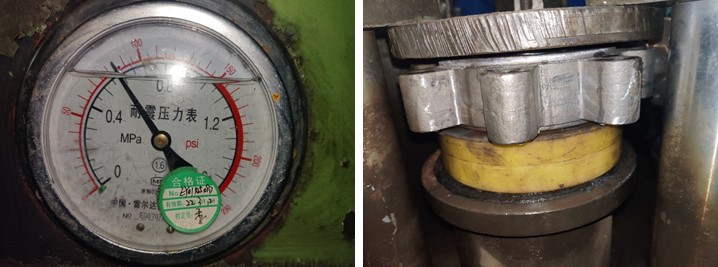
Pressure Testing
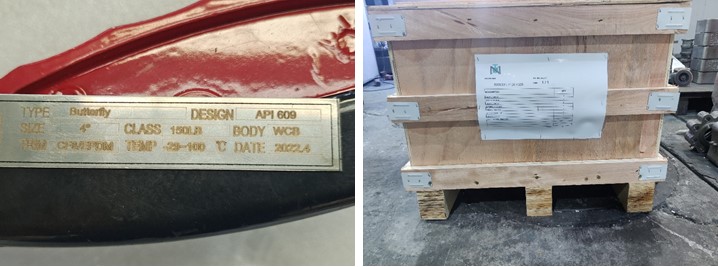
Nameplate & Packing
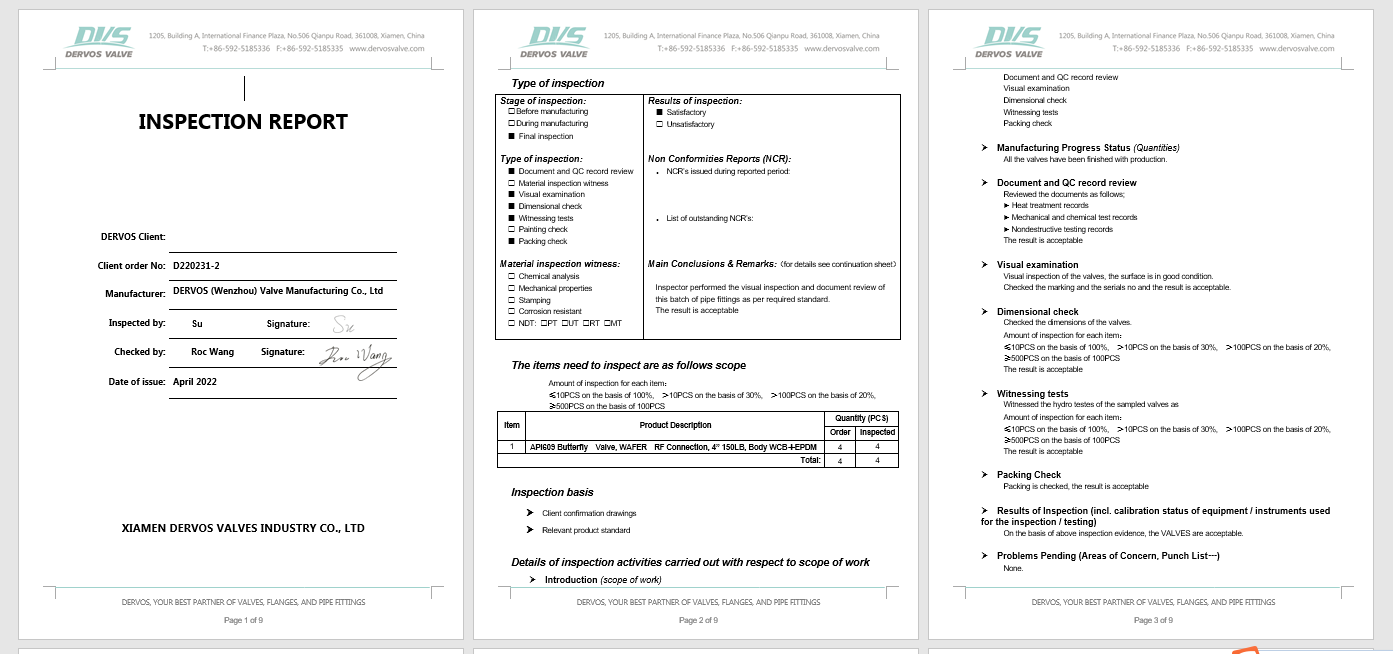
Inspection report
If you are interested in our products and want to know more details,please leave a message here,we will reply you as soon as we can.
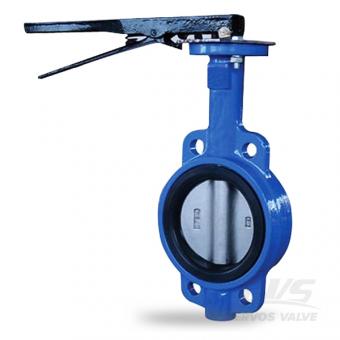
The concentric lever operated butterfly valve is made of cast iron GG25, SS420 stem, and EPDM seat. The DN200 wafer butterfly valve is applicable for water. Quick Detail Type Butterfly Valve Nominal Size DN200 Nominal Pressure PN10 Structure Concentric Type, EPDM Soft Seated Connection Type Wafer Type Operation Lever Operated Design Code EN 593 Face to Face EN 558 End Connection EN 1092 Test & Inspection EN 12266 Body Material Cast Iron GG25 Temperature Range -15℃~+150℃ Application Water, Oil, Gas Available Modifications for Butterfly Valves -Valve Nominal Pressure -Valve Nominal Size -Concentric Type and Eccentric Type -Soft Seat, Multi-Layer Metal Seat, Fully Metal Seat -Body & Trim Material -End Connection (Double Flanged,Wafer, Lug) -Available Operation (Bare Stem, Electric Actuator, Pneumatic Actuator, Lever or Wrench) -Customised Coating -Customised Packaging Product Application Oil & Gas Industry Dervos valves are fully involved in refining, oil and gas industries to handle very tough working environments. Petrochemical Industry We could also provide all kinds of valves in various materials, like stainless steel, Monel, titanium, and hastelloy to meet requirements of chemical industry. Power Station Industry Dervos could provide valves suitable for power station use with high pressure and temperature requirements.
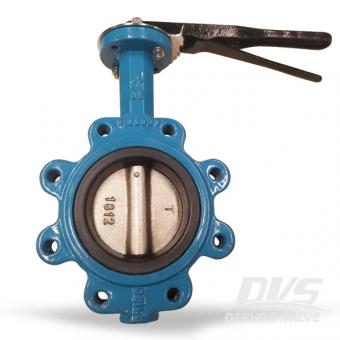
Thisconcentricbutterfly valve is a lug type valve with threaded holes and can be used for many applications. The valve can be used as a stopper, a tap for discharging at the end of the pipeline, open/close and flow control.
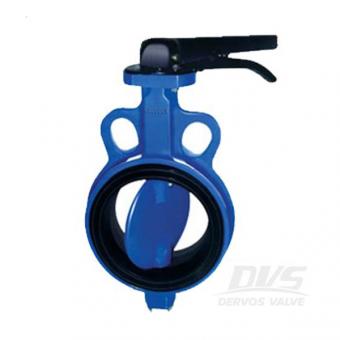
China Wafer Type Butterfly Valve Provider DVS Supplies Cast Steel Wafer Butterfly Valve, 2 Inch, Class 300, Lever Operation, for Air, Water, Steam and Gases.
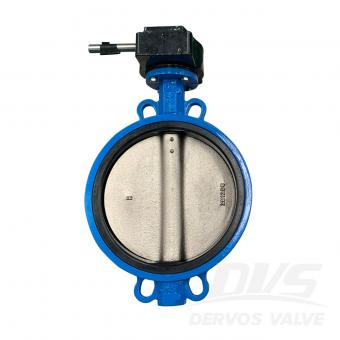
DN300 PN10 butterfly valve is made according to API 609 standard. The valve body is made of GGG40. It has the structural characteristics of centerline and structural length of 78mm. Its connection mode is FF. And it has turbine operation mode.
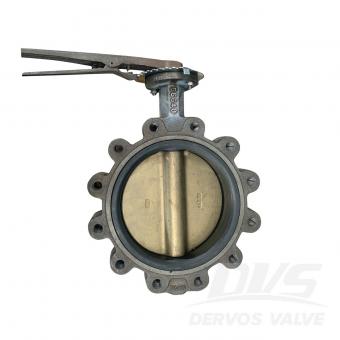
10" 150LB butterfly valve is made according to API 609 standard. The valve body is made of GGG40. It has the structural characteristics of medium line type and lug type (threaded hole). Its connection mode is lug. And it has lever operation mode.
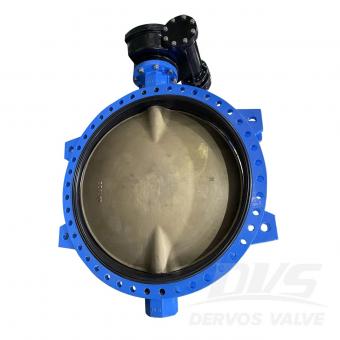
DN1350 4 Bar butterfly valve is made according to API 609 standard. The valve body is made of GGG40. It has the structural characteristics of midline type. Its connection mode is flange connection according to AWWA C207 Class D. And it has gearbox operation mode.
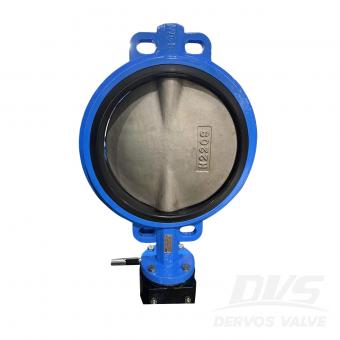
14" 150LB butterfly valve is made according to API609 standard. The valve body is made of WCB+EPOXY COATING. It has the structural characteristics of center line. Its connection mode is wafer. And it has gear operation mode.
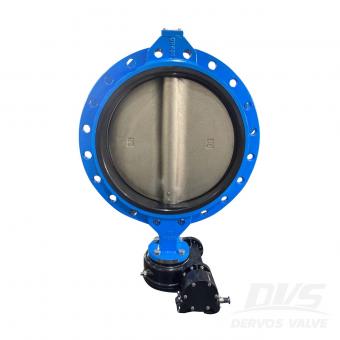
DN600 PN16 concentric butterfly valve is made according to EN593 standard. The valve body is made of GGG40. It has the structural characteristics of center line. Its connection mode is wafer. And it has gear operation mode.
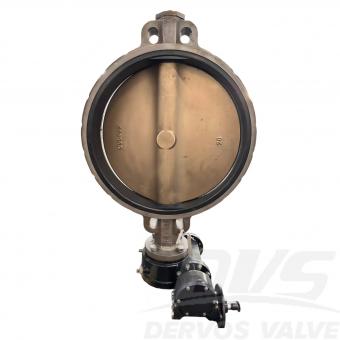
20" 150LB Wafer Butterfly Valve is made according to API609 standard. The valve body is made of A216 WCB. Its connection mode is FF. And it has Electric Actuator operation mode. Product Parameters Type Wafer Butterfly Valve Size 20” Pressure 150LB Connection FF Operation Electric Actuator Body Material A216 WCB Design Norm API609 Face To Face API609 End flange EN1092/ASME B16.5 Test & Inspection Code API 598 Temperature -10 ~ 110°C Applicable Medium Water, Oil and Gas Features 1.A216 WCB carbon steel body provides durability and reliable performance for large-diameter Class 150 pipelines. 2.Wafer-type butterfly design with FF flanges enables compact installation and smooth flow regulation. Technical Drawing Dimension Checking Painting Nameplate & Packing
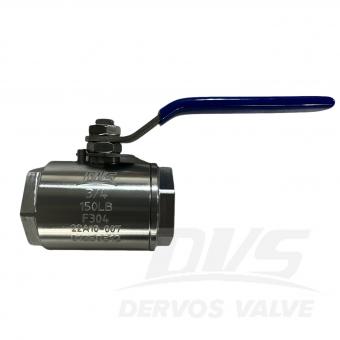
3/4” 150LB Forged Steel Floating Ball Valve is made according to API608 standard. The valve body is made of A182 F304. It has the structural characteristics of Full Bore, Floating Ball, Fire-safe and Anti-static, Blow-out Proof Stem. Its connection mode is NPT. And it has hand wheel operation mode. Product Parameters Type Forged Steel Floating Ball Valve Size 3/4” Pressure 150LB Connection NPT Operation H.W. Body Material A182 F304 Design Norm API 608 Face to Face MFG Screwed End ASME B1.20.1 Test & Inspection Code API 598 Temperature -29 ~ 120°C Applicable Medium Water, Oil and Gas Features 1.High-temperature F304 stainless steel body ensures superior corrosion resistance and durable performance. 2.API 608 certified design guarantees reliable shut-off and long-term service in demanding industrial application. Technical Drawing Dimension Checking Pressure Testing Nameplate & Packing Inspection Report
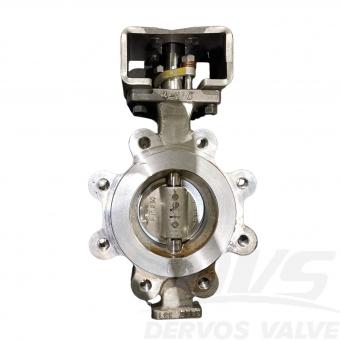
4” 150LB Butterfly Valve is made according to API609 standard. Its connection mode is RF. Product Parameters Type Lug Butterfly Valve Size 4” Pressure 150LB Connection RF Body Material ASTM A352 LCC Design Norm API 609 Face to Face API 609 Flange dimension ASME B16.5 Test & Inspection Code API 598 Temperature -40~ 120°C Applicable Medium Water,Steam,Oil etc Features 1.Lug-style design allows easy installation between flanges and supports downstream piping during maintenance. 2.Constructed from LCC carbon steel, rated 150LB with RF flange, and compliant with API 609 for reliable sealing and durability. Technical Drawing Dimension Checking Pressure Testing Spectrum Inspection Report
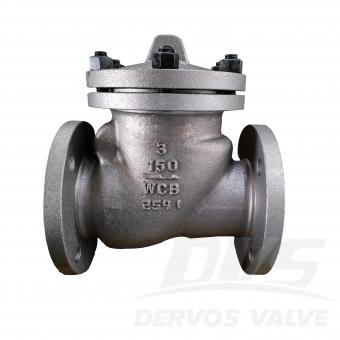
3" 150LB Swing Check Valve is made according to API 6D standard. The valve body is made of A216 WCB. It has the structural characteristics of Bolted Bonnet, Swing Type. Its connection mode is RF.
Copyright © 2015-2026 DERVOS VALVE CO.,LTD.All Rights Reserved Blog / Sitemap / XML / Privacy Policy