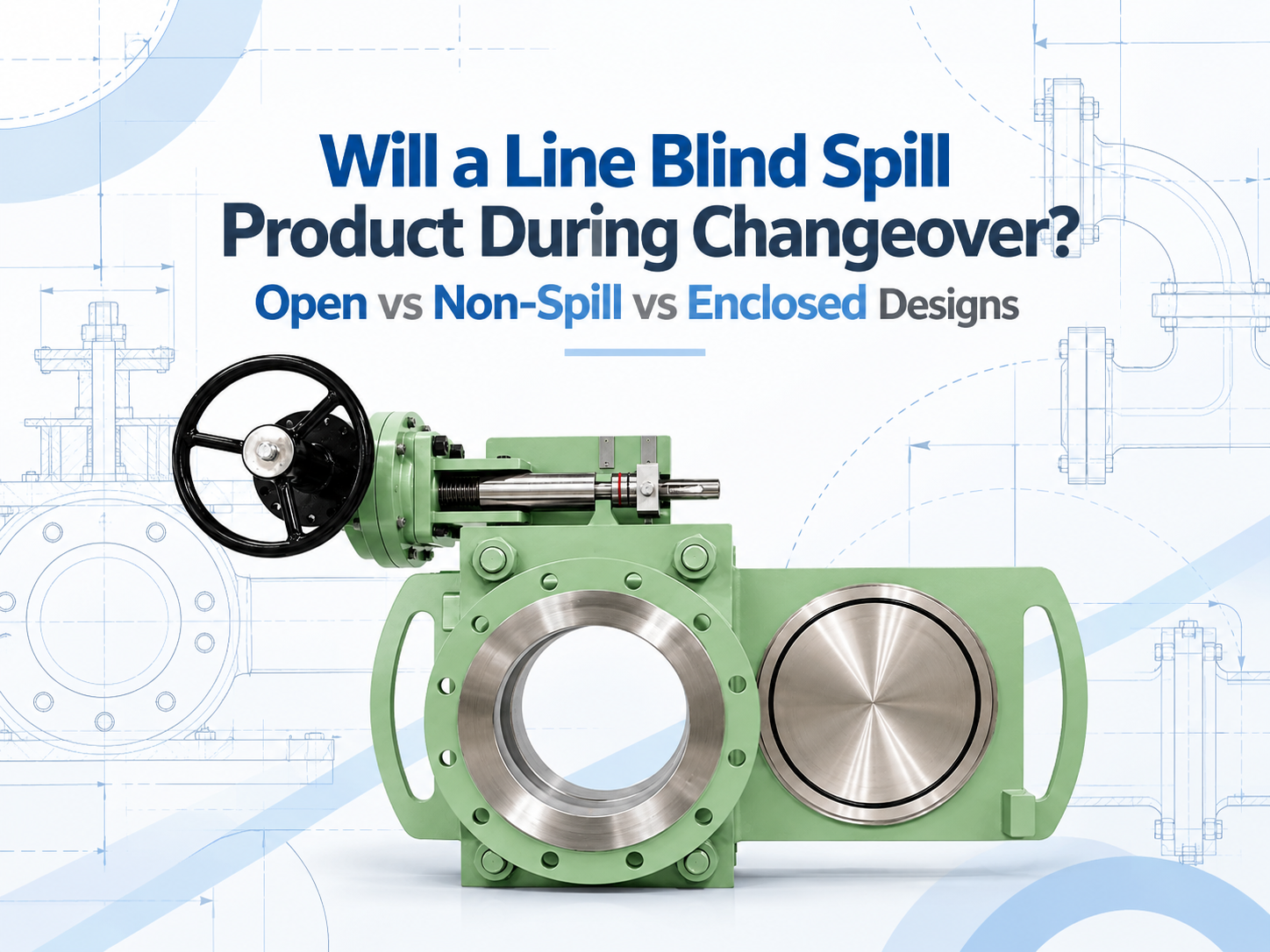
Yes, an open-body line blind can release residual product when it changes between the open and blind positions. A non-spill design does not make that residue disappear; it catches the liquid in a partial enclosure and directs it to a drain. An enclosed design can provide better control of liquid and vapour, but only when its housing, drain, vent and purge connections are engineered for the service. None of these labels should be read as permission to move the blind under live line pressure. Why Product Can Escape During Changeover When a line blind is fully clamped, its seals contain the process and the solid plate provides positive isolation in the blind position. Changeover is different. The sealing faces must separate before the spectacle or sliding plate can move. During that interval, the body cavity and plate path may be open to the surrounding area. The line should already be isolated, depressurised and drained, but “drained” rarely means perfectly dry. Liquid can remain as a film on the plate, collect in the lower body, or sit in a poorly drained pipe pocket. Gas service may leave flammable, toxic or odorous vapour. The amount released therefore depends as much on piping layout and the shutdown procedure as on the line blind itself. The Three Designs Manage Residue Differently Open-body design Residual liquid can drip from the exposed plate path into a temporary tray or the work area, while vapour disperses locally. This arrangement can suit water, steam condensate or other manageable media where easy access and visual inspection matter. It presents the highest potential for floor contamination and operator exposure. Non-spill design A bottom-and-side cover catches drips and sends them to a drain or recovery container; the top may remain open. This design is commonly considered for fuel terminals, marine service and liquid duties where ground or deck contamination must be controlled. It reduces dripping but may not contain vapour, and a blocked drain defeats its purpose. Enclosed design A housing surrounds more or all of the plate travel and may connect to a closed drain, purge, vent, flare or vapour-recovery system. It is better suited to toxic, flammable, odorous or environmentally sensitive service requiring controlled containment. The tradeoff is greater complexity in purging, inspection and maintenance, together with the need to manage trapped pressure deliberately. These names are not perfectly standardised across manufacturers. One supplier's “non-spill” model may be open at the top, while another product described as enclosed may use a more complete casing. The RFQ should show the enclosure arrangement and identify every opening rather than relying on the product name. Non-Spill Does Not Automatically Mean Zero Release For a liquid with low volatility, catching the remaining drops and routing them into a closed contai...
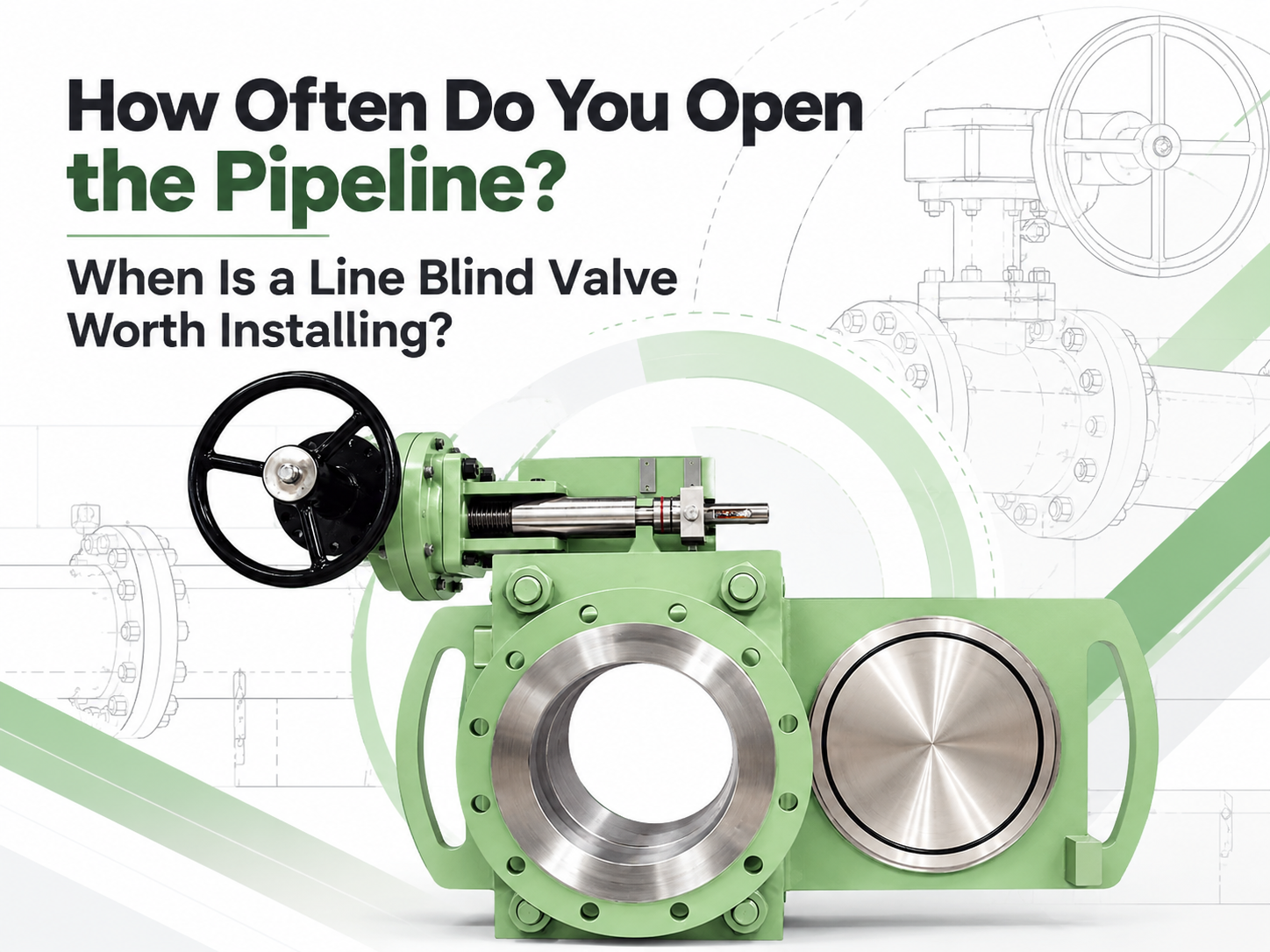
A line blind valve is worth evaluating when a pipeline is blinded several times a year, or when one conventional changeover causes hours of shutdown, lifting work or significant exposure to hazardous residue. No universal cycle count guarantees payback. A large critical line operated twice a year may justify the investment, while a small accessible line operated monthly may not. The decision should be based on the cost and risk of each complete isolation event, not frequency alone. There Is No Standard “Two Operations per Year” Rule Some suppliers use one or two annual changeovers as a screening threshold. That can start a discussion, but it is not an engineering rule. Frequency has very different consequences on a DN50 utility line and a DN600 process-gas main. For a preliminary review, the following bands are useful but not mandatory: Blinding frequency Initial interpretation Once per major turnaround or less A removable blind or spectacle blind is often more economical. One to three times per year Compare labor, lifting, outage duration and medium risk carefully. Quarterly to monthly A quick-action line blind is normally a strong candidate. Weekly or more often Purpose-built or automated isolation deserves detailed review; also confirm that a line blind is suitable for the required cycle duty. A low operating frequency can still support installation when every event requires scaffolding, a crane, several pipefitters or a long production interruption. Conversely, frequent operation does not justify a line blind if the process cannot accommodate its pressure, temperature, materials or maintenance needs. Count the Complete Changeover Traditional blinding is more than moving a plate. After the line is made safe, workers loosen bolting, spread the flange joint, handle the blind or spacer, replace gaskets, restore alignment, tighten the joint and complete leak checks. Large sizes add rigging and access equipment. A quick-action line blind keeps the spectacle or sliding plate supported inside the installed assembly. Manufacturer literature commonly reports one-person changeover in minutes rather than the man-hours needed for conventional flange work. Those figures are useful for screening, but the project calculation should use the plant’s own procedures and recorded shutdown times. Use a simple comparison: Annual avoided cost = operations per year x cost avoided per operation Avoided cost may include pipefitter hours, rigging, scaffolding, gaskets and bolting, leak testing and the production value of saved time. Keep categories separate to avoid double counting. Compare the annual saving with the line blind’s additional installed price and maintenance cost. Risk Can Matter More Than Simple Payback Repeated flange separation creates opportunities for residual-medium exposure, damaged flange faces, poor alignment and inconsistent bolt load...
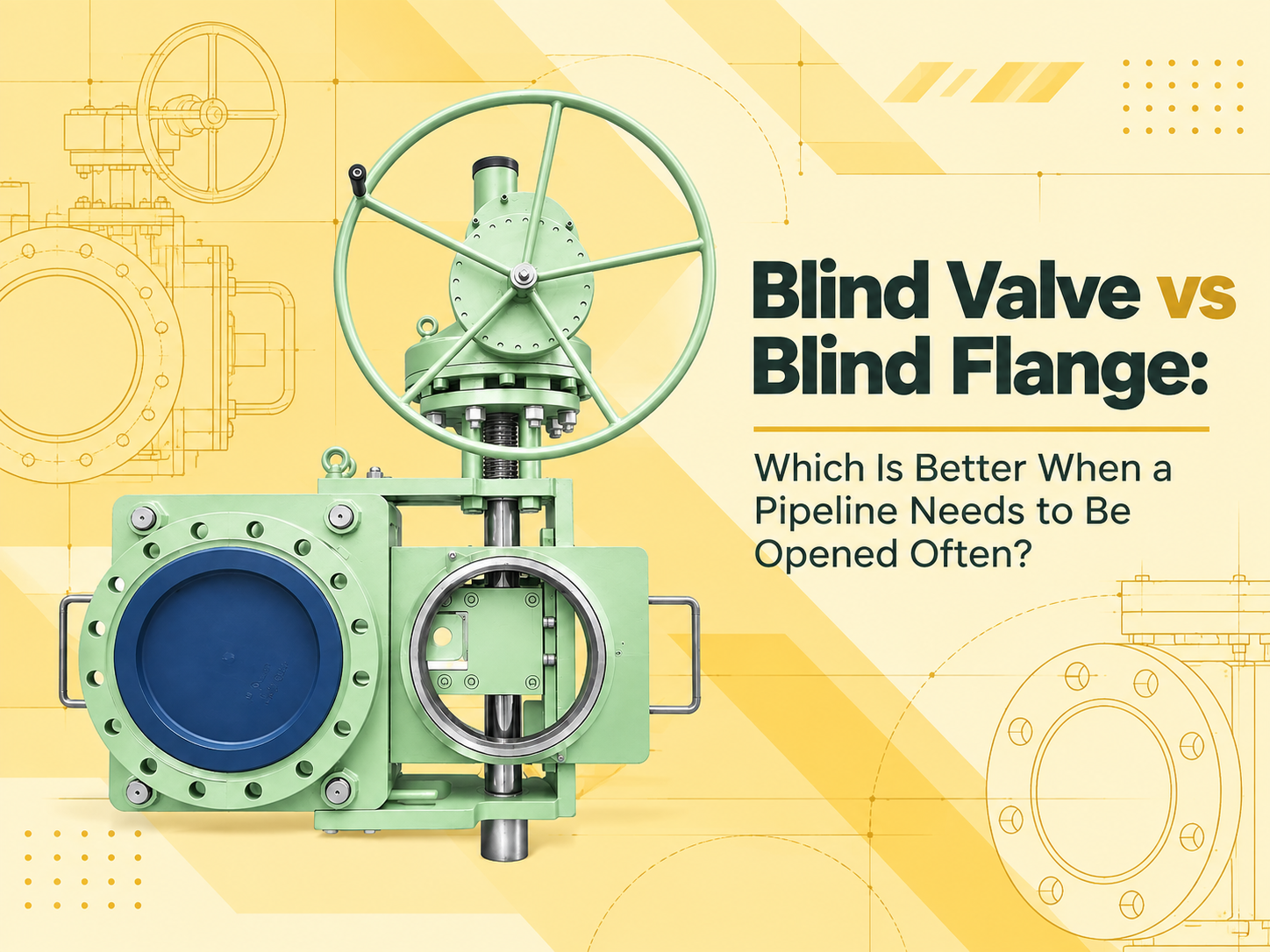
When a pipeline must be opened and positively isolated often, a line blind valve is usually the better choice. It keeps the blind mechanism permanently installed and lets operators change between open and blocked positions without repeatedly removing a bolted end closure. A blind flange costs less and has fewer moving parts, but it is better suited to closing a pipe end that will remain closed for long periods. This answer assumes that “blind flange” means a solid flange bolted to the end of a pipe or nozzle. A spectacle blind or a removable spade installed between two flanges is a different device, although it creates a similar solid-metal isolation barrier. Frequent Opening Changes the Cost Calculation The purchase price favors the blind flange. Its construction is simple, and maintenance is largely limited to checking the flange face, gasket, studs and nuts. If the closure will be disturbed only during an occasional turnaround, that simplicity is difficult to beat. Repeated opening changes the picture. Removing a blind flange requires the line to be shut down, depressurized, drained or purged, and verified safe. The bolts must then be loosened, the flange supported and the sealing faces separated. Larger flanges may require lifting equipment. Reassembly introduces a new gasket, controlled bolt tightening and a leak test. None of these steps is unusual, but repeating them turns a low-cost component into a labor-intensive operating method. A line blind valve also requires the line to be isolated and depressurized before changing position unless its approved design and operating procedure explicitly state otherwise. Its advantage is mechanical handling: the plate, spacer or sliding element remains captured in the body, and the mechanism separates, moves and reclamps the sealing faces. Manual gearing may suit moderate operating forces; electric, pneumatic or hydraulic actuation may be justified for large sizes or remote operation. The Blind Valve Reduces Handling but Adds Equipment to Maintain For frequent switching, a blind valve can shorten the task and reduce repeated handling of heavy plates, bolts and gaskets. Its open or closed position is normally visible from the external plate or position indication, which helps field verification. It also avoids repeatedly forcing connected piping apart to insert or remove a blind. Those benefits come with additional maintenance. Guides, screws, gearboxes, hydraulic components, seals and interlocks must remain functional. Product deposits or corrosion can obstruct plate travel, while damaged sealing surfaces can prevent reliable reclamping. The installation therefore needs drainage, cleaning access and enough surrounding clearance to complete the full movement and service the mechanism. A blind flange has no operating mechanism to seize. However, frequent removal can damage flange faces, stretch or corrode bolting, disturb pipe al...
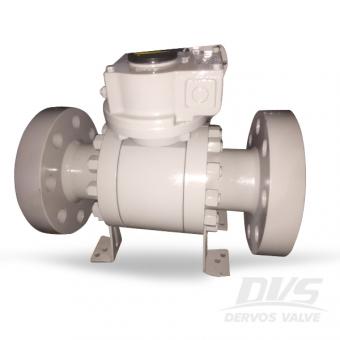

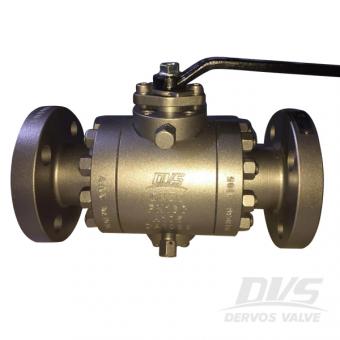
The 4 inch 150LB ball valve is a 3-piece one with reduced port, A105 body, F6A stem, ball and seat. The The valve is made as per API6D and is tested under API 598.
Payment:
30% when order confirmed, 70% before shipmentProduct Origin:
ChinaColor:
CustomizationShipping Port:
Shanghai, ChinaLead Time:
30~60 days Ex Works after order confirmationMaterial:
A105Method of Operation:
GearboxQuick Detail
|
Type |
Ball Valve |
|
Size |
4 Inch |
|
Pressure |
150LB |
|
Construction |
Three-Piece Body, Reduced Bore, Trunnion Mounted Ball |
|
Connection |
RTJ |
|
Operation Mode |
Gear Box |
|
Body Material |
A105 |
|
Trim Material |
F6A |
|
Design & Manufacture |
API 6D |
|
Pressure & Temp Code |
ASME B16.34 |
|
End to End |
ASME B16.10 |
|
End Connection |
ASME B16.5 |
|
Inspection |
API 598 |
|
Temperature Range |
-29℃~120℃ |
|
Medium |
Oil, Water, Gas etc. |
Features
EMERGENCY STEM SEALANT INJECTION: This standard feature allows the valve’s stem housing to be adapted with a grease fitting to inject sealant during emergency scenarios, providing protection against unplanned spikes in operating conditions.
DRAIN AND VENT PORTS: Drain ports located at the bottom of the valve release any fluid trapped in the body cavity of a closed valve. Vent ports located at the top of the body cavity eliminate any gas trapped in the body cavity of a fully closed valve. Both play a key safety role in the double block and bleed and/or double isolation and bleed valve configurations.
FIRE SAFE DESIGN: Metal seat design provides a fire-safe shut off per API 607. Additionally, graphite body seals and flexible graphite packing prevents leakage through the body joints and stuffing box, respectively.
ANTI-STATIC DEVICES: Standard anti-static devices ensure electrical continuity between the ball, stem, and body, eliminating the possibility of sparks within the valve created by static electrical charges.
VALVE POSITION INDICATION: Clear stamping on the outer diameter of the mounting flange identifies the open or closed position of the valve based on the stem key orientation.
BLOWOUT-PROOF STEM DESIGN: Valves are designed with stem/body connection preventing stem blowout under line pressure.
Technical Drawing


Reports
Documents can be used to prove how we control valve quality. Along with every order, Dervos will provide clients with an inspection report & a 3.1 mill test report for free.
In Dervos inspection report, you will see the actual results of dimension checking and pressure testing along with painting and packing picture. All these info are shown through data and clear pictures.

In 3.1 mill test report, we will show you the chemical composition, mechanical property and heat number for valve body, bonnet, stem, disc and so on.

If you are interested in our products and want to know more details,please leave a message here,we will reply you as soon as we can.
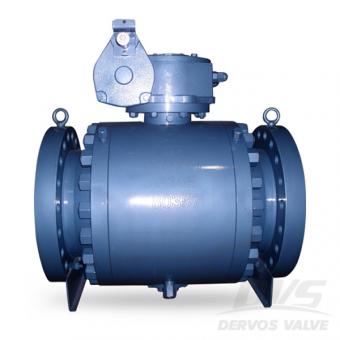
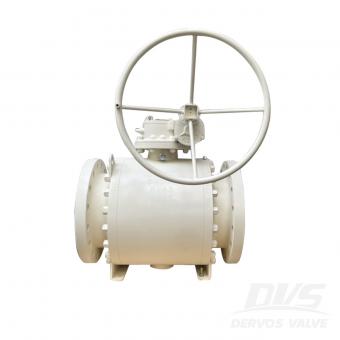
The 12 inch 600LB trunnion mounted ball valve has gearbox, RTJ flange, fire safe design per API 607. The 3 piece ball valve is designed per API 6D. Design Feature & Benefit 1.Small flow resistance means less pressure drop 2.Simple valve structure and light weight 3.Diversified sealing material available, from metal material TCC, satellite, stainless steel to soft material PTFE, Teflon, Nylon, Peek and etc 4.Good performance of both metallic sealing and soft sealing 5.Convenient and swift operation of the valve 6.Easy to maintain due to renewable seat ring 7.When fully opened or closed, the valve sealing face is isolated from medium corrosion. 8.Wide range of application in terms of size and pressure rating Quick Detail Type Ball Valve Size 12" Pressure Class 600 Construction Trunnion Mounted Ball, Three-Piece Type, Side Entry Connection RF Flange Operation Gear Operated Body Material ASTM A105 Design & Manufacture API 6D Pressure & Temp ASME B16.34 Face to Face ASME B16.10 End Connection ASME B16.5 Test & Inspection Code API 598 Fire Safe API 607 Temperature Range -29℃~+200℃ Medium Water, Oil and Gas Origin China Material Specification No Part Name Carbon steel to ASTM Stainless Steel to ASTM WCB LCB CF8 CF8M CF3 CF3M 1 Underplate WCB LCB CF8 CF8M CF3 CF3M 2 Underplate Bolt A193 B7 A320 L7 A193 B8 3 Trunnion A182 F6 A182 F6 A182 F304 A182 F316 A182 F304L A182 F316L 4 Body A216 WCB A352 LCB A351 CF8 A351 CF8M A351 CF3 A351 CF3M 5 Bonnet Nut A194 2H A194 4 A194 8 6 Bonnet Bolt A193 B7 A320 L7 A193 B8 7 Cap A216 WCB A352 LCB A351 CF8 A351 CF8M A351 CF3 A351 CF3M 8 Gasket SS Spiral Wound/graphite or SS Spiral Wound/PTFE 9 Shaft Sleeve SS/graphite 10 Seat Ring RPTFE or POM 11 Ball A105/Ep.Cr or F6 A182 F6 A351 CF8 A351 CF8M A351 CF3 A351 CF3M 12 Seat A105/Ep.Cr or F6 A182 F6 A182 F304 A182 F316 A182 F304L A182 F316L 13 Spring 17-17PH(inconel for NACE)Ni-cr Alloy 14 O-Ring Viton 15 Stem A182 F6 A182 F6 A182 F304 A182 F316 A182 F304L A182 F316L 16 Sealing Cover A182 F6 A182 F6 A182 F304 A182 F316 A182 F304L A182 F316L 17 O-Ring Viton 18 Gear Actuator The material is according to ASTM standard Related Knowledge What is difference between floating and trunnion ball valve? The ball part of floating ball valve is movable. Under the pressure of medium, the ball has a certain displacement and presses on the sealing surface of outlet end to ensure its tight sealing. The floating structure is suitable for ball valve with small size and low & medium pressure rating. The ball part of trunnion mounted ball valve is fixed. Under the medium pressure, the floating seat will move towards the ball to ensure the sealing. The trunnion mounted ball valve is often with larger size and higher pressure.
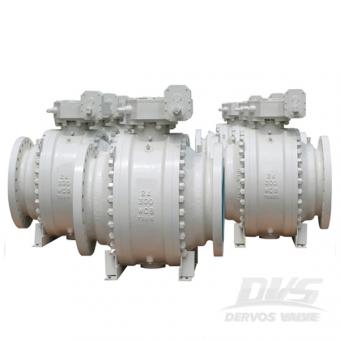
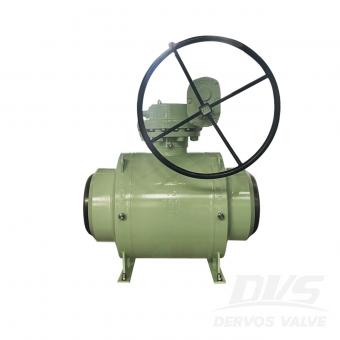
The Class 300 flanged ball valve has cast steel WCB body, stainless steel ball, stem, seat ring along with Devlon seat insert. We also supply more types of trunnion mounted ball valve, accept customized. Design Feature 1.Firesafe design as per API 607 2.With sealant injection for self lubricating 3.With antistatic design 4.With anti-blowout stem 5.With vent and drain port 6.Full bore design 7.Three-piece type and trunnion ball 8.Gear operated for easy operation Quick Detail Type Ball Valve Size 24" Pressure ANSI 300 Construction Trunnion Type Ball, 3-Piece Body, Side Entry, Full Bore Connection Flange Connection Operation Gearbox Operation Body Material ASTM A216 WCB Design Code API 6D Pressure & Temp Code ASME B16.34 Face to Face ASME B16.10 End Connection ASME B16.5 Test & Inspection Code API 598, API 6D Fire Safe API 607 Temperature Range -29℃~+200℃ Medium WOG Origin China Dimension CLASS 300 DN mm 50 65 80 100 150 200 250 300 350 400 450 500 600 700 NPS in 2 2.5 3 4 6 8 10 12 14 16 18 20 24 28 L (RF) mm 216 241 283 305 403 502 568 648 762 838 914 991 1143 1346 in 8.5 9.5 11.13 12 15.88 19.75 22.38 25.5 30 33 36 39 45 53 L1 (BW) mm 216 241 283 305 457 521 559 635 762 838 914 991 1143 1346 in 8.5 9.5 11.13 12 18 20.5 22 25 30 33 36 39 45 53 L2 (RTJ) mm 232 257 298 321 419 518 584 664 778 854 930 1010 1165 1372 in 9.13 10.13 11.75 12.63 16.5 20.38 23 26.13 30.63 33.63 36.63 39.75 45.89 54 H mm 153 165 195 213 272 342 495 580 625 720 790 840 1050 1150 in 6.02 6.5 7.68 8.39 10.7 13.5 19.5 22.85 24.6 28.35 31 33.1 41.34 45.3 Do(W) mm 400 400 600 850 1100 1500 *350 *350 *600 *600 *800 *800 *800 *800 in 15.74 15.74 23.62 33.46 43.3 59 13.8 13.8 23.6 23.6 31.5 31.5 31.5 31.5 RF(Kg) 18 27 47 80 118 200 365 530 740 1030 1320 1540 2600 3900 BW(Kg) 14 2 38 65 105 185 342 503 713 1000 1285 1498 2540 3825 *Worm Gear or Electric Actuator Operated Dervos Quality Checking System In Dervos, we control quality throughout the whole manufacturing process. Casting inspection: Though casting inspection, we can find out the problem of raw material, such as shoddy casting, unqualified wall thickness, chemical composition and so on, which ensure that you will not be cheated. Machining Inspection: On the one hand, we could ensure machining accuracy through this process. On the other hand, we can find out machining mistake as early as possible, to win more time for repairing and remaking Final Inspection: Final inspection activities include document and QC record review, visual examination, dimension check, pressure test, painting and packing check. You don’t need to come and inspect in person and all the documents could be provided as proof.
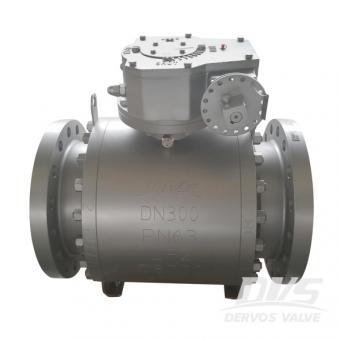
Trunnion mounted ball valve DN300 PN63 full bore Double Block and Bleed PMSS seal(metal seal+soft seal)blowout proof stem gearbox operation with LF2 body, LF2+ENP ball/seat and 410 stem. Quick Detail Type Ball Valve Size DN300 Design Pressure PN63 Construction DBB,Trunnion mounted ball valve ConnectionType Flange OperationType Gearbox Operated Body Material LF2 Ball Material LF2+ENP Stem Material 410 Seat Material LF2 +ENP Design Code API 6D Face to Face Dimension API 6D End Connection ASME B16.5 Pressure & Temp ASME B16.34 Medium Water, Oil and Gas Origin China
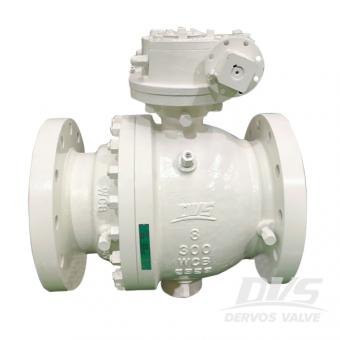
API 6D ball valve is designed with trunnion mounted ball and full bore structure. The flanged ball valve has 300LB design pressure and 8 inch nominal size with gearbox operation mode, conforming to NACE MR0175 requirement. Quick Detail Type Ball Valve Size 8” Pressure 300LB Construction Two-Piece Body, Full Bore, Trunnion Ball Connection RF Flange Operation Mode Gearbox Body Material A216 WCB Trim Material Ball/Stem F6a, Seat RPTFE Design & Manufacture API 6D Pressure & Temp Code ASME B16.34 End to End ASME B16.10 End Connection ASME B16.5 Inspection API 6D, API 598 Temperature Range -29℃~+200℃ Medium Oil, Water, Gas Dervos Packing Painting Test & Report Pressure Testing & Dimension Checking
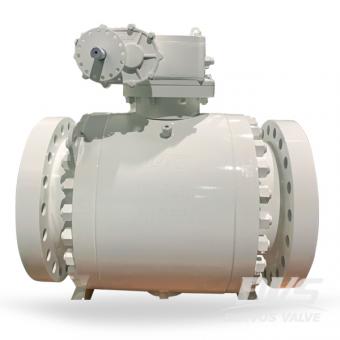
The API 6D ball valve is designed with trunnion mounted ball and full bore structure. The flanged ball valve has 600LB design pressure and 10 inch nominal size with gearbox operation mode, conforming to NACE MR0175 requirement.
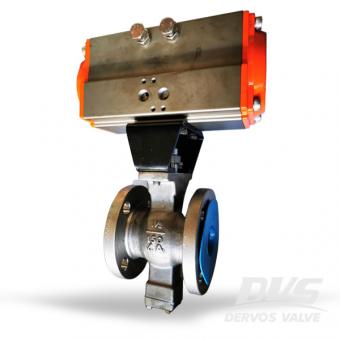
The 150LB ball valve, made of Duplex stainless steel 4A, has a special V port ball. The valve is particularly suitable for media containing fibers, tiny solid particles, slurry and so on.
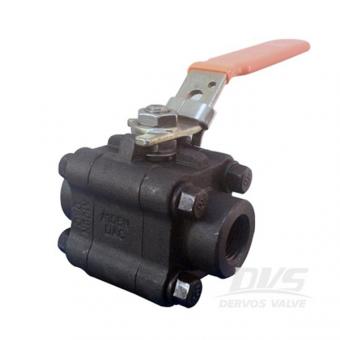
China Carbon Steel Ball Valve Provider Offers 3 Piece Position Type Ball Valve, ASTM A105N, Class 800, 1 Inch, Free Floating Ball, API 608, BS 5351.
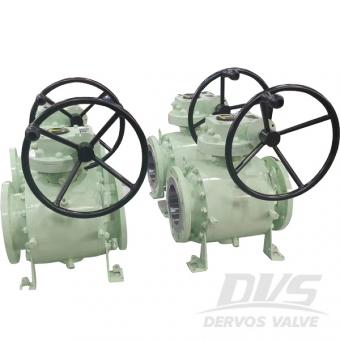
DN150 PN16 Ball Valve is made according to ISO 17292 standard. The fire resistance test meets the requirements of API 607 standard. The valve body is made of ASTM A105. Its operation mode is turbine operation. The trunnion mounted ball valve with a structural length of 400mm has the structural characteristics of full bore.
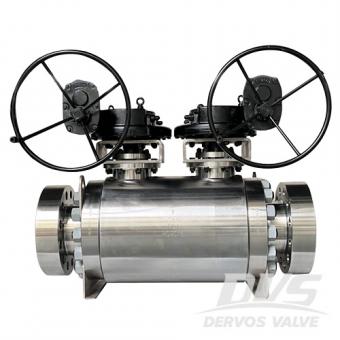
8" 2500LB ball valve is made according to API 6D standard. The valve body is made of F51. It has the structural characteristics of trunnion mounted ball, full bore. It also has the design of anti-fire, anti-static and anti-flying valve stem. In addition, it also meets NACE MR0175 requirements.
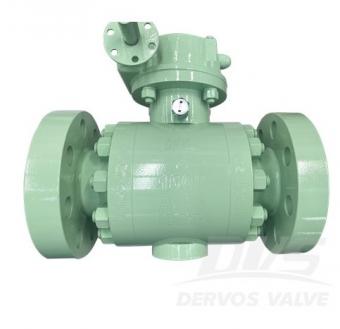
2" 1500LB ball valve is made according to API 6D standard. It also complies with the design standard of NACE MR0175. The valve body is made of ASTM-A105. It has the structural characteristics of full flow and trunnion mounted ball. It has RTJ connection mode and gearbox operation mode.
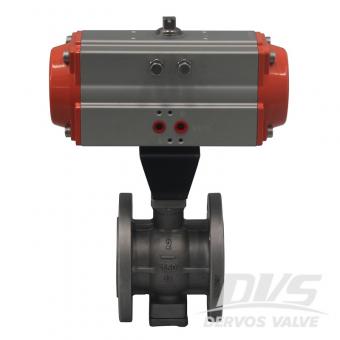
2" CL150 V-ball valve is made according to API 608 standard. The valve body is made of ASTM A995 4A. It has the structural characteristics of V type. It has RF connection mode, and its operation mode is polished rod torque.
Copyright © 2015-2026 DERVOS VALVE CO.,LTD.All Rights Reserved Blog / Sitemap / XML / Privacy Policy