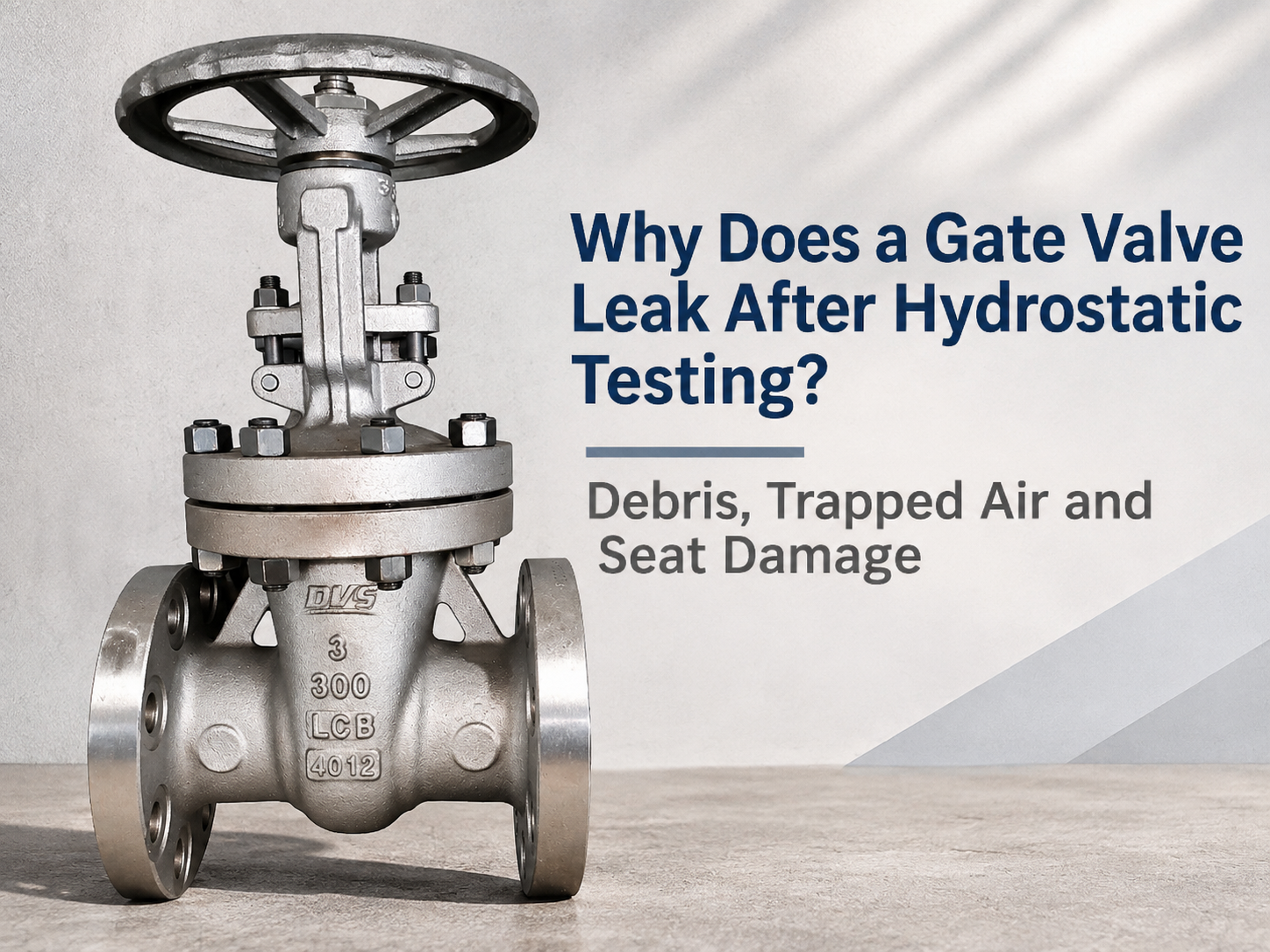
A pressure drop after hydrostatic testing does not automatically mean the gate valve seat is damaged. The loss may come from temperature change, trapped air, test equipment, an external joint, incomplete closure, debris on the seat, or permanent sealing-surface damage. The fastest solution is to confirm the leak path before removing the valve. First: Make the Test Safe Do not tighten, open, or cycle a valve while it is holding full test differential pressure unless an approved procedure specifically permits it. Isolate the test section, depressurize it, verify zero pressure, and drain safely before working on the valve. Confirm that test pressure is within every component’s allowable limit. Record the medium, pressure, temperature, hold time, and valve position. Step 1: Prove Where the Pressure Is Going Pressure loss alone is not proof of seat leakage. Check the pump isolation valve, temporary hoses, blinds, flanges, drains, vents, body-bonnet joint, packing, and pressure instruments. Then identify the symptom: Observation Most likely direction Pressure falls but no water appears downstream Temperature stabilization, trapped air, instrument error, or another system leak Water appears at the stem or bonnet Packing, gasket, or pressure-boundary leakage Measurable water continuously passes to the isolated downstream side Incomplete closure, seat contamination, or seat damage Leakage falls sharply after flushing and controlled cycling Debris was probably preventing full contact Leakage remains steady and repeatable after cleaning Inspect for damaged seats, wedge, gate, or alignment Use the project-specified leakage procedure. Drain residual downstream water first, then observe whether new water accumulates. Step 2: Eliminate Trapped Air and Temperature Effects Entrapped air compresses and produces an unstable pressure response. Vent all high points while filling the line slowly. Test-water temperature also matters. Cooling normally lowers pressure; warming can raise it. Allow the filled system to stabilize and record water, pipe, and ambient temperatures with pressure readings. If pressure change follows temperature change and the rate gradually reduces, investigate stabilization before blaming the valve. Refill and repeat the test only under the approved test procedure. Do not simply add water until the chart looks acceptable. Step 3: Confirm Full Valve Travel A gate that stops slightly above its closed position will pass water even when the handwheel or actuator appears closed. Check the stem position, travel indicator, gearbox, actuator limit switches, torque settings, and mechanical stops against the manufacturer’s data. Do not use a cheater bar or increase actuator torque without approval. Excessive force can bend the stem, overload the wedge, damage resilient...
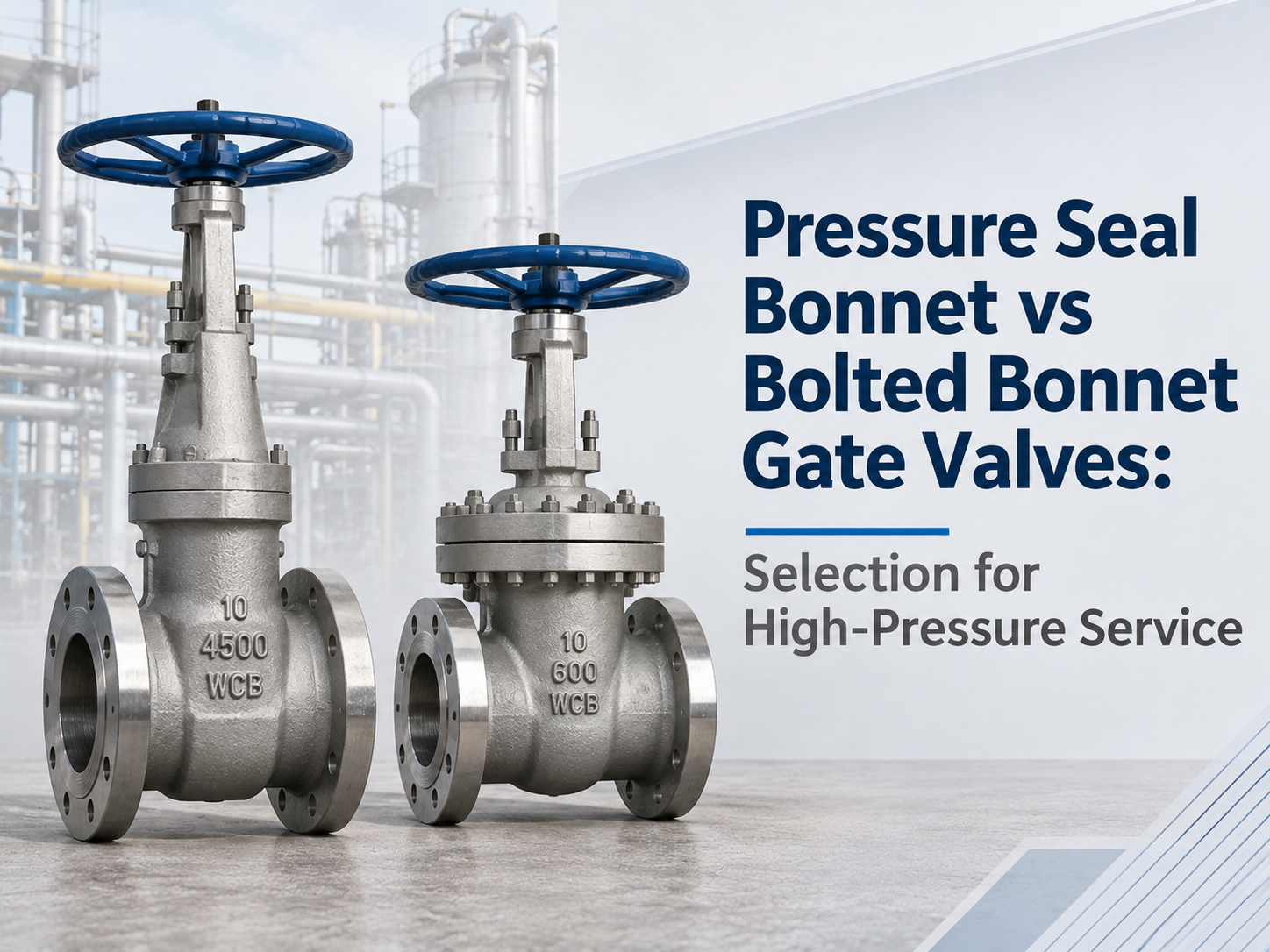
A pressure-seal bonnet is usually the stronger candidate for very high-pressure, high-temperature service because internal pressure increases the sealing load at the body-bonnet joint. A bolted bonnet relies primarily on bolt preload to compress its gasket and is often simpler to inspect and disassemble. That does not create a universal pressure-class cutoff. A Class 600 valve may use a pressure seal, while a bolted-bonnet design may be available at a higher class. The correct choice depends on the applicable pressure-temperature rating, valve size, material, thermal cycles, start-up conditions, maintenance plan, and the manufacturer’s qualified design. Quick Selection Answer Choose a pressure-seal bonnet when the service combines high pressure with high temperature, repeated thermal loading, or a critical external-leakage consequence, and the plant can support its more specialized maintenance procedure. Choose a bolted bonnet when the approved valve design satisfies the full pressure-temperature envelope and familiar disassembly, gasket replacement, and general maintenance access have greater value. Do not use the bonnet style to decide the valve function. Gate, globe, and check valves can all be made with pressure-seal constructions, but they perform different jobs in the system. How Does a Bolted Bonnet Work? In a bolted-bonnet valve, a flanged joint connects the bonnet to the body. Studs or bolts apply the initial clamping force, compressing a gasket between the mating faces. The bolting, flange geometry, gasket, surface finish, assembly method, and temperature all affect joint integrity. As internal pressure rises, pressure-generated forces tend to separate the body and bonnet. The joint must retain enough gasket compression after pressure, temperature change, bolt relaxation, and thermal expansion are considered. Correct tightening sequence and controlled preload therefore matter. The main practical advantage is familiarity. Maintenance teams can see and access the external bolting, and the disassembly sequence is generally straightforward. However, the joint may become large and heavily bolted as pressure, size, and design load increase. How Does a Pressure-Seal Bonnet Work? A pressure-seal bonnet uses an internal gasket and a retaining system rather than a conventional large external body-bonnet flange. Exact details vary, but common designs use a bonnet or cover, pressure-seal gasket, spacer or thrust ring, and segmented retaining ring inside the body neck. Process pressure acts on the bonnet assembly and forces the sealing elements against their contact surfaces. As pressure increases, the body-bonnet sealing load also increases. This is why the design is described as self-energizing or pressure assisted. Self-energizing does not mean self-assembling. At zero or low pressure, the process has not yet created its full sealing force. The initia...
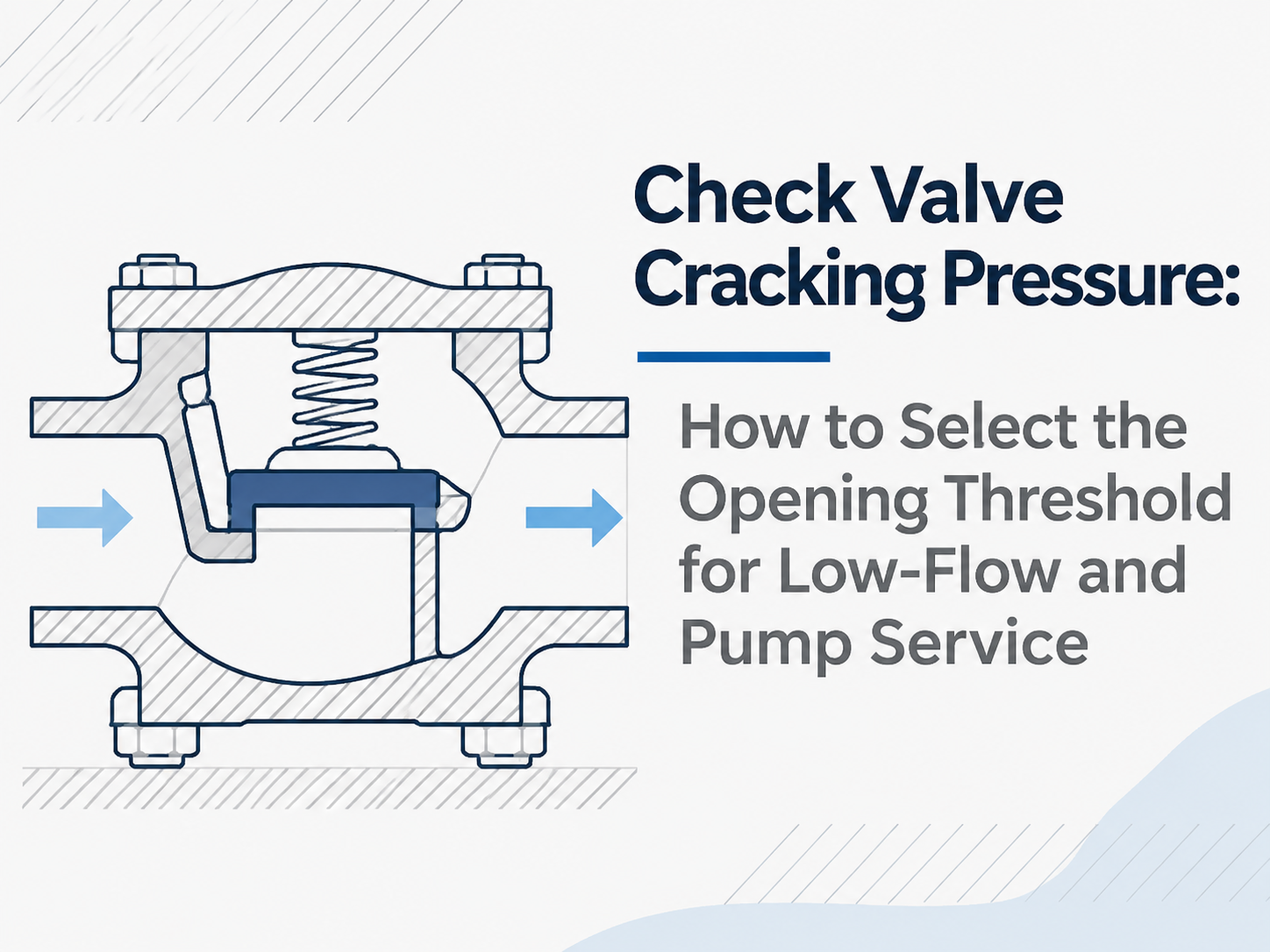
A check valve can begin to pass fluid and still be far from a stable open position. Check valve cracking pressure is therefore the threshold for first detectable flow, not the full-open pressure drop or proof of reliable minimum-flow operation. For low-flow and pump service, the opening threshold is acceptable only when the system can exceed it in the worst forward-flow case. The selection must then pass three separate checks: stable valve travel at minimum flow, acceptable pressure loss at normal and maximum flow, and timely closure when the pump stops. Start with the Worst Available Differential Pressure Parker defines cracking pressure as the upstream pressure at which detectable flow is measured, while Swagelok notes that first flow does not mean the valve is fully open. The relevant system value is not pump discharge pressure alone, but the pressure difference across the valve when it must open. For an initial screen: Available opening ΔP = minimum upstream pressure at the valve − maximum downstream pressure at the valve If the pressures come from remote points, correct them for elevation and line losses. Evaluate the least favorable credible case, such as a variable-speed pump starting at low speed or a standby pump opening against a live common header. The maximum guaranteed cracking pressure of the offered valve should be below this available ΔP, with an engineering allowance for manufacturing tolerance, temperature, orientation, deposits and measurement uncertainty. There is no defensible universal allowance. A nominal value alone is insufficient because catalog cracking pressure may be specified as a range, and a valve left idle may initially require a higher differential than it does after cycling. Low Cracking Pressure Does Not Solve Low-Flow Instability After the closure member lifts, more differential pressure and flow force are needed for stable travel. An oversized valve may crack open but hover near the seat because velocity is too low, causing clicking, flutter, impact and accelerated wear. Swagelok’s service guidance identifies excessive spring cracking pressure and excessive valve size as possible causes of chatter near the threshold. Size from the operating envelope rather than automatically matching the pipe diameter. Ask the supplier to evaluate three points for the exact size, spring and trim: Operating point Required evidence Minimum continuous flow Stable-open position, minimum stable flow or velocity, and corresponding ΔP Normal flow Model-specific pressure-drop curve or validated flow coefficient Maximum flow Peak ΔP, velocity limits, erosion risk and acceptable travel Cracking pressure answers “When does motion begin?” The flow curve and stable-flow limit answer “Will the valve remain open without damaging itself?” Pump Opening and Pump Shutdown Are Different Design Cases At s...
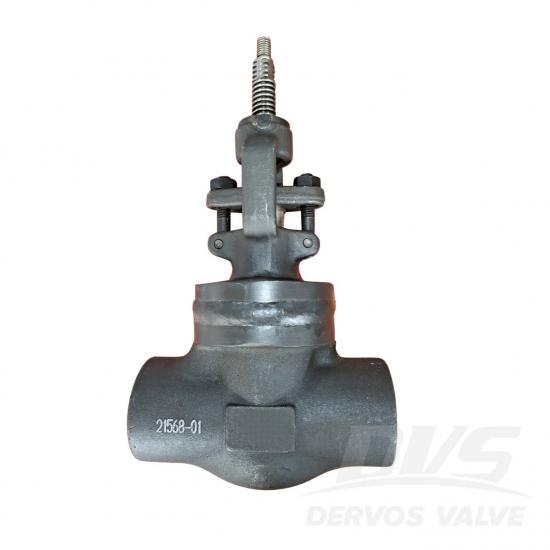
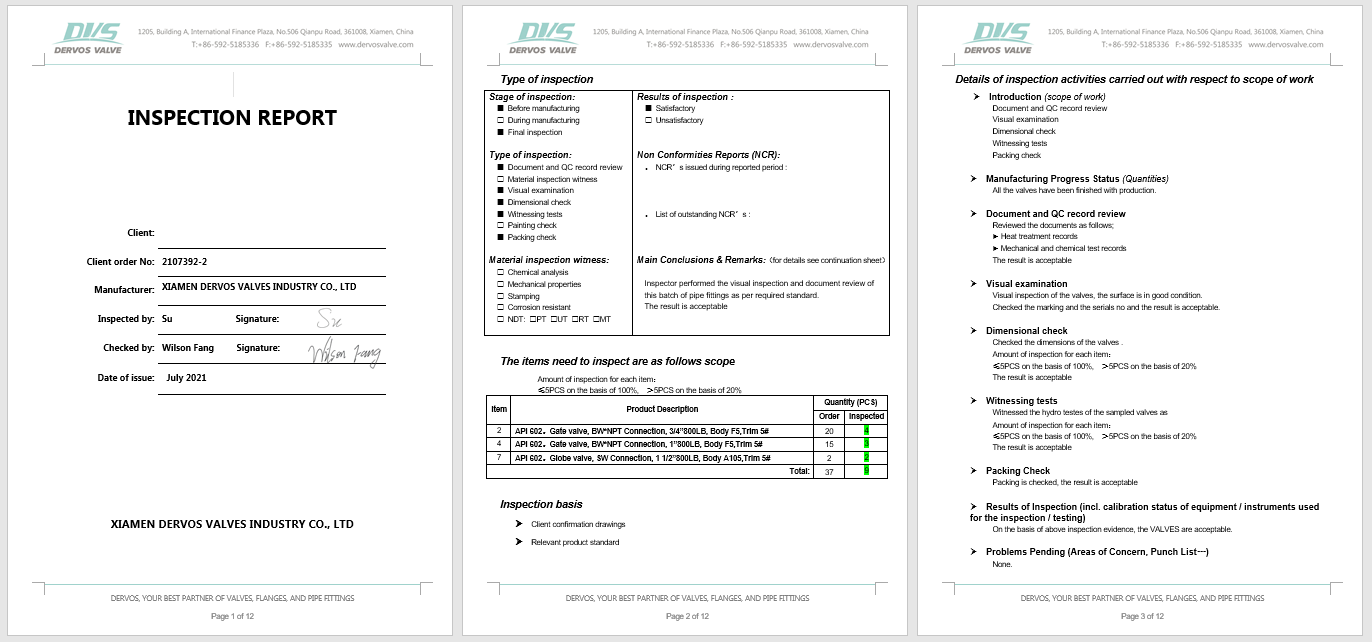
11/2" 800LB globe valve is made according to API602 standard. The valve body is made of A105+STL. It has the structural characteristics of welded bonnet. Its connection mode is SW. And it has hand wheel operation mode.
Payment:
30% when order confirmed, 70% before shipmentProduct Origin:
ChinaColor:
CustomizationShipping Port:
Shanghai, ChinaLead Time:
30~60 days Ex Works after order confirmationMaterial:
A105+STLMethod of Operation:
Hand WheelProduct Description
|
Type |
Globe Valve |
|
Size |
11/2" |
|
Pressure |
800LB |
|
Connection |
SW |
|
Operation |
Hand Wheel |
|
Body Material |
A105+STL |
|
Design Norm |
API 602 |
|
Socket Welded Dimension |
ANSI B16.11 |
|
Materials |
AISI/ASTM |
|
Test & Inspection Code |
API 598 |
|
Applicable Medium |
Water, Oil and Gas |
Features
1. Simple structure, convenient manufacturing and maintenance;
2. The sealing surface of the valve is not easy to wear and scratch, with good sealing performance and long service life.
Technical Drawing
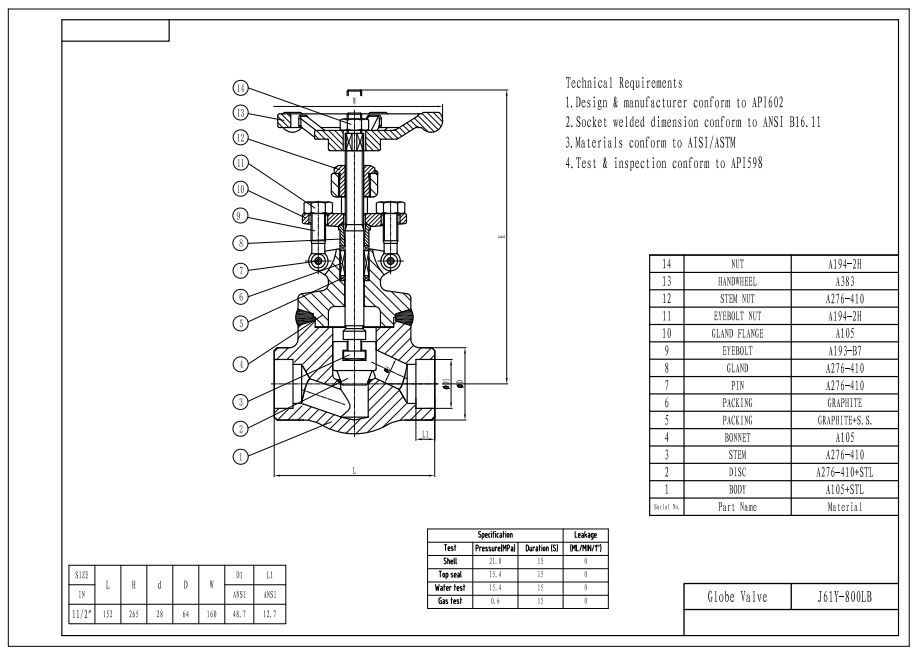
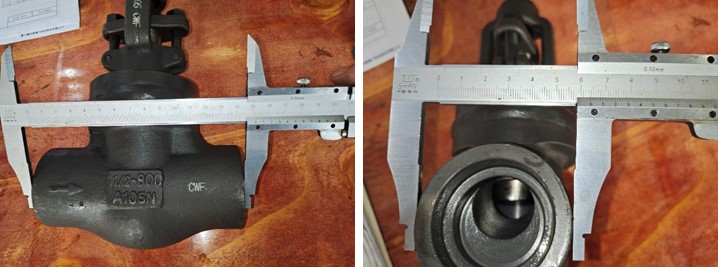
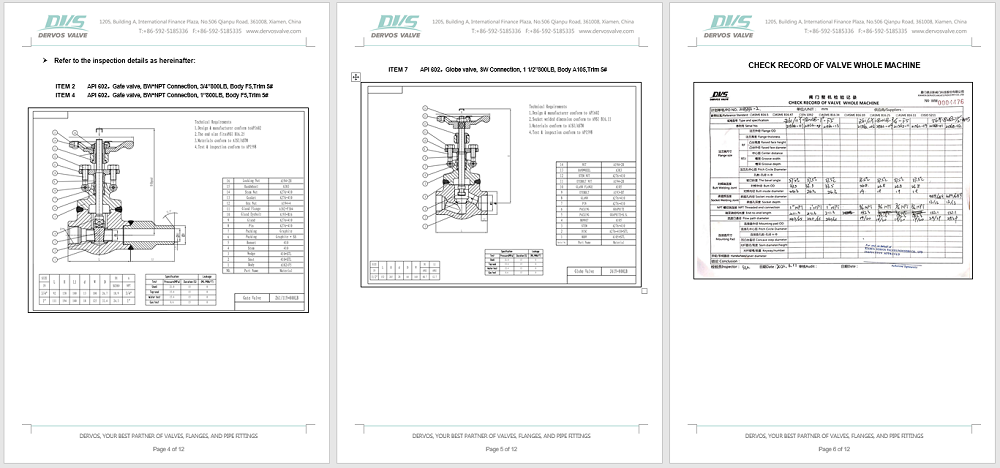
Dimension Checking
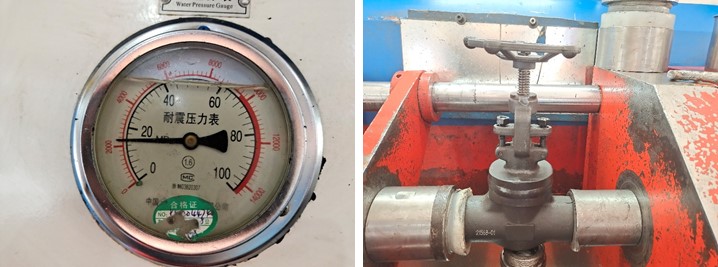
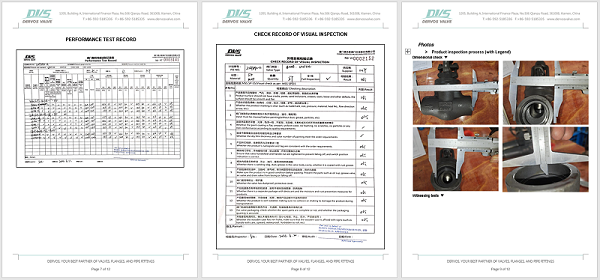
Pressure Testing
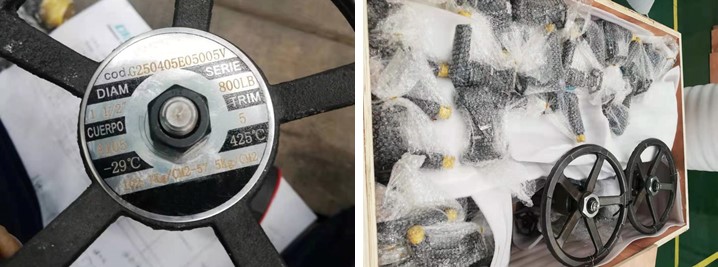
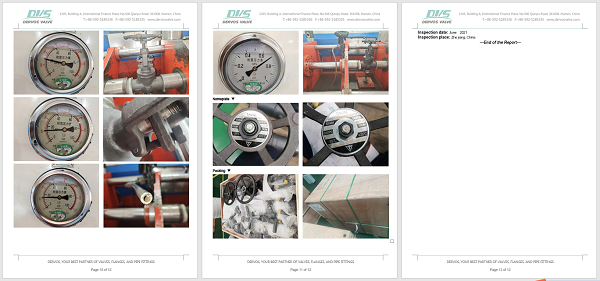
Nameplate & Packing
Inspection report
If you are interested in our products and want to know more details,please leave a message here,we will reply you as soon as we can.

The 1 inch 800LB female threaded globe valve has plug disc, reduced port and manual handwheel operation. The valve is made of A105N body and trim 5 as per API 602. Quick Detail Type Globe Valve Size 1'' Pressure Class 800 Construction Bolted Bonnet, Reduced Port, Outside Scew & Yoke ConnectionType NPT Female Thread OperationType Handwheel Operated Design Code API 602 End to End Dimension ASME B16.10 Connection ASME B1.20.1 Pressure & Temp ASME B16.34 Test & Inspection API 598 Body Material Forged Steel A105 TrimMaterial 13CR+Stellite Temperature Range -29℃~+427℃ Application Water, Oil, Gas Origin China Product Range 1.Size up to 4 inch 2.Design pressure between 150LB to 2500LB 3.Connection: flange, socket weld, thread 4.Operation: handwheel, gearbox, bare stem, with actuators 5.Body material: carbon steel, stainless steel, alloy steel 6.Trim material: trim 1, 5, 8, 10, 12, 16 and ect. 7.Bolted bonnet, pressure sealed bonnet, welded bonnet, screwed bonnet 8.Reduced bore, full bore Inspection Reports Along with each order, Dervos will provide inspection reports and material test reports free of charge after shipment. All these certificates will let you have a clear picture of inspection process and results. Plus, these reports can be used for traceability.
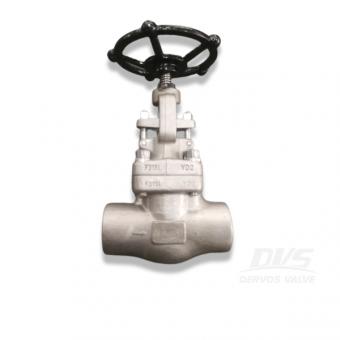
Globe valve with a non-return design, preventing reverse flow when in the open position, also suitable for isolation duty. Manually operated, supplied with a handwheel.
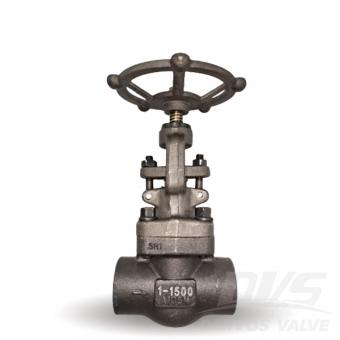
Quick Detail Type Globe Valve DN DN50 PN PN250 Construction Tee Pattern; Bolt Bonnet; Connection Type NPT Operation Type Handwheel Design Code API602 Screw End ASME/ANSI B1.20.1 Test & Inspection API598 Body Material A105+STL Trim Material A276-420 Medium Water, Oil and Gas Origin China Features -- Globe valves have both good throttling and shutoff capabilities -- Easy to maintain and resurface the seats -- Can be used as a stop-check valve if the disc is not attached to the stem Technical Drawing Dimension Check Witnessing Tests Dervos Packaging Good packing means good first impression. Just imagine how do you feel differently when seeing two boxes below? And you will know the reason why in Dervos we value packaging so much. In Dervos, we make sure- Every valve is clean and dry. -Clean the valve before packing -Add anti-rust oil -Add flange cover No damage to valves in delivery. -Fix the valve with iron wire -Separate the valve with soft material -Layer the valve with plywood -Strong box and clear shipping mark
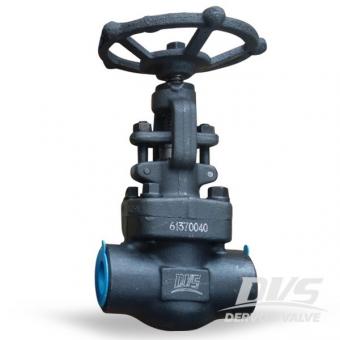
With outside screw and yoke, handwheel operation, NPT, the forged steel globe valve is made of A105 and designed as per BS5352.
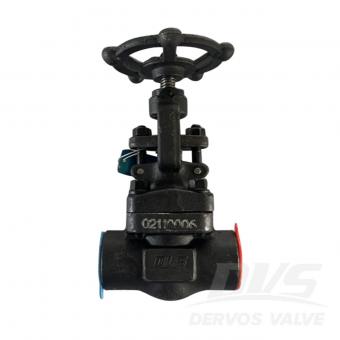
3/4" 800LB globe valve is made according to API 602 standard. The valve body is made of A105N+ STL. It has the structural characteristics of plug, disc swivel plug, body seat and OS&Y. Its connection mode is SW+FNPT. And it has hand wheel operation mode.
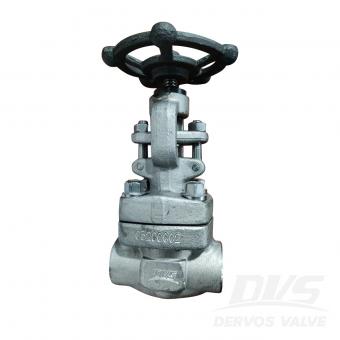
1/2" 800LB globe valve is made according to API 602 standard. The valve body is made of ASTM A182 F316/F316L+STL. It has the structural characteristics of bolt cover, disc swivel plug, body seat and OS&Y. Its connection mode is SW. And it has hand wheel operation mode.
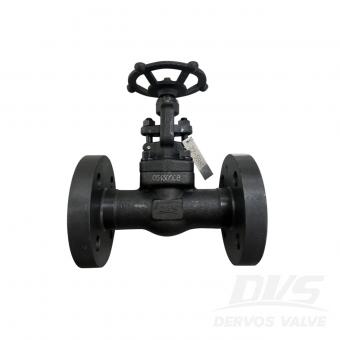
DN25 PN63 globe valve is made according to BS5352 standard. The valve body is made of A105N+SS304. It has the structural characteristics of bolt cover, straight through type. Its connection mode is EN1092-1 D. And it has hand wheel operation mode.
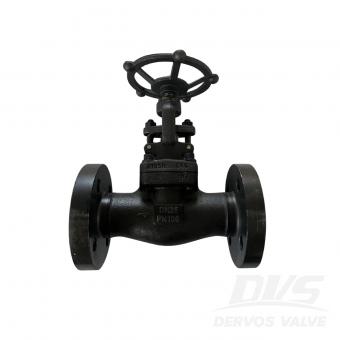
DN25 PN100 globe valve is made according to API 602 standard. The valve body is made of A105N+SS304. It has the structural characteristics of bolt cover, straight through type. Its connection mode is EN1092-1 D. And it has hand wheel operation mode.
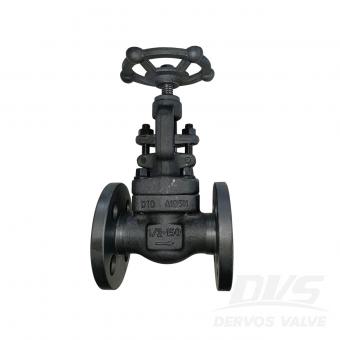
1/2" 150LB globe valve is made according to API 602 standard. The valve body is made of ASTM A105N+STL. It has the structural characteristics of pass-through type. Its connection mode is RF. And it has hand wheel operation mode.

1/2" 150LB globe valve is made according to API 602 standard. The valve body is made of ASTM A105N+STL. It has the structural characteristics of pass-through type. Its connection mode is RF. And it has hand wheel operation mode.

1" 600LB globe valve is made according to API 602 standard. The valve body is made of ASTM A105N+STL. It has the structural characteristics of bolt cover, straight through type. Its connection mode is RF. And it has hand wheel operation mode.

DN25 PN40 forged steel globe valve is made according to BS 5352 standard. The valve body is made of A182-F316+STL. It has the structural characteristics of bolt cover and straight through type. Its connection mode is EN1092-1 B. And it has hand wheel operation mode.
Copyright © 2015-2026 DERVOS VALVE CO.,LTD.All Rights Reserved Blog / Sitemap / XML / Privacy Policy