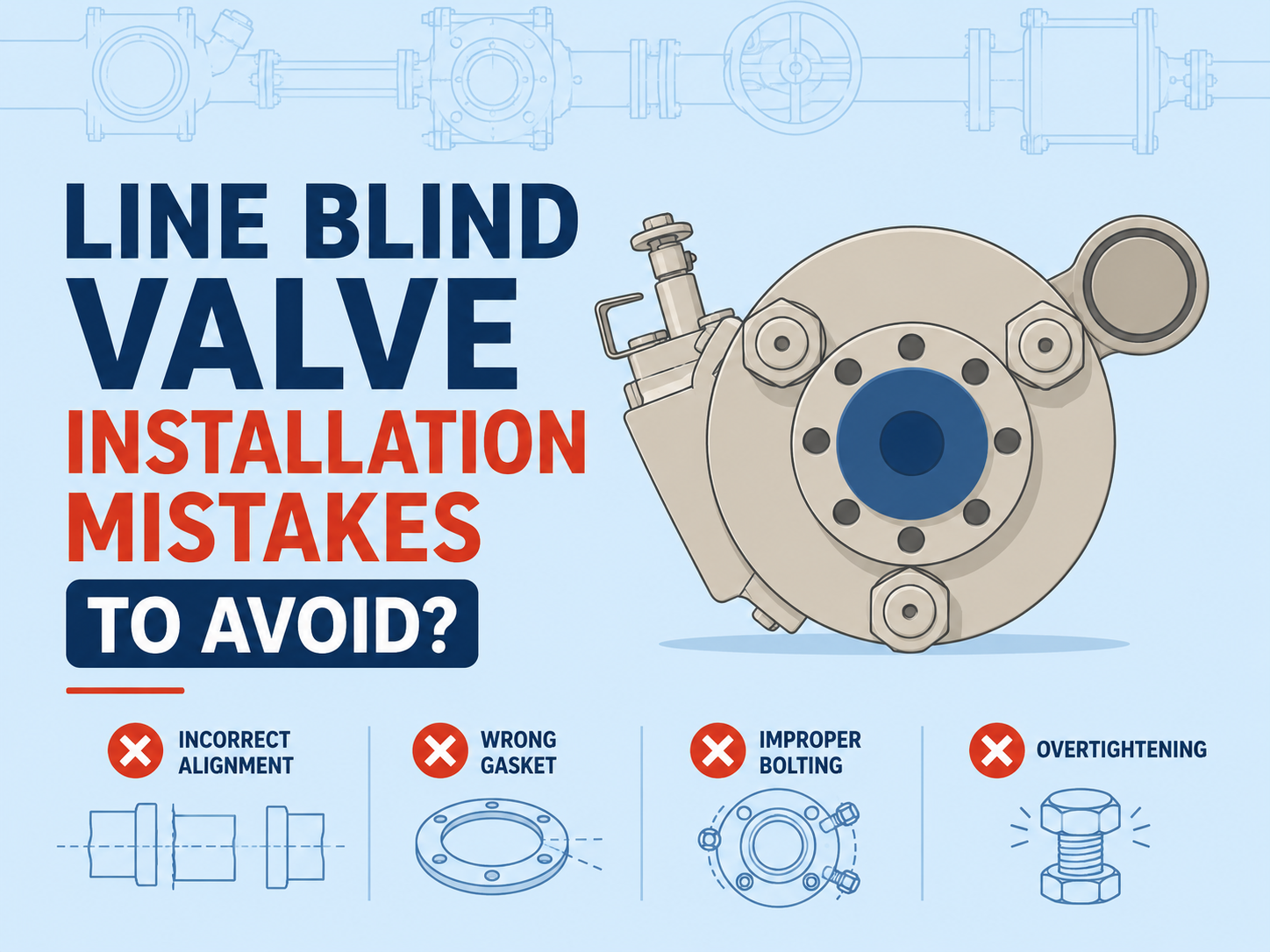
A Line Blind Valve(also referred to as a spade/blind plate isolation device) is a mechanical device used to achieve positive isolation in pipeline systems. It is widely applied in oil, gas, petrochemical, refining, and maintenance isolation systems. Its primary function is not flow regulation, but to ensure zero fluid passage during maintenance conditions. However, improper installation or operation can lead to leakage, seal failure, flange distortion, and even safety risks. The following sections summarize common installation mistakes based on engineering logic, along with their consequences. 1. Failure to Confirm Complete Depressurization Before Installation If residual pressure remains in the pipeline, inserting or switching the blind plate may cause mechanical impact or damage to sealing surfaces. If Line Blind Valve operation is performed without full depressurization, it may result in: ● Scoring or deformation of sealing faces ● Abnormally high operating torque ● Incomplete insertion of the blind plate ● In extreme cases, fluid release risk Therefore, the standard procedure requires: full depressurization, complete venting of residual media, and confirmation of zero-pressure conditions before isolation operation. 2. Installing Line Blind Valve with Poor Flange Alignment Line Blind Valve systems depend on accurate flange alignment. If flange misalignment or eccentricity exists: ● Uneven loading on the blind plate ● Localized sealing stress concentration ● Permanent leakage paths after operation ● Sticking or jamming of the operating mechanism If significant misalignment is present, the Line Blind Valve should not be forced into installation. Pipe supports or alignment conditions must be corrected first. 3. Neglecting Sealing Surface Cleanliness Line Blind Valve sealing performance typically relies on metal-to-metal sealing or soft sealing structures. If sealing surfaces contain: ● Weld slag ● Rust ● Debris or particles ● Residual gasket material Then effective sealing cannot be achieved even if the design torque is applied. From an engineering perspective: if the sealing surface is not clean, micro-leakage is inevitable. 4. Incorrect Orientation of the Blind Plate Some Line Blind Valve designs have specific flow direction or installation orientation requirements. If installed in the wrong direction: ● Incomplete insertion of the blind plate ● Incorrect sealing load direction ● Insufficient actuator travel ● Failure of mechanical locking Installation must strictly follow manufacturer markings (flow arrow or structural orientation), not field experience assumptions. 5. Improper Torque Control During Operation Line Blind Valve systems typically r...
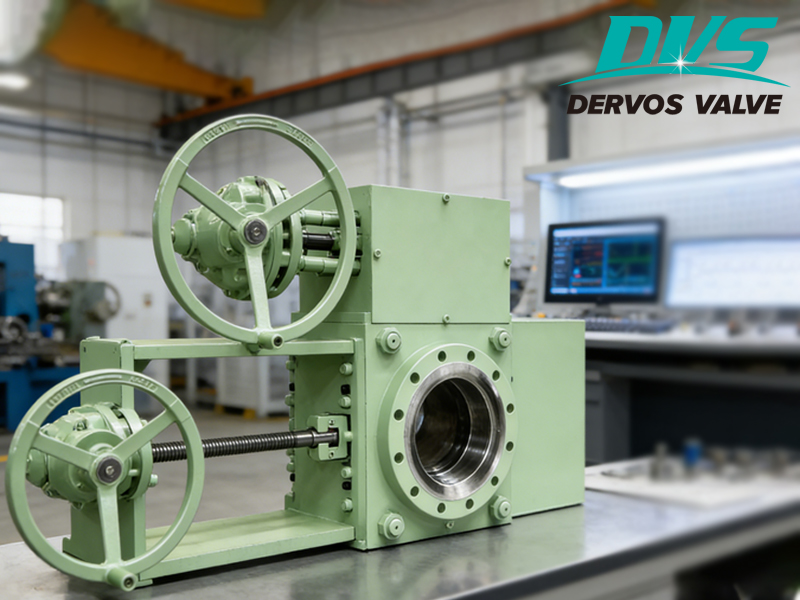
A major South African oil client deployed the DVS sliding blind valve in a multi-media pipeline system requiring frequent switching between oil products, natural gas, and chemical solvents. Since installation, the system has achieved stable zero-leakage operation. The valve’s online operation under pressure has completely eliminated the need for shutdown and depressurization, while significantly improving onsite maintenance safety. Customer Challenge: Seal Failure and Lack of Positive Isolation During Frequent Multi-Media Switching The client is a large oil processing and storage company in South Africa. Their pipeline network frequently switches between multiple media, including oil products, natural gas, and chemical solvents. Due to the significant differences in media characteristics, the system places extremely high demands on valve sealing performance, corrosion resistance, and operational safety. While using conventional gate valves and ball valves, the client faced the following critical operational issues over the long term: Issue Type Conventional Gate / Ball Valve Performance Actual Operational Impact Seal failure and internal leakage Seals degrade over time and cannot guarantee zero leakage Media leakage creates serious safety and environmental risks Shutdown and depressurization required for maintenance Pipelines must be fully depressurized before maintenance Long downtime and significant production losses Inability to achieve true positive isolation Isolation depends on sealing components with limited reliability Risk of cross-contamination during media switching The client specifically requested a valve solution that could: ● Operate without relying on seals ● Support operation under pressure ● Provide absolute physical isolation DVS Sliding Blind Valve Solution: Physical Isolation + Online Operation + Zero Leakage The DVS sliding blind valve uses a solid blind plate to physically block the media passage. This design fundamentally eliminates the risks associated with conventional seal-dependent valves. The following four technical advantages played a key role in solving the client’s operationalchallenges: Absolute Physical Isolation with Zero Leakage The solid blind plate directly blocks media flow, eliminating seal aging and seal failure issues. This ensures true zero-leakage performance under all operating conditions. Online Operation Under Pressure Without Shutdown The valve can switch between open and closed positions while the system remains pressurized. No depressurization or production shutdown is required, dramatically reducing downtime and operational safety risks. External Position Indicator Prevents Misoperation An external position indicator clearly displays whether the valve is open or closed. Operators can instantly verify valve status, significantly reducing the risk of operational mistak...
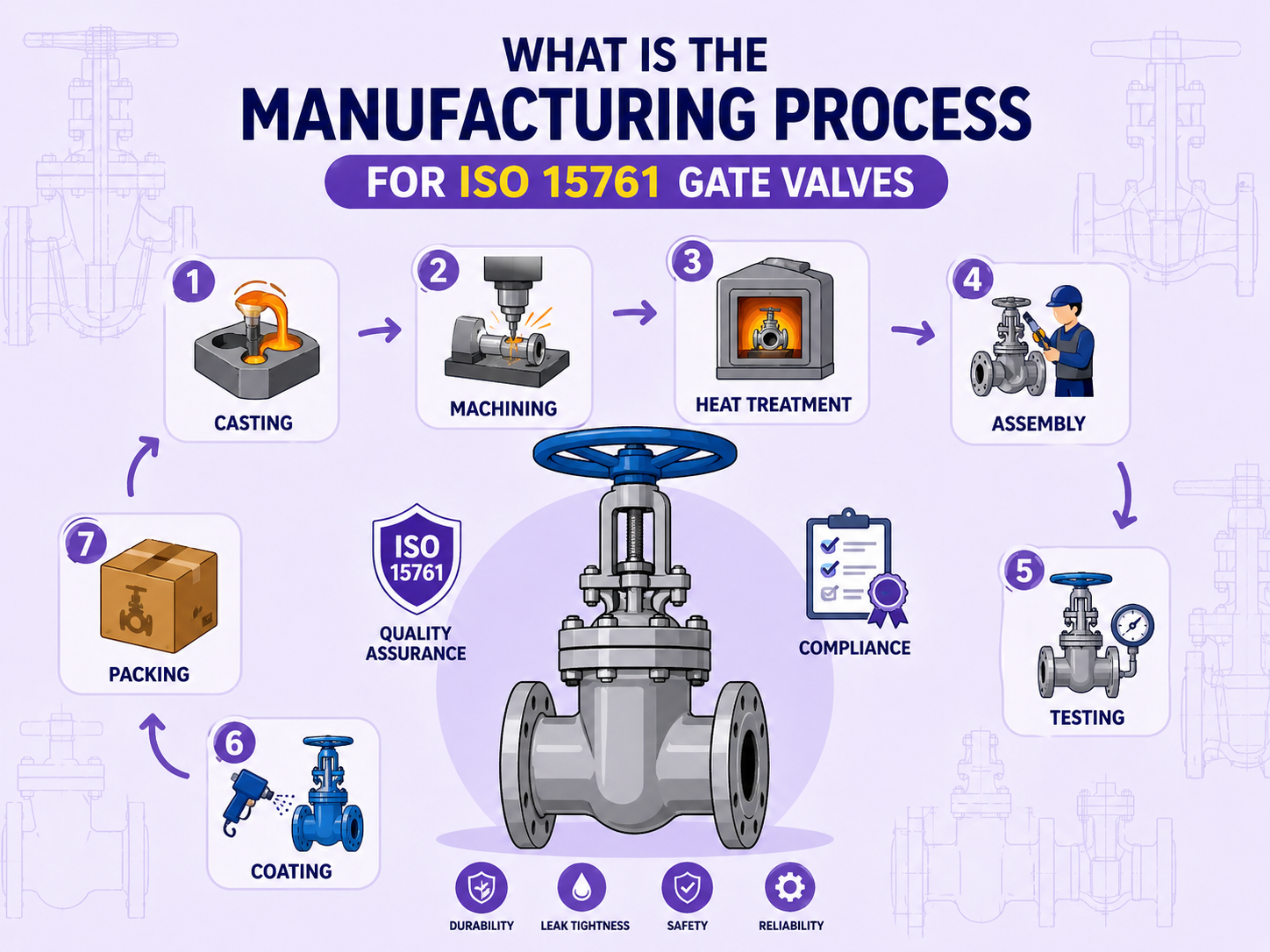
ISO 15761 is a standard for small-bore steel valves used in the oil and gas industry, covering sizes from DN 15 to DN 100 and pressure classes from Class 150 to Class 2500. It applies to gate valves, globe valves, and check valves. These valves are not produced in a single step, but through a sequential manufacturing chain. The quality of each stage directly affects the next. Understanding this chain helps identify critical issues more efficiently during valve selection, compliance review, and supplier evaluation. Complete Manufacturing Process Step 1: Material Selection Material determines the applicable service conditions and is the starting point of the entire process. Common materials under ISO 15761 include: ● Carbon steel for general oil and gas service ● Low-temperature carbon steel for cryogenic or low-temperature conditions (e.g., LNG applications) ● Stainless steel for corrosive media If the service contains hydrogen sulfide (H₂S), materials must also comply with NACE MR0175 / ISO 15156 to prevent sulfide stress cracking. This requirement is applied independently of ISO 15761. Incorrect material selection cannot be compensated by subsequent process control. Step 2: Forging This step determines the internal quality of the valve body. Forging involves forming heated metal under pressure, resulting in a dense internal structure with a lower probability of defects. It is typically preferred for high-pressure or high-reliability applications. For Class 800 and above, forged bodies are commonly selected in engineering practice to reduce internal defect risks and improve structural reliability, although final selection depends on project specifications. Step 3: Machining After forming, precision machining is performed to meet dimensional and sealing requirements. Sealing surface machining is a critical control point. The contact surfaces between the seat and disc must undergo multiple machining and lapping processes to achieve specified flatness and surface roughness, directly affecting shut-off performance. The stem surface must also meet low roughness requirements to ensure long-term packing sealing stability. Excessive roughness accelerates packing wear and may lead to external leakage during operation. Step 4: Welding (Hardfacing of Sealing Surfaces) This process is used to enhance sealing surface performance. For wear or corrosion-resistant applications, sealing surfaces are typically overlaid with hard alloys such as Stellite to improve resistance. During welding, heat input and dilution rate must be controlled to prevent excessive mixing of the base material, which would reduce surface hardness. The hardfacing layer is usually required to meet a specified hardness range (e.g., Stellite typically ≥ HRC 35–45). This process must be performed by qualified welders, with welding procedure specifications (WPS), procedure qualification records (PQR...
1" 800LB check valve is made according to API 602 standard. The valve body is made of A105N+STL. It has the structural characteristics of half spherical, welded valve cover. Its connection mode is SW.
Payment:
30% when order confirmed, 70% before shipmentProduct Origin:
ChinaColor:
CustomizationShipping Port:
Shanghai, ChinaLead Time:
30~60 days Ex Works after order confirmationMaterial:
A105N+STLProduct Description
|
Type |
Lift Check Valve |
|
Size |
1" |
|
Pressure |
800LB |
|
Connection |
SW |
|
Body Material |
A105N+STL |
|
Design Norm |
API 602 |
|
Socket Welded Dimension |
ANSI B16.11 |
|
Materials |
AISI/ASTM |
|
Test & Inspection Code |
API 598 |
|
Applicable Medium |
Water, Oil and Gas |
Features
1. Lift check valves have good sealing performance and can effectively prevent medium leakage;
2. The structure is relatively simple, and the maintenance and replacement of the valve disc and seat are relatively convenient, making it easy for daily inspection and maintenance.
Technical Drawing
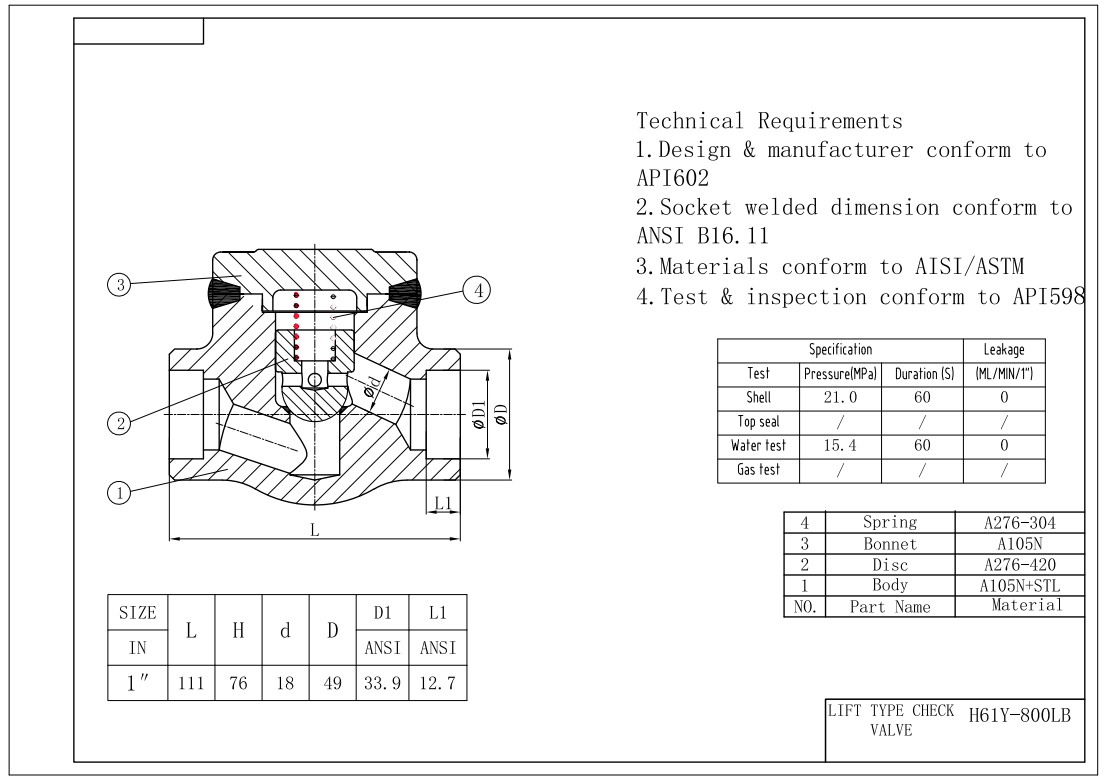
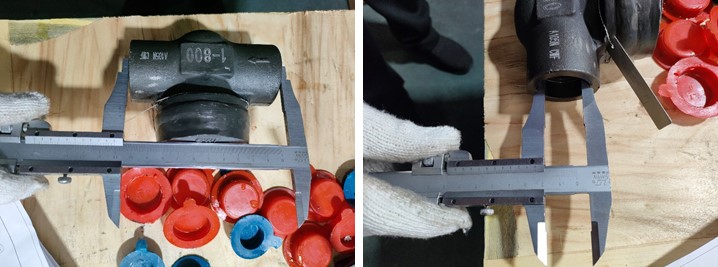
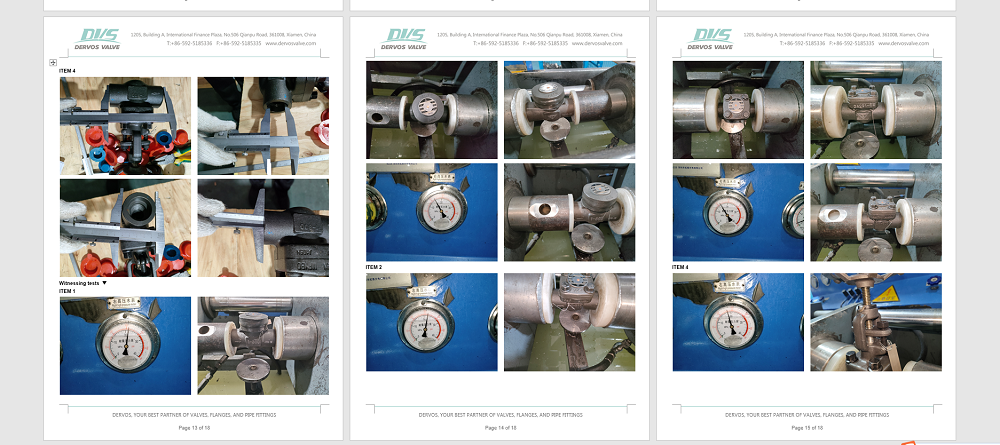
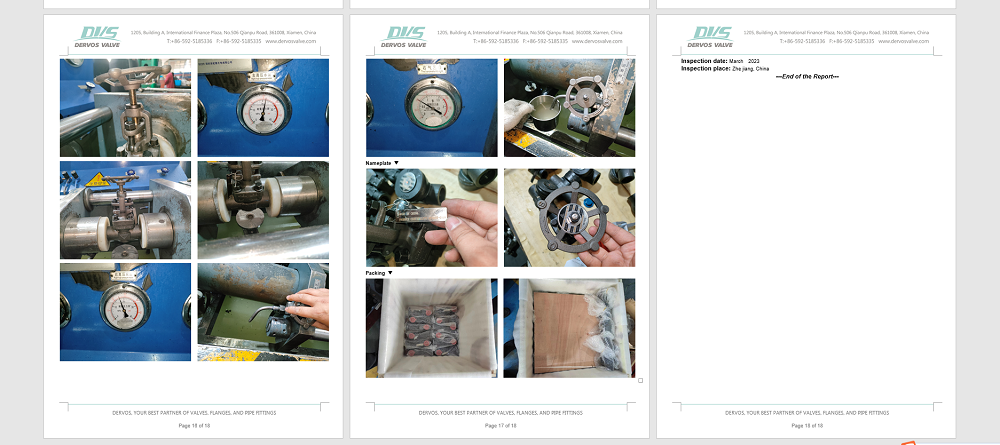
Dimension Checking
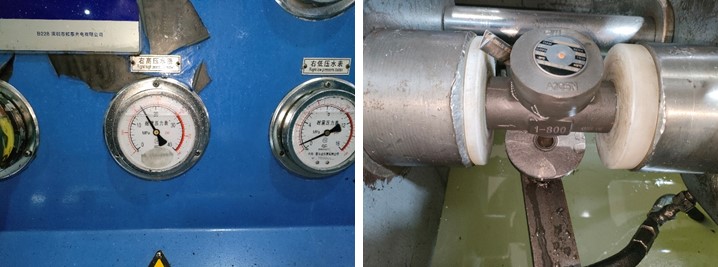
Pressure Testing
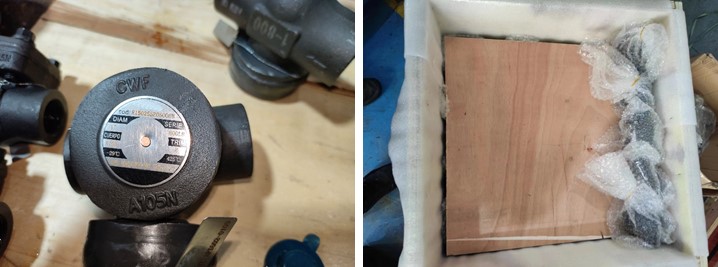
Nameplate & Packing
Inspection report
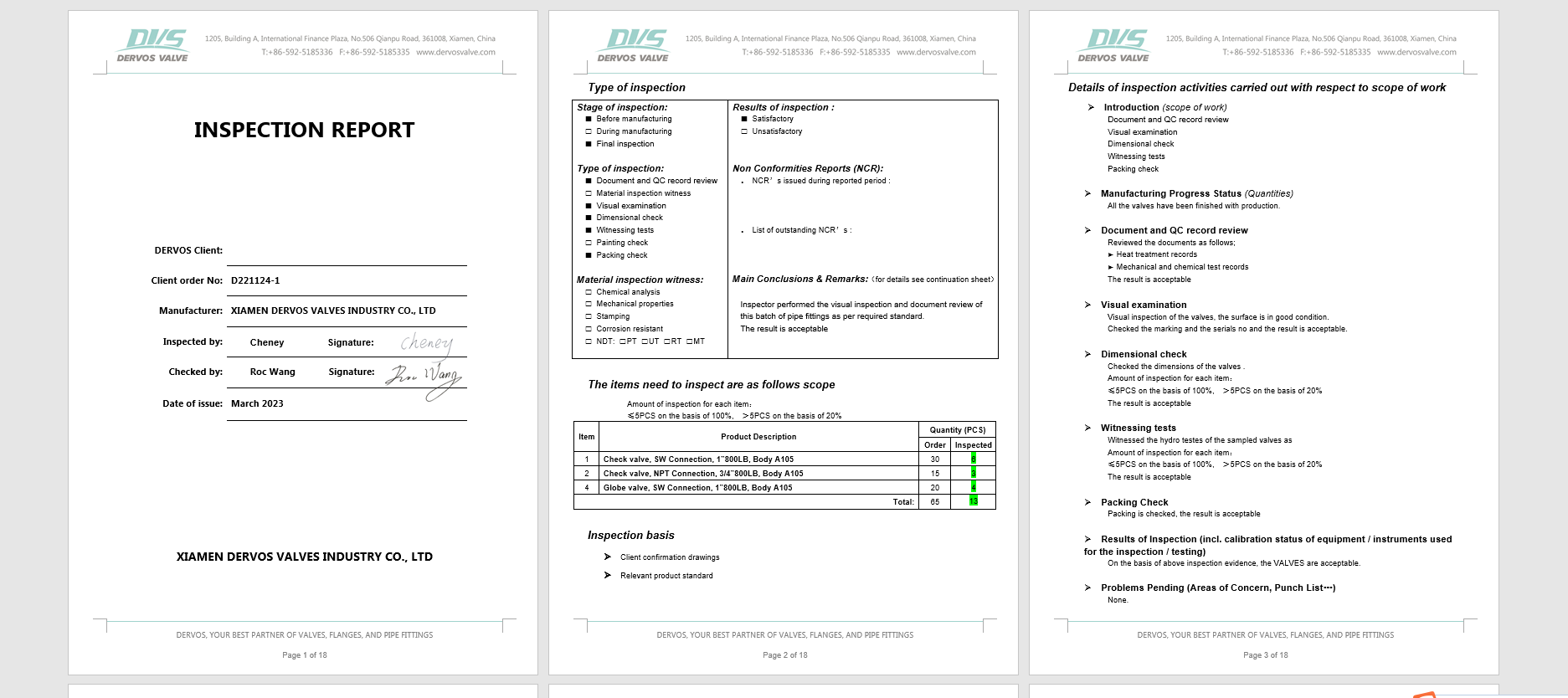
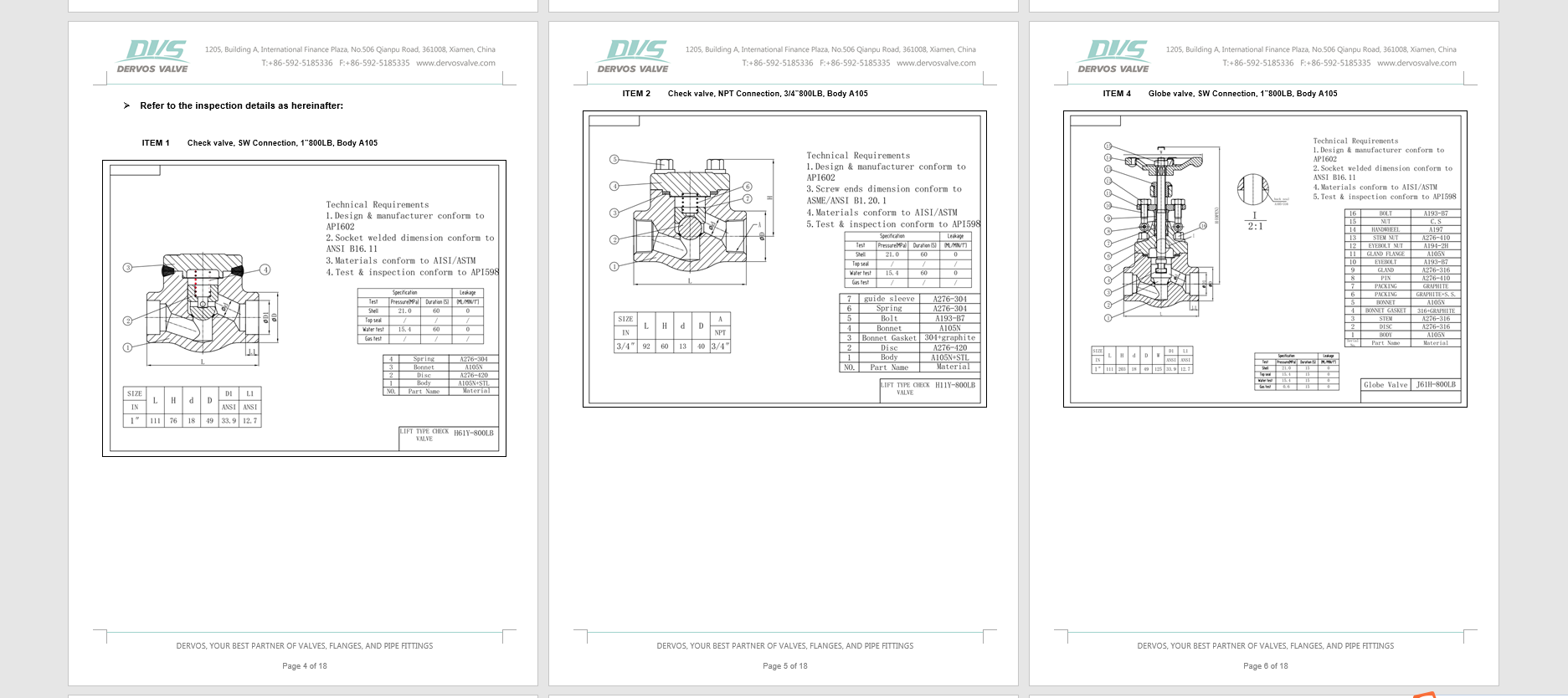
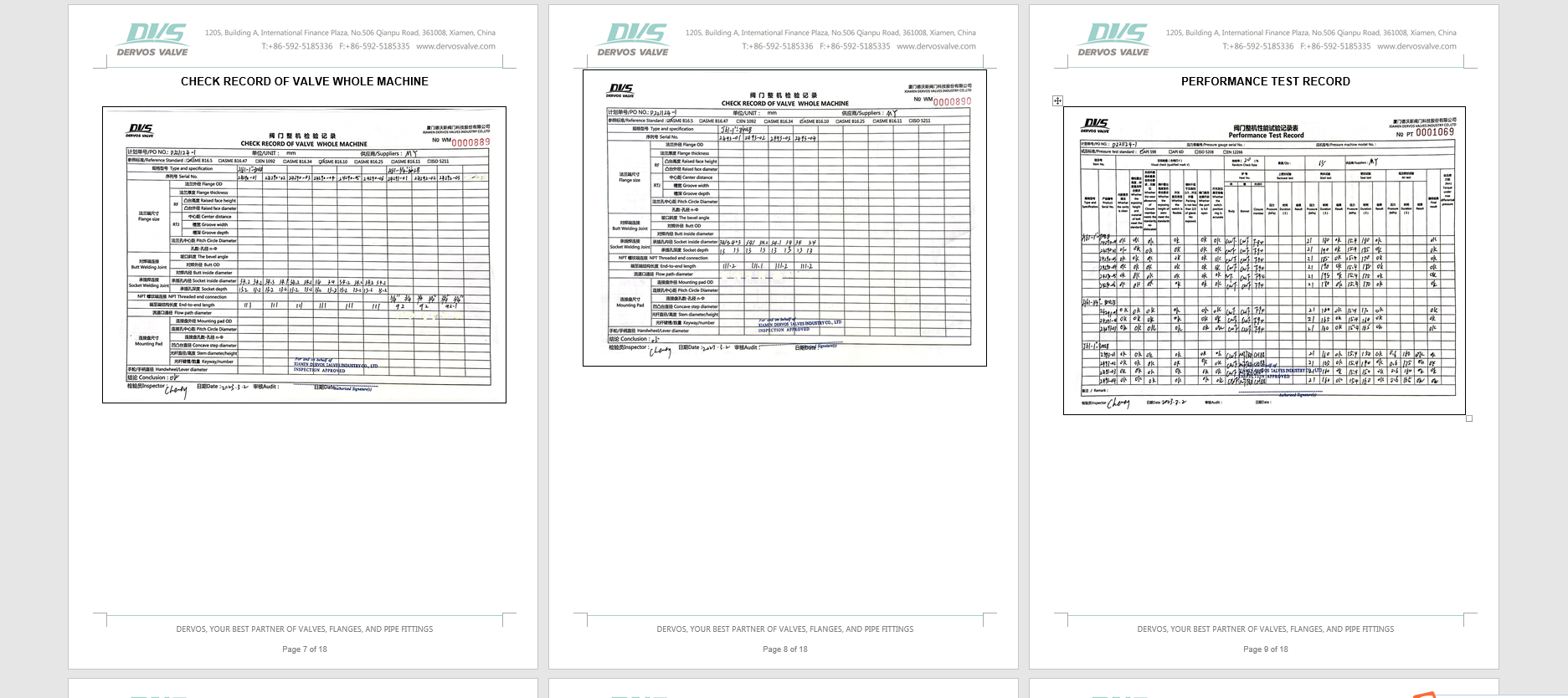
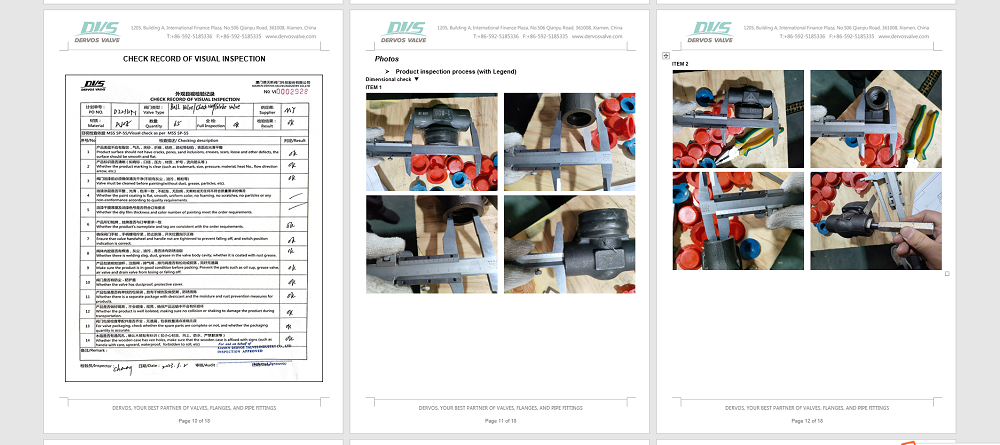
If you are interested in our products and want to know more details,please leave a message here,we will reply you as soon as we can.
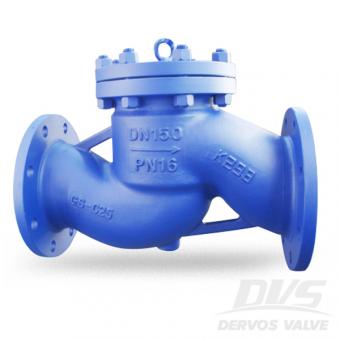
The cast steel lift non return check valve is designed with piston type disc, bolted bonnet, and PN16 RF flange. The spring loaded check valve conforms to DIN 3356. Quick Detail Type Check Valve ( Non-return Valve) Nominal Diameter DN 150 NominalPressure PN 16 Construction Lift Type / Piston Type, Bolted Bonnet Connection Flanged Connection Design & Manufacture DIN 3356 End to End EN 558 Connection EN 1092 Test & Inspection EN 12266 Body Material Carbon Steel GS C25 Media W.O.G. Product Range Body material: CS, SS, Alloy Steel, CI, Bronze, Brass Size Range: 2”~12” (DN50~DN300) End Type: Butt Weld, Socket Weld, Flanged, Screwed Pressure Range: 150lbs~2500lbs (PN16~PN420) Temperature Range: -46℃~ +425℃ Related Knowledge What is a piston check valve? Usually, we have swing type check valve and lift type check valve. A piston check valve and ball check valve both belong to lift type check valve. In a lot of cases, a piston check valve use spring to retain the disc in closed position. The structure of a piston check valve is very similar to the globe valve just without manual operation. Due to its piston type disc and superior leak tight characteristic, the piston check valves are suitable for small size and high pressure conditions.
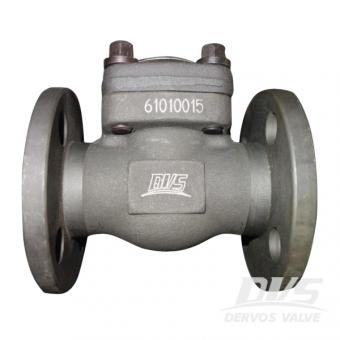
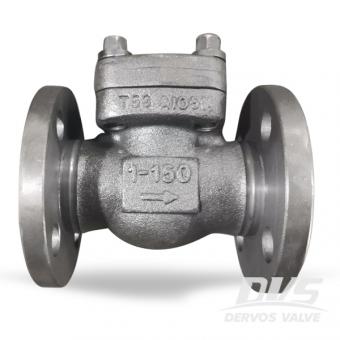
The forged steel lift check valve is designed with class 150 pressure and 1 inch nominal size according to standard API 602. We also call it as piston check valve. Quick Detail Type Check Valve Size 1'' DesignPressure 150LB Construction Lift Type, Piston Type Connection RF Flange Design & Manufacture API 602 End to End ASME B16.10 Connection ASME B16.5 Pressure & Temp ASME B16.34 Test & Inspection API 598 Body Material ASTM A105N Trim Material Trim 5 Temp Range -29℃~+425℃ Media W.O.G. Dimension Checking Pressure Tesing Packing
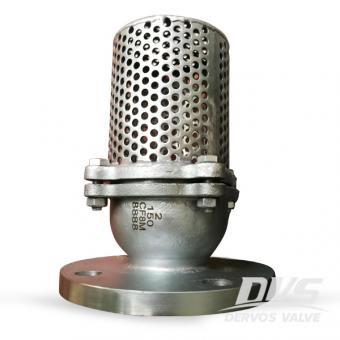
The 2 inch 150LB foot valve is made of stainless steel.
Due to its simple flow efficient and virtually maintenance-free design, thestainless steel ball checkvalve is commonly specified and used in submersible waste water lift stations.
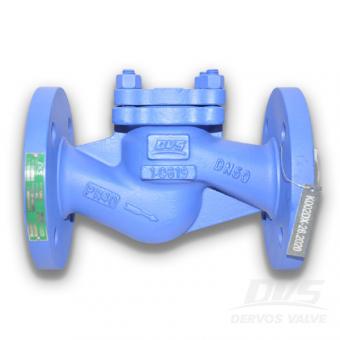
This spring loaded check valve, made according to DIN3840, requires no gravity or backflow pressure to work or actuate.It’s body material 1.0619 enable the valve to work under great heat and It’s spring can accommodate a wide range of temperature, too.
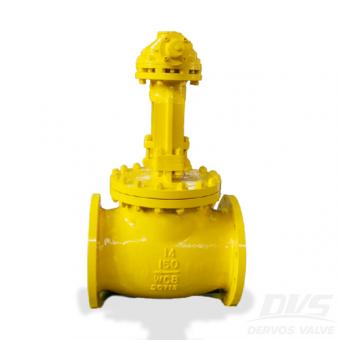
Chinese Valve manufacturer Dervos supplies Check Valve that featured with through conduit, plug type disc and replaceable seat. Expect these 14 inch 150LB check valve, other types valves of different materials, sizes are also available.
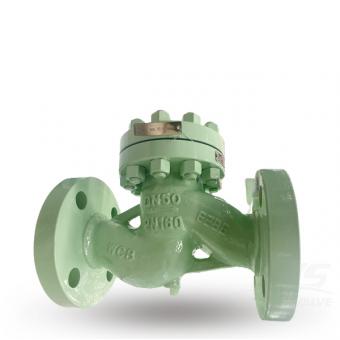
The DN50 PN160 spring loaded lift check valve, made of Cast Steel, is powered by flow and differential pressure with assistance from spring pressure. And it requests no human intervention is required to function, easy to use.
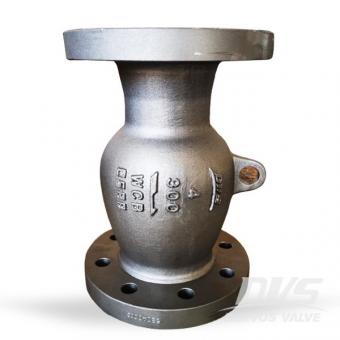
The stainless steel non return valve features in non slam type disc, INCONEL X750 spring, WCB valve body. This valve owns an excellent dynamic performance and minimizes vibrations and noise.
1" 2500LB check valve is made according to ASME B16.34 standard. The valve body is made of F316L. It has the structural characteristics of lifting type, pressure self-sealing, conventional diameter. Its connection mode is FNPT.
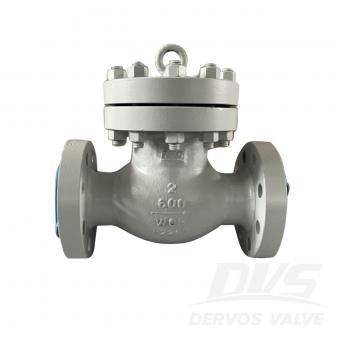
2" 600LB check valve is made according to BS1868 standard. The valve body is made of A216 WCB. It has the structural characteristics of lifting type, bolt cover and body valve seat. Its connection mode is RF.
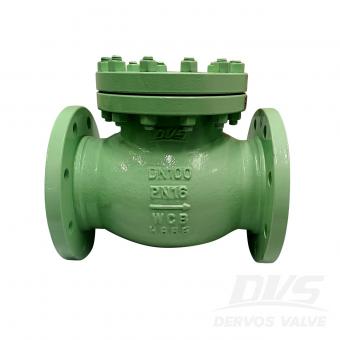
DN100 PN16 check valve is made according to EN12516-1 standard. The valve body is made of ASTM A216 WCB+STL. It has the structural characteristics of lifting type with spring. Its connection mode is EN1092-1 B.
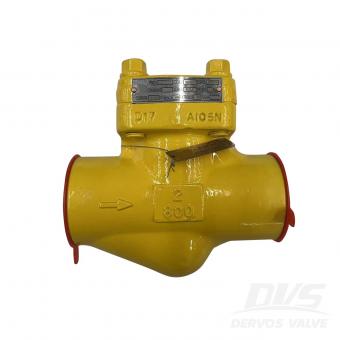
2" 800LB lift check valve is made according to API 602 standard. The valve body is made of ASTM A105N+STL. It has the structural characteristics of lift type. Its connection mode is SW.
Copyright © 2015-2026 DERVOS VALVE CO.,LTD.All Rights Reserved Blog / Sitemap / XML / Privacy Policy