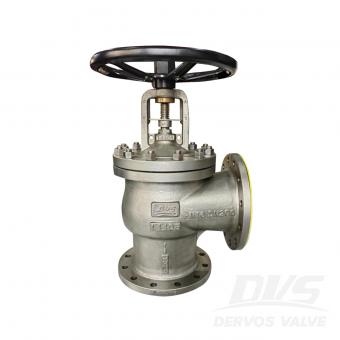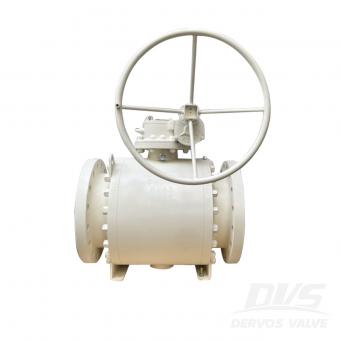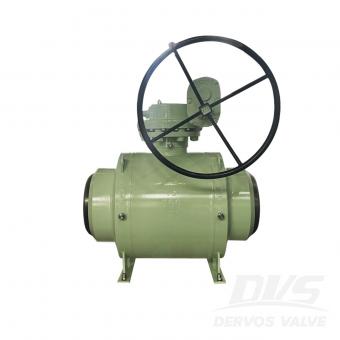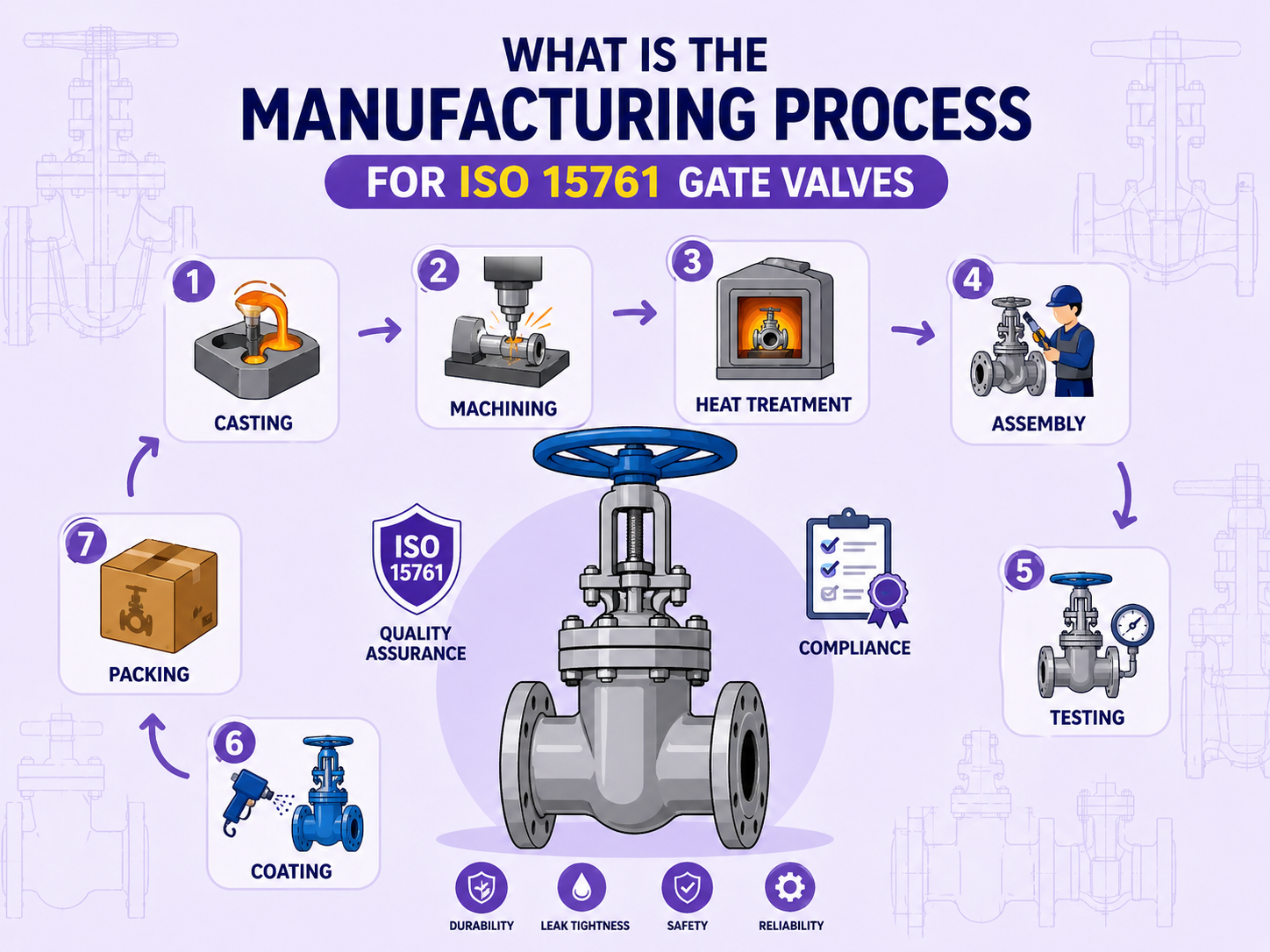
ISO 15761 is a standard for small-bore steel valves used in the oil and gas industry, covering sizes from DN 15 to DN 100 and pressure classes from Class 150 to Class 2500. It applies to gate valves, globe valves, and check valves. These valves are not produced in a single step, but through a sequential manufacturing chain. The quality of each stage directly affects the next. Understanding this chain helps identify critical issues more efficiently during valve selection, compliance review, and supplier evaluation. Complete Manufacturing Process Step 1: Material Selection Material determines the applicable service conditions and is the starting point of the entire process. Common materials under ISO 15761 include: ● Carbon steel for general oil and gas service ● Low-temperature carbon steel for cryogenic or low-temperature conditions (e.g., LNG applications) ● Stainless steel for corrosive media If the service contains hydrogen sulfide (H₂S), materials must also comply with NACE MR0175 / ISO 15156 to prevent sulfide stress cracking. This requirement is applied independently of ISO 15761. Incorrect material selection cannot be compensated by subsequent process control. Step 2: Forging This step determines the internal quality of the valve body. Forging involves forming heated metal under pressure, resulting in a dense internal structure with a lower probability of defects. It is typically preferred for high-pressure or high-reliability applications. For Class 800 and above, forged bodies are commonly selected in engineering practice to reduce internal defect risks and improve structural reliability, although final selection depends on project specifications. Step 3: Machining After forming, precision machining is performed to meet dimensional and sealing requirements. Sealing surface machining is a critical control point. The contact surfaces between the seat and disc must undergo multiple machining and lapping processes to achieve specified flatness and surface roughness, directly affecting shut-off performance. The stem surface must also meet low roughness requirements to ensure long-term packing sealing stability. Excessive roughness accelerates packing wear and may lead to external leakage during operation. Step 4: Welding (Hardfacing of Sealing Surfaces) This process is used to enhance sealing surface performance. For wear or corrosion-resistant applications, sealing surfaces are typically overlaid with hard alloys such as Stellite to improve resistance. During welding, heat input and dilution rate must be controlled to prevent excessive mixing of the base material, which would reduce surface hardness. The hardfacing layer is usually required to meet a specified hardness range (e.g., Stellite typically ≥ HRC 35–45). This process must be performed by qualified welders, with welding procedure specifications (WPS), procedure qualification records (PQR...
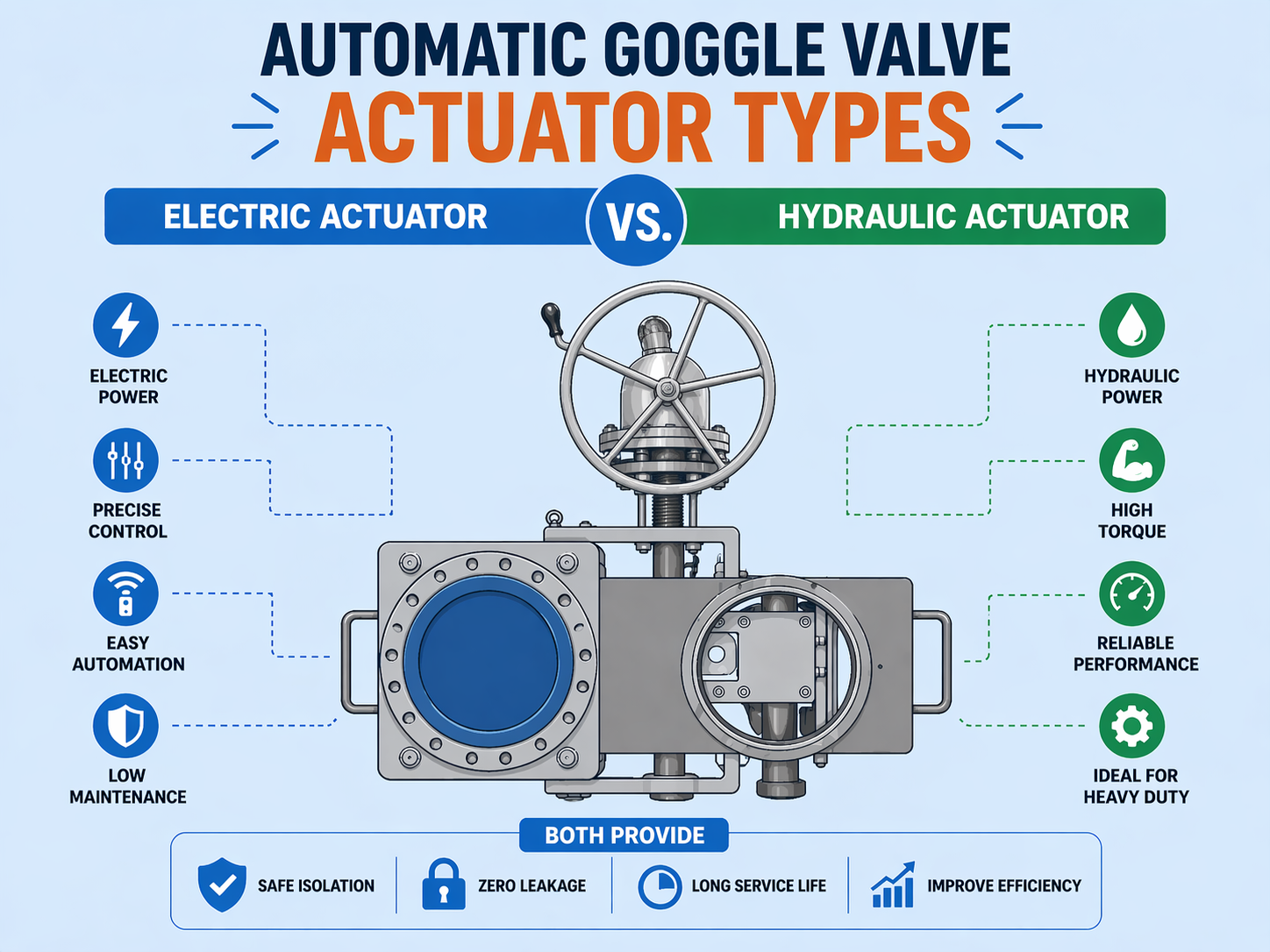
In applications requiring remote operation or frequent switching, an automatic line blind valve is typically equipped with either electric or hydraulic actuation. The fundamental difference between the two does not lie in whether they can be used, but in their load capacity, response characteristics, environmental adaptability, and system complexity. 1. Electric Actuation (Electric Actuated Line Blind Valve) Electric actuation uses a motor combined with a reduction gearbox to generate torque, driving the blind plate to complete the switching operation. Selection logic: ● If power supply on site is stable → electric actuation should be prioritized ● If remote control or automation integration (DCS/PLC) is required → electric actuation is more straightforward ● If switching frequency is relatively high → electric actuation allows better control of operation speed Key features: ● Simple control: can be directly integrated into control systems, enabling remote operation and position feedback ● Compact structure: no additional hydraulic power unit required ● Lower maintenance requirements: routine checks mainly involve the motor and gearbox Limitations: ● If valve size is large or high thrust is required → electric actuation may have insufficient torque ● If the environment is high-temperature, hazardous (explosive), or dusty → higher electrical protection standards are required (e.g., ATEX) ● If power supply is unstable or frequently interrupted → reliability may decrease Conclusion:If the application involves standard automation requirements and moderate load conditions, electric actuation is generally the preferred solution. 2. Hydraulic Actuation (Hydraulic Actuated Line Blind Valve) Hydraulic actuation generates thrust through hydraulic fluid pressure, making it suitable for high-load applications. Selection logic: ● If valve size is large (e.g., DN300 and above) → hydraulic actuation should be prioritized ● If high thrust is required or resistance/sticking needs to be overcome → hydraulic actuation is more stable ● If a hydraulic system is already available on site → integration cost is lower Key features: ● High thrust output: suitable for heavy-duty blind plates or high-pressure pipelines ● Stable operation: provides continuous output with strong resistance to shock loads ● Good controllability: enables precise control through pressure regulation Limitations: ● If no hydraulic power unit is available on site → system complexity increases ● If ambient temperature variation is significant → hydraulic fluid performance may fluctuate ● If maintenance is insufficient → leakage issues are more likely to occur Conclusion:If the application involves high load and high reliabili...
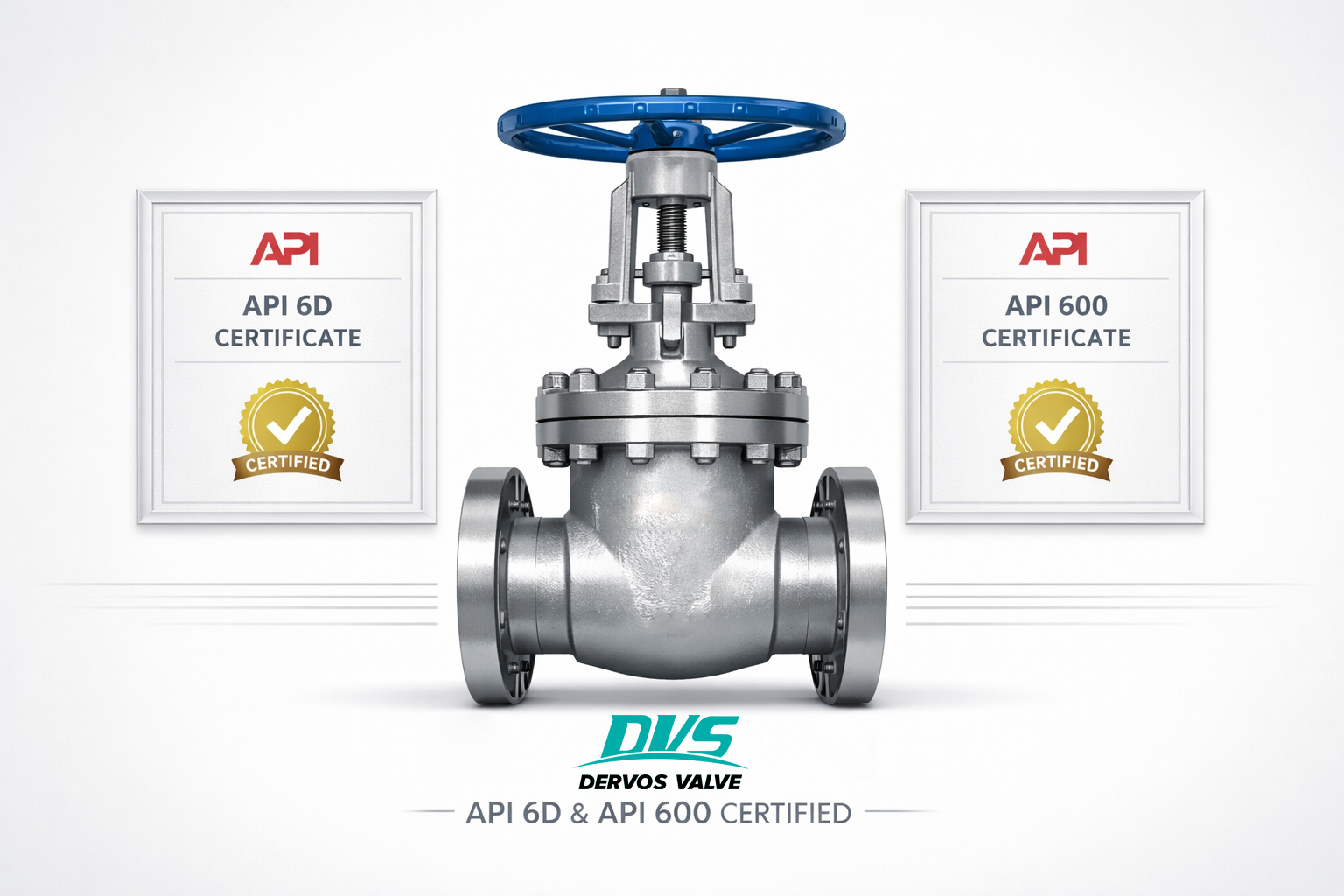
Recently, DERVOS Valve successfully passed the audit by the American Petroleum Institute (API). The company’s API Spec 6D certification for pipeline valves has been renewed, and the API 600 certification has also been issued. Both certificates are valid through 2029. What is an API6D certificate? API 6D is an internationally recognized standard for valves used in oil and gas pipeline transportation systems. It covers the full process requirements for design, manufacturing, and inspection of products such as ball valves, gate valves, and check valves. The certification typically requires renewal audits every three years. What is an API600 certificate? API 600 is an internationally recognized standard for steel gate valves used in oil and gas refinery applications. It defines requirements for design, materials, manufacturing, inspection, and testing. This certification is generally subject to renewal every three years to maintain validity. According to available information, the audit covered multiple aspects, including quality management system operation, production process control, inspection equipment calibration, and personnel qualifications. During the audit, the API inspection team conducted an on-site review of the entire process at DERVOS Valve, from raw material procurement to final product delivery. A representative from the company’s quality department stated that DERVOS Valve has been continuously improving its standardized system management and has established a quality control system covering the full product lifecycle. Key production processes are supported by standardized work instructions, and inspection records are fully traceable to individual orders. The successful renewal of these certifications demonstrates that DERVOS Valve continues to meet API requirements in product manufacturing and quality assurance within the industrial valve sector. It also supports the company’s qualification to supply products for international projects such as oil and gas pipelines and LNG receiving terminals. The company stated that it will continue to focus on standardized production and process management to ensure the effective operation of its quality management system.
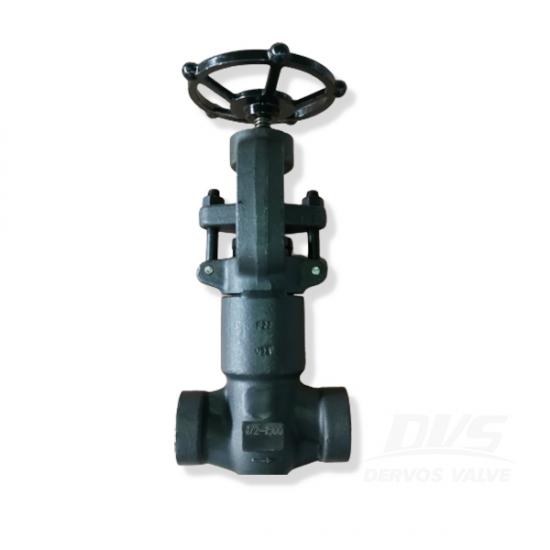
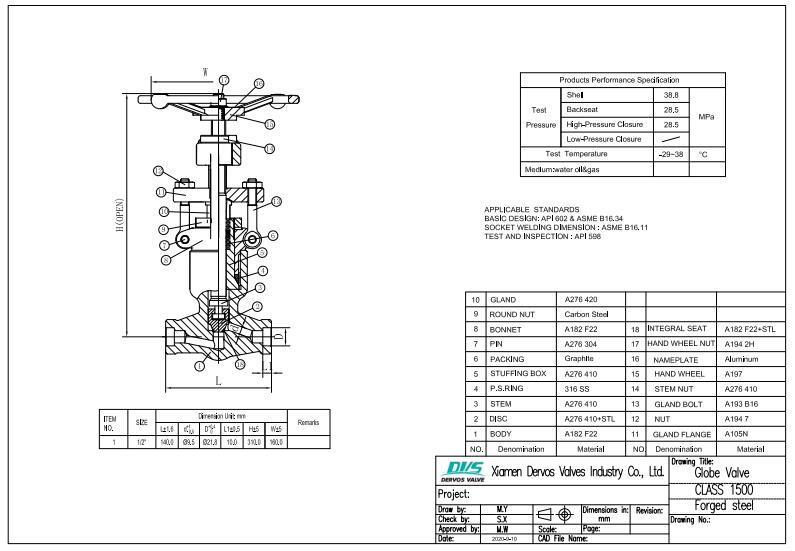
The 1 1/2inch 1500LB globe valve,made of one kind of alloy steel F22, is the best answer to working conditions under high pressure and temperature .
Payment:
30% when order confirmed, 70% before shipmentProduct Origin:
ChinaColor:
CustomizationShipping Port:
Shanghai, ChinaLead Time:
30~60 days Ex Works after order confirmationMaterial:
F22Method of Operation:
HandwheelQuick Detail
|
Type |
Globe Valve |
|
Size |
1 1/2 Inch |
|
Pressure |
1500LB |
|
Construction |
Pressure Sealed;OSY |
|
Connection Type |
Socket Weld |
|
Operation Type |
Handwheel Operated |
|
Design Code |
API602 & ASME B16.34 |
|
Socket Weld Dimension |
ASME B16.11 |
|
Test & Inspection |
API 598 |
|
Body Material |
F22 |
|
Trim Material |
SS304+STL |
|
Temperature Range |
-29~38℃ |
|
Application |
Water, Oil, Gas |
|
Origin |
China |
Features
1. Flexible wedge gate, full guide;
2. Compact structure, reliable sealing, excellent performance and nice appearance;
3. Only one sealing surface on the valve body and disc brings convenient maintenance;
4. Packing can be replaced in-site;
Technical Drawing
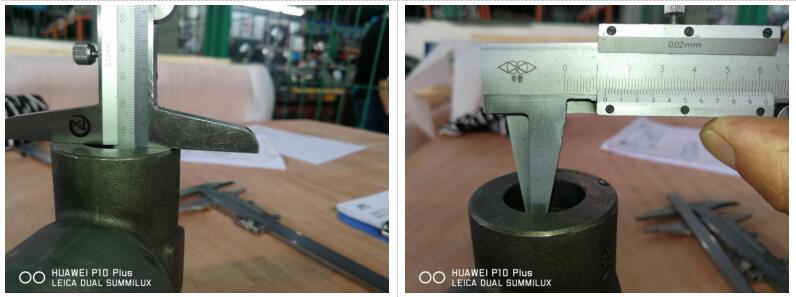
Dimension Check
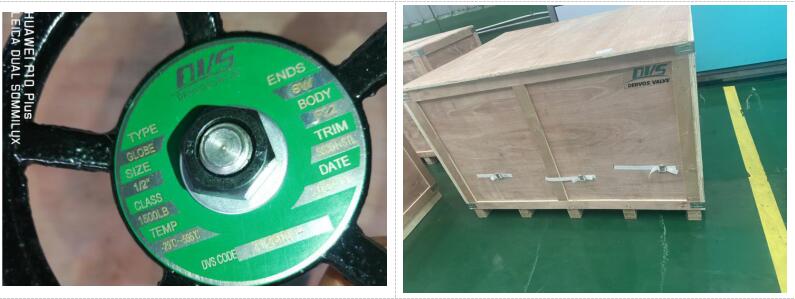
Nameplate&Packaging
About Dervos
Xiamen Dervos Valves Industry Co.,Ltd (stock code 861601), founded in June 2008, is a one-stop industrial valves supplier integrated of R&D, manufacture, resource integration, and trade service. For 12 years, Dervos has been committed to finding solutions for industrial needs and providing professional service for both general and specialized valves.

If you are interested in our products and want to know more details,please leave a message here,we will reply you as soon as we can.
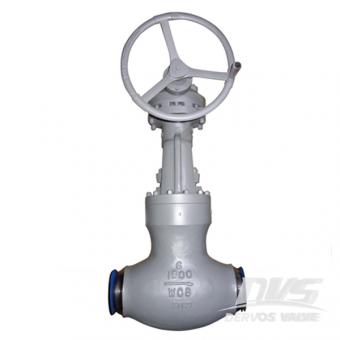
The 6 Inch PSB globe valve has 1500LB design pressure, butt weld end, and gearbox. The full bore globe valve is made of carbon steel WCB body and trim 5 material. Quick Detail Type Globe Valve Size 6'' Design Pressure Class 1500 Construction Pressure Seal Bonnet, Plug Type Disc, Rising Stem Connection Type Butt Weld Operation Type Bevel Gearbox Opearted Design Code BS 1873 End to End ASME B16.10 Connection End ASME B16.25 Pressure & Temperature ASME B16.34 Test & Inspection Standard API 598 Body Material Cast Steel WCB Trim Material Trim NO. 5 Temperature Range -29℃~+425℃ Application WOG Origin China Material & Dimension NPS DN Class 2 2 1/2 3 4 6 8 50 65 80 100 150 200 L(RF) L1(BW) 900LB 368 419 381 457 610 737 1500LB 368 419 470 546 705 832 2500LB 451 508 578 673 917 1022 L2(RTJ) 900LB 371 422 384 460 613 740 1500LB 371 422 473 549 711 841 2500LB 454 514 584 683 927 1038 H(Opne) 900LB 550 605 678 798 930 1230 1500LB 550 605 866 956 1260 1263 2500LB 560 720 755 1230 1791 2086 W 900LB 350 350 400 450 458 610* 1500LB 400 400 450 560 610* 610* 2500LB 400 450 560 310* 610* 760 Weight (RF) 900LB 78 108 102 142 400 960 1500LB 85 110 135 230 660 1590 2500LB 140 168 247 620 1500 3200 Weight (BW) 900LB 66 91 87 128 355 868 1500LB 77 101 122 209 595 1440 2500LB 100 118 180 438 1148 2594 *Manual gear operator is recommended No Part Name Carbon steel to ASTM Alloy steel to ASTM Stainless steel to ASTM WCB WC6 WC9 C5 CF8 CF8M CF3 CF3M 1 Body A216 WCB A217 WC6 A217 WC9 A217 C5 A351 CF8 A351 CF8M A351 CF3 A351 CF3M 2 Seat Ring A105 A182 F11 A182 F22 A182 F5 A182 F304 A182 F316 A182 F304L A182 F316L 3 Disc A105 A182 F11 A182 F22 A182 F5 A182 F304 A182 F316 A182 F304L A182 F316L 4 Stem A182 F6 A182 F304 A182 F304 A182 F316 A182 F304L A182 F316L 5 Disc nut A182 F6 A182 F304 A182 F304 A182 F316 A182 F304L A182 F316L 6 Cap SS Spiral Wound graphite or SS Spiral Wound PTFE 7 Body Seal Flexible Graphite+316 8 Adjustment Gasket F6 F6 F316 9 Stem packing Flexible Graphite+316 10 Gland Nut A194 2H A194 8 11 Gland Eyebolt A193 B7 A193 B8 12 Pin Carbon steel or Stainless Steel 13 Cap Nut Carbon steel or Stainless Steel 14 Gland A182 F6 A182 F304 A182 F316 A182 F304L A182 F316L 15 Gland Flange A216 WCB A351 CF8 16 Yoke A216 WCB A351 CF8 17 Stem Nut A439 D2 or B148-952A 18 Screw Carbon steel 19 Handwheel Ductile Iron or carbon steel 20 Name Plate Stainless steel or Aluminum 21 Washer Carbon steel 22 Nut Carbon steel or Stainless Steel Related Knowledge Why do we use pressure seal bonnet? Pressure sealed bonnet are often used for valves with high design pressure. The higher the internal pressure gets, the greater the sealing force beween body and bonnet become. For bolted bonnet valves, the body and bonnet are joined by studs and nuts with a gasket between the flange faces to facilitate sealing. However,as system pressure increases,the potential for leakage through the body and bonnet increases. But for pressure sealed valve, “bonnet take-up bolts” to pull the bonnet up and seal against the pressure seal gasket. That is why when pressure increase, the performance of pressure seal gasket between body and bonnet becomes better.
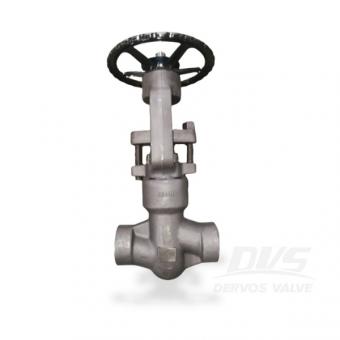
The 1 1/2inch 1500LBglobe valve,made of A105N are best suited for throttling application at high pressure and temperature.
Copyright © 2015-2026 DERVOS VALVE CO.,LTD.All Rights Reserved Blog / Sitemap / XML / Privacy Policy