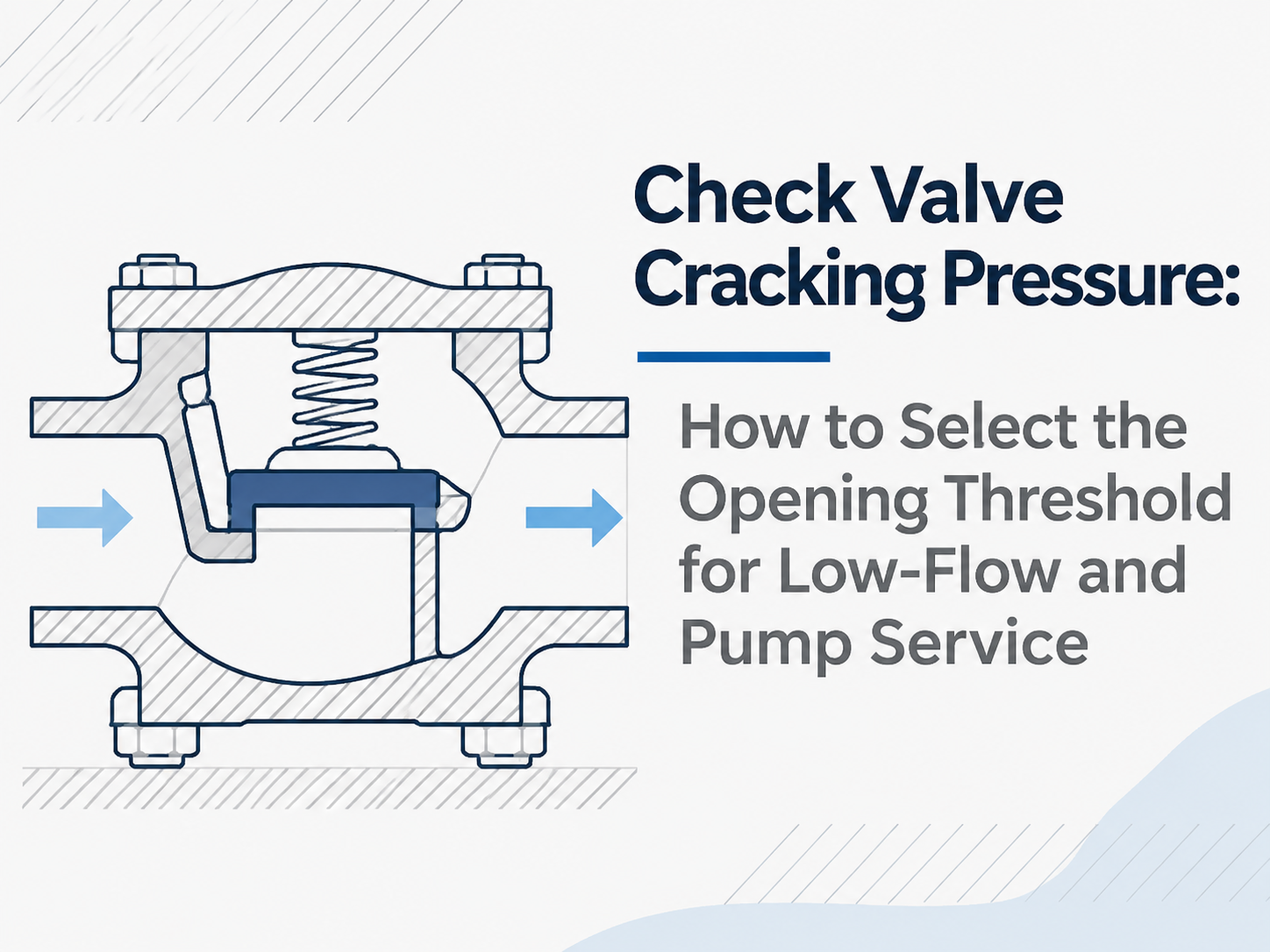
A check valve can begin to pass fluid and still be far from a stable open position. Check valve cracking pressure is therefore the threshold for first detectable flow, not the full-open pressure drop or proof of reliable minimum-flow operation. For low-flow and pump service, the opening threshold is acceptable only when the system can exceed it in the worst forward-flow case. The selection must then pass three separate checks: stable valve travel at minimum flow, acceptable pressure loss at normal and maximum flow, and timely closure when the pump stops. Start with the Worst Available Differential Pressure Parker defines cracking pressure as the upstream pressure at which detectable flow is measured, while Swagelok notes that first flow does not mean the valve is fully open. The relevant system value is not pump discharge pressure alone, but the pressure difference across the valve when it must open. For an initial screen: Available opening ΔP = minimum upstream pressure at the valve − maximum downstream pressure at the valve If the pressures come from remote points, correct them for elevation and line losses. Evaluate the least favorable credible case, such as a variable-speed pump starting at low speed or a standby pump opening against a live common header. The maximum guaranteed cracking pressure of the offered valve should be below this available ΔP, with an engineering allowance for manufacturing tolerance, temperature, orientation, deposits and measurement uncertainty. There is no defensible universal allowance. A nominal value alone is insufficient because catalog cracking pressure may be specified as a range, and a valve left idle may initially require a higher differential than it does after cycling. Low Cracking Pressure Does Not Solve Low-Flow Instability After the closure member lifts, more differential pressure and flow force are needed for stable travel. An oversized valve may crack open but hover near the seat because velocity is too low, causing clicking, flutter, impact and accelerated wear. Swagelok’s service guidance identifies excessive spring cracking pressure and excessive valve size as possible causes of chatter near the threshold. Size from the operating envelope rather than automatically matching the pipe diameter. Ask the supplier to evaluate three points for the exact size, spring and trim: Operating point Required evidence Minimum continuous flow Stable-open position, minimum stable flow or velocity, and corresponding ΔP Normal flow Model-specific pressure-drop curve or validated flow coefficient Maximum flow Peak ΔP, velocity limits, erosion risk and acceptable travel Cracking pressure answers “When does motion begin?” The flow curve and stable-flow limit answer “Will the valve remain open without damaging itself?” Pump Opening and Pump Shutdown Are Different Design Cases At s...
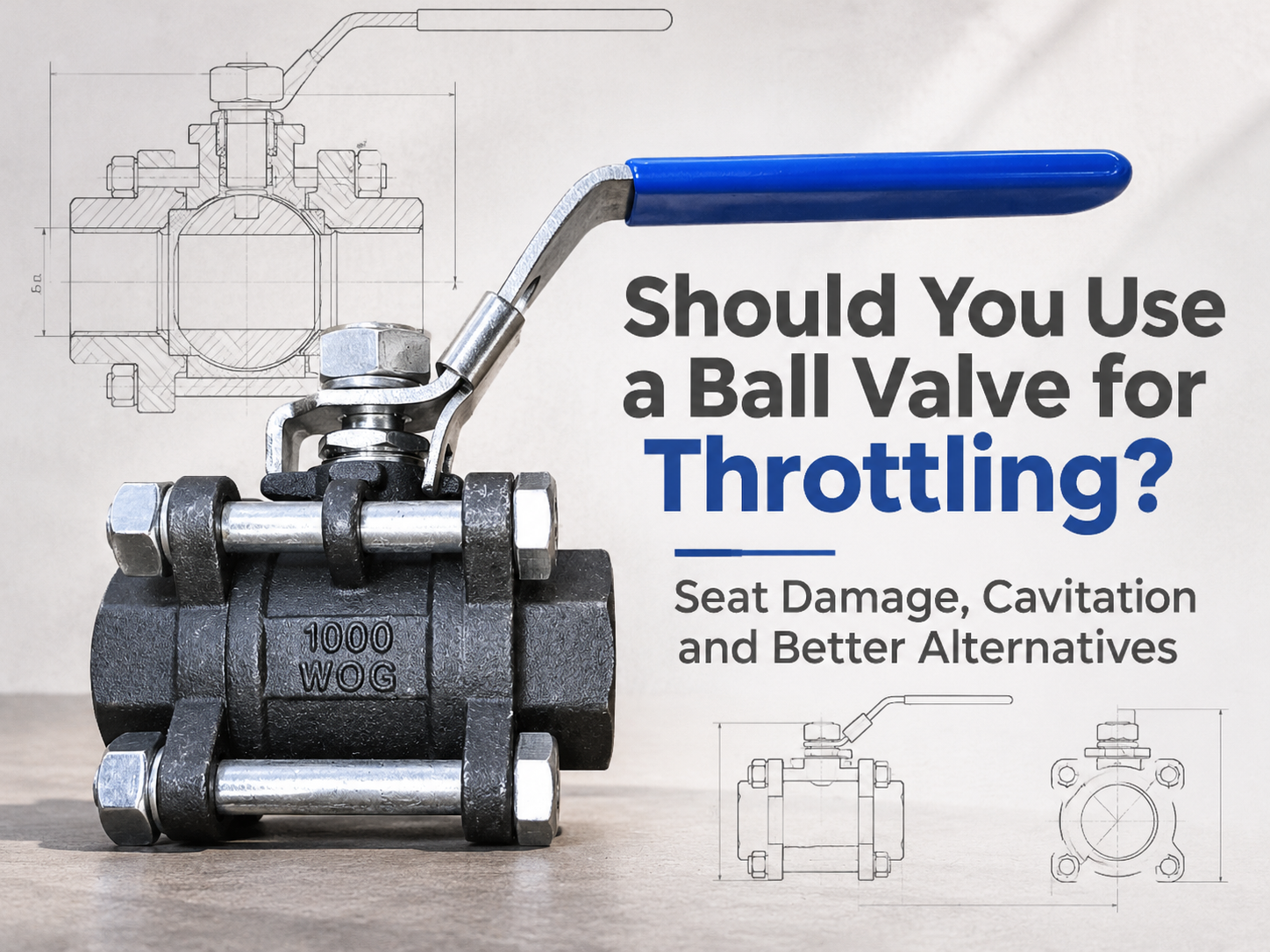
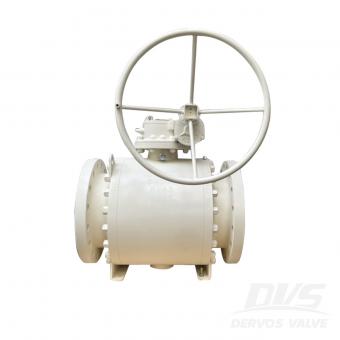
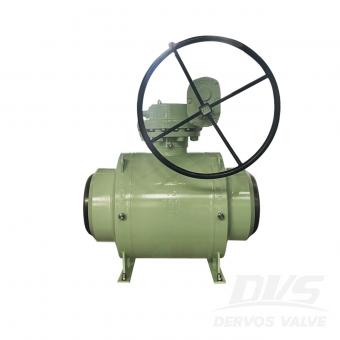
A standard on-off ball valve should not be the default choice for continuous throttling. It can restrict flow, but that does not make it a control valve. Holding it partly open can expose the seat to a concentrated high-velocity jet, produce unstable control and, in liquid service, create cavitation. Brief restriction during start-up or shutdown may be acceptable if the manufacturer permits it. Regular modulation requires a valve designed and sized for that duty. A Part-Open Ball Puts the Seat in the Flow Path When a standard ball valve is fully open, the bore provides a relatively straight flow path. As the ball rotates toward closed, the opening becomes a narrow, changing shape. Velocity rises through this restriction, and the emerging jet can pass close to the downstream seat edge and body cavity. That matters because the seat performs the shutoff function. A soft seat may deform, cut or erode under high velocity, heat and entrained solids. A metal seat may tolerate harsher conditions, but hardness alone does not provide a suitable control characteristic or prevent local erosion. Damage often appears later as increased shutoff leakage, even though the valve still moves normally. Control quality is another limitation. A conventional full-port ball may pass a large increase in flow over a small change in travel once it begins to open. The actuator can therefore hunt around a narrow angle instead of positioning smoothly across a useful range. A positioner cannot correct an unsuitable valve characteristic. Cavitation Depends on the Local Pressure, Not Just Line Pressure Cavitation is possible when liquid accelerates through the restriction and its local pressure falls below the liquid's vapour pressure. Vapour bubbles then form. If pressure recovers above vapour pressure downstream, the bubbles collapse and release damaging energy near the valve or downstream pipe. Ball valves are generally high-recovery valves: much of the pressure lost at the narrowest flow area is recovered downstream. That means the minimum internal pressure can be considerably lower than the measured outlet pressure. A moderate-looking inlet-to-outlet pressure drop may therefore hide a more severe pressure dip inside the valve. Noise resembling gravel, vibration and rough pitting are warning signs, but sound alone is not a design method. The evaluation needs minimum, normal and maximum flow; upstream and downstream pressure at each case; fluid temperature and vapour pressure; density; solids content; valve size; and the manufacturer's pressure-recovery and sizing data. If downstream pressure remains below vapour pressure, the condition is flashing rather than cavitation and requires a different damage assessment. A Ball Valve Can Throttle When It Is a Control Valve A V-port or segmented ball introduces a shaped opening that gives a more predictable relationship between travel and flow. Correctly sele...
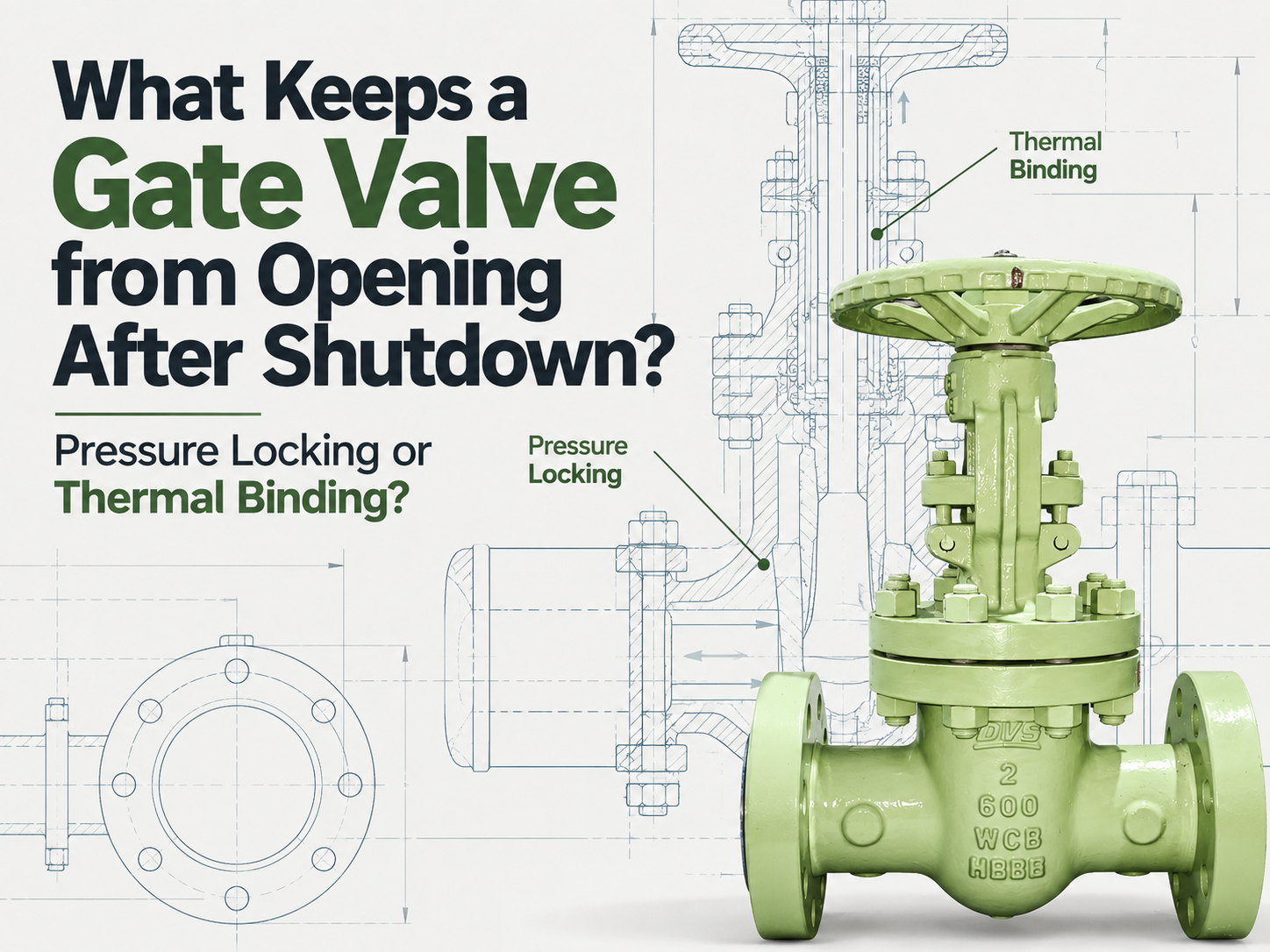
A gate valve that will not open after shutdown may be pressure locked or thermally bound, and the shutdown history usually separates the two. Pressure locking means pressure is trapped in the bonnet cavity; thermal binding means a hot-closed wedge has developed mechanical interference during cooldown. Neither is an automatic reason to raise the actuator torque setting. Pressure Locking Starts in the Bonnet Cavity Pressure locking can affect flexible-wedge and double-disc gate valves when liquid enters the bonnet cavity during operation or through slight seat movement or leakage. Once the valve is closed, that liquid may be trapped between the two seating boundaries. The problem develops when cavity pressure exceeds the pressure on both sides of the closed gate. The line may have been depressurised after the cavity filled at operating pressure, or trapped liquid may have heated and expanded. The resulting load forces the closure element against both seats, leaving normal actuator thrust insufficient to start opening. A failed opening after line depressurisation, or after the closed valve was heated, points toward pressure locking. Where an approved connection permits measurement, bonnet pressure is stronger evidence than high motor current or a torque trip alone. Thermal Binding Follows Hot Closure and Cooldown Thermal binding follows a different sequence. A wedge gate valve is seated hot and the system cools before the next opening command. Unequal contraction of the body and wedge can increase mechanical interference at the seats. Solid wedges are particularly susceptible, although large temperature changes can also affect flexible wedges. This mechanism does not require an overpressurised cavity. Its strongest clue is timing: the valve closes normally at operating temperature but refuses to open after cooldown. Behaviour that changes as temperature returns toward the closing condition supports the diagnosis, but deliberate reheating requires an approved procedure. Uncontrolled external heating is unsafe. Reconstruct the Shutdown Before Touching the Torque Switch Start with the pressure and temperature timeline. Record when the valve closed, whether either side was later drained or depressurised, whether the body remained exposed to heat, and the temperature at the failed opening attempt. Confirm the gate design from drawings or manufacturer records; solid-wedge, flexible-wedge and double-disc designs do not share the same susceptibility. Rule out ordinary faults such as lost power or pressure, wrong limit or torque-switch settings, stem or packing friction, gearbox damage, corrosion and debris. Actuator alarms and the point where movement stopped help distinguish a drive problem from a gate held at the seats. Do not bypass the torque switch or repeatedly hammer the valve open. Extra thrust may bend the stem, damage the seats or overload the gearbox. A larger actuator d...

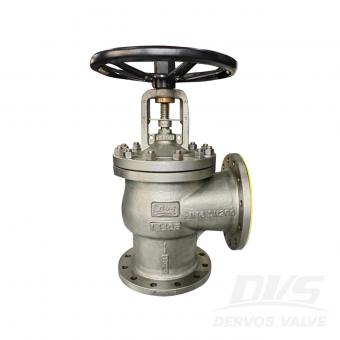
DN100 PN16 change over valve is made according to EN12516 standard. The valve body is made of ASTM A216 WCB. It has the structural characteristics of bolt cap and structural length of 510mm. Its connection mode is RF. And it has hand wheel operation mode.
Payment:
30% when order confirmed, 70% before shipmentProduct Origin:
ChinaColor:
CustomizationShipping Port:
Shanghai, ChinaLead Time:
30~60 days Ex Works after order confirmationMaterial:
ASTM A216 WCBMethod of Operation:
Hand WheelProduct Description
|
Type |
Change Over Valve |
|
Size |
DN100 |
|
Pressure |
PN16 |
|
Connection |
RF |
|
Operation |
Hand Wheel |
|
Body Material |
ASTM A216 WCB |
|
Design Norm |
EN12516 |
|
Face to Face Dimension |
Customer Requirements |
|
Flange Dimension |
EN1092-1/B1 |
|
Test & Inspection Code |
EN12266-1/2 |
|
Temperature |
-29 ~ 425°C |
|
Applicable Medium |
Water, Oil and Gas |
Features
1. Wear resistance, corrosion resistance, long service life, and low maintenance cost;
2. Provide multiple diameter and flow specifications to meet the needs of different systems, from precise control of small flow to main circuit control of large flow.
Technical Drawing

Dimension Checking

Pressure Testing

Painting

Nameplate & Packing

Inspection report


If you are interested in our products and want to know more details,please leave a message here,we will reply you as soon as we can.
The DN32 JIS 5K globe valve is suitable for marine application. The bronze globe valve is handwheel operated with FF flange. Quick Detail Type Marine Globe Valve Size DN 32 Design Pressure 5K Connection Type FF Flange Design Code JIS F7301 Face to Face JIS B2002 Body Material Bronze Trim Material Bronze Application Water, Oil, Gas Purchasing System Late delivery time become a common issue in 2018. However, Dervos keep more than 90% on-time delivery, so how do we achieve that? It owns our purchasing department. How do we react to a delay crisis? -Visit the factory everyday and supervise on site -Initiate related resources, such as machining workshops and skilled workers to help on expediting production What benefits could we do for you by keeping on-time delivery? -Avoid penalty from end user -Accumulate reputation -Gain client’s trust FAQ 1. Do you have your own foundry or forge shop? No, but we have an approved list of foundries over the past decade of casting inspections, which can make sure that our castings are of good quality and all the raw materials are traceable. 2. Can you do NDE Capability radiography, MT, UT, LP? Of course, we can do all these tests upon our clients, but there will be additional charge to these tests. 3. What kind of test will you do for each order? After valve assembly, we will do hydraulic test for shell & sealing and air test. Plus, we will do dimension checking (face to face dimension, flange dimension) as per assembly drawing and standards.
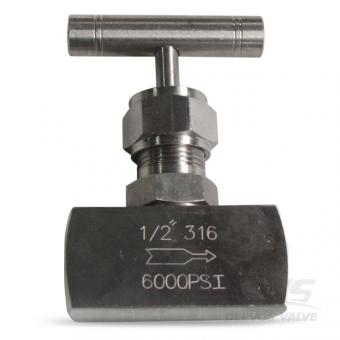
The 6000 psi high pressure needle valve is made of stainless steel F316 according to ASME B16.34. The 1/2 inch NPT needle is used for regulating the flow of fluid and suitable for application with high pressure and small flow. Quick Detail Type Needle Valve Size 0.5 Inch DesignPressure 6000 PSI ConnectionType Female Thread FNPT Design Code ASME B16.34 End Connection ASME B1.20.1 Face to Face ASME B16.10 Test & Inspection API 598 Body Material SS316 TrimMaterial SS316 Application Water, Oil, Gas Why choose Dervos as your partner?One Stop ServiceHere in Dervos, we can provide you with one stop service by our complete product list, it means, you don’t need to search for various suppliers for different types of valves, and it will surely save your time and energy. All you need to do is choose Dervos and we will provide complete solutions to you. On Time DeliveryDervos keeps a high percentage of on time delivery. Why could we achieve that? Our purchasing team follows the order very closely. Plus, our QC and sales person will also do monitoring job on each order.Strict Quality Control All the members in the QC team are very experienced and professional. For each order, they will check the raw material, manufacturing process, do the pressure testing on shell and seal, and check the valve dimension per assembly drawing. Lastly, they will inspect the painting and packaging.
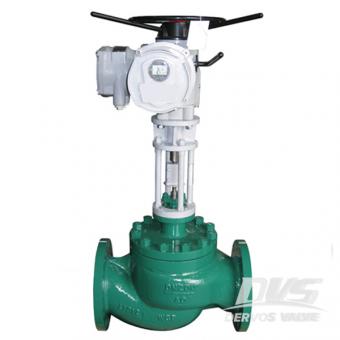
The electric control valve is made of carbon steel WCB designed for precise flow control and regulating. Dervos have many suppliers of different control valve types. Quick Detail Type Globe Control Valve Size DN 200 DesignPressure PN 40 ConnectionType RF Flange Design Code ASME B16.34 End Connection ASME B16.5 Face to Face ASME B16.10 Test & Inspection API 598 Body Material A216 WCB TrimMaterial Stainless Steel Application Water, Oil, Gas Company Profile Founded in 2008, DERVOS VALVES INDUSTRY CO., LTD is a professional vendor, exporter and supplier of industrial valves, pipes and fittings. Dervos has expanded its business to five continents around the world, including Europe, Oceania, Africa, America and Asia. Our commitment is to find the most suitable products for our clients in an efficient way. We adopt modern management skills to make sure efficiency in production and selling system. How we handle complaints When complaints come, how do we handle them? We will reply within 24 hours and ask more proof from clients. Then we discuss with QC and factories to identify the reason. In the third day, we will provide a solution to clients.
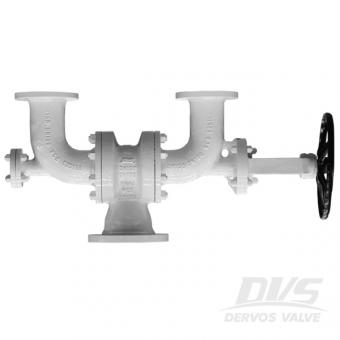
The changeover valve is combined by two valves that are different from nominal diameter--one is DN100, the other is DN150. A handwheel is put on the right side of the valve to help control the large WCB-made device. Designed as per DIN 3356, the valve is usually put in the oil industry.
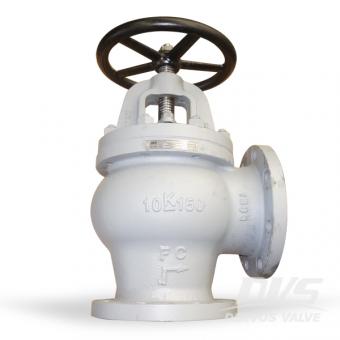
The 150A JIS 5K globe valve is suitable for marine application. The Cast Iron globe valve is handwheel operated with FF flange.

The inverted bucket type steam trap is known as the most reliable steam trap. The DN20 WCB inverted bucket steam traps are used in steam heating systems to stop steam from draining out, so choosing the right trap can help steam heating equipment work more efficiently.
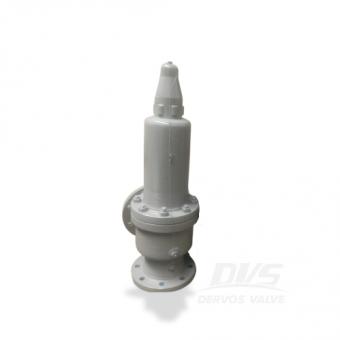
The DN100 safety valve, made of WCB and according to GB/T12241-2005, usually work as the over-pressure protection device that work under a steam, air, water or other non-corrosive medium.
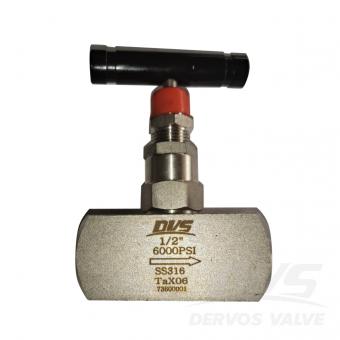
1/2" 6000PSI needle valve is made according to ASME B16.34 standard. The valve body is made of SS316. It has the structural characteristics of straight through. Its connection mode is FNPT. And it has lever operation mode.
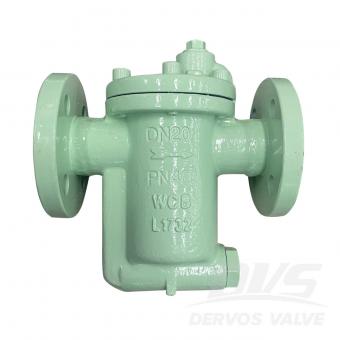
DN20 PN40 steam trap valve is made according to GB/T22654-2008 standard. The valve body is made of WCB. It has the structural characteristics of inverted bucket steam trap and model L881F. Its connection mode is RF.
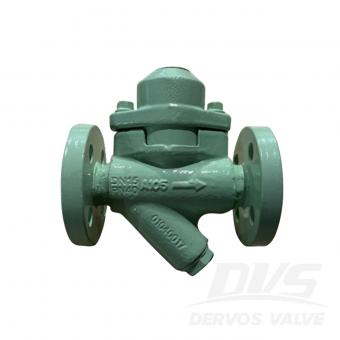
DN15 PN40 steam trap valve is made according to GB/T22654-2008° standard. The valve body is made of A105. It has the structural characteristics of bimetal type and BK47-Y model. Its connection mode is RF.
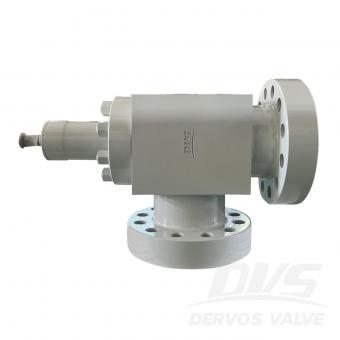
6" 1500LB throttle valve is made according to ASME B16.34 standard. The valve body is made of LF2. It has the structural characteristics of angular, full flow and body cover bolted. Its connection mode is RTJ. And it has hand wheel operation mode.
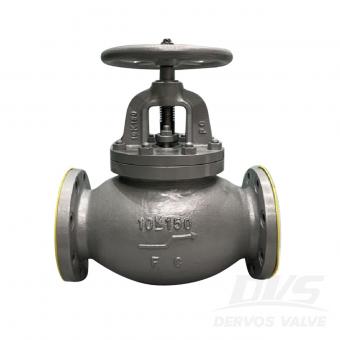
DN150 JIS10K globe check valve is made according to JIS F7400 standard. The valve body is made of cast iron. It has the structural characteristics of bolt cover and F7375. Its connection mode is FF.
Copyright © 2015-2026 DERVOS VALVE CO.,LTD.All Rights Reserved Blog / Sitemap / XML / Privacy Policy