In pipeline isolation systems used across oil & gas, LNG, refining, and chemical processing, line blind valves are still one of the most reliable ways to achieve true positive isolation.
Unlike conventional block valves, a line blind provides a physical barrier in the pipeline, which makes it a preferred solution during shutdowns, maintenance isolation, and safety-critical operations where zero leakage is required.
That said, not every valve manufacturer has real engineering depth in line blind or spectacle blind systems. Many focus on general-purpose isolation valves, while only a smaller group actually understands pipeline isolation design, API requirements, and field maintenance conditions.
Below is a practical list of manufacturers and suppliers commonly considered in the U.S. industrial market in 2026. This is not a ranking based on size alone, but on engineering relevance, application experience, and suitability for real-world pipeline service.
Before looking at suppliers, most EPC contractors and plant engineers evaluate a few non-negotiable criteria.
For upstream, midstream, and refinery applications, typical baseline requirements include:
● API 6D (pipeline valves)
● ASME B16.34 (pressure-temperature ratings)
● API 598 (testing)
● NACE MR0175 / ISO 15156 (sour service)
● Fire-safe design (API 607 / API 6FA where applicable)
If a manufacturer cannot consistently meet these standards with documentation, they are usually eliminated early in the sourcing stage.
Line blind valves are not standard catalog products in most cases. Engineers usually look for suppliers who understand:
● Positive mechanical isolation (not just soft-seated sealing)
● Pipeline shutdown procedures (turnaround operations)
● Field installation constraints
● Maintenance safety requirements
Experience in refinery shutdowns or gas transmission systems is often more important than brand recognition.
Most industrial applications fall within:
● ASME Class 150 to Class 2500
● Carbon steel and low-temperature service
● RTJ and RF flange connections
● Large diameter pipeline systems in some cases
Not all manufacturers are comfortable working across this full range.
In modern EPC projects, documentation is as important as the valve itself:
● EN 10204 3.1 / 3.2 certificates
● Material traceability (heat numbers)
● NDT reports
● Hydrostatic / pneumatic test reports
● PMI reports for alloy verification
Powell is one of the oldest industrial valve manufacturers in the U.S. and is widely used in refinery and power applications where long service life and conservative design margins are required.
From a field perspective, Powell is typically considered a “heavy-duty” industrial valve supplier rather than a niche isolation specialist.
They are commonly selected for:
● High-pressure refinery systems
● Steam and hydrocarbon service
● Applications requiring strict ASME compliance
Their strength lies in manufacturing discipline and consistency rather than customization flexibility.
Cameron, part of SLB, is a major name in pipeline and upstream oil & gas valve systems.
Their engineering focus is clearly on pipeline integrity and severe-service applications. In many midstream projects, Cameron products are specified directly in engineering standards.
Typical applications include:
● Transmission pipelines
● Offshore production systems
● High-pressure hydrocarbon service
They are particularly strong in API 6D pipeline valve technology and large-scale project execution.
Flowserve is more of a complete flow control solutions provider than a pure valve manufacturer.
In EPC environments, Flowserve is often selected when valve systems need to integrate with:
● Actuation packages
● Control systems
● Condition monitoring platforms
For line blind valve applications, Flowserve is usually involved indirectly through engineered isolation or severe-service valve packages rather than standard catalog blind valve products.
Flowserve is more of a complete flow control solutions provider than a pure valve manufacturer.
In EPC environments, Flowserve is often selected when valve systems need to integrate with:
● Actuation packages
● Control systems
● Condition monitoring platforms
For line blind valve applications, Flowserve is usually involved indirectly through engineered isolation or severe-service valve packages rather than standard catalog blind valve products.
Velan is well known for high-performance valves used in critical service environments.
Their engineering approach is conservative and heavily focused on safety-critical applications.
They are frequently used in:
● Nuclear and power generation facilities
● Severe-service refinery units
● High-pressure steam systems
Velan products are often specified where failure is not an option and design margins must be strict.
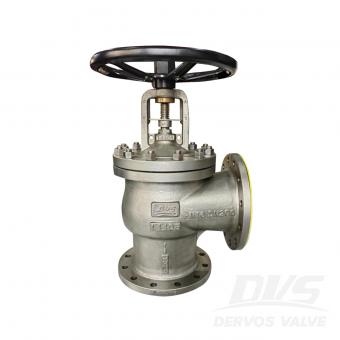
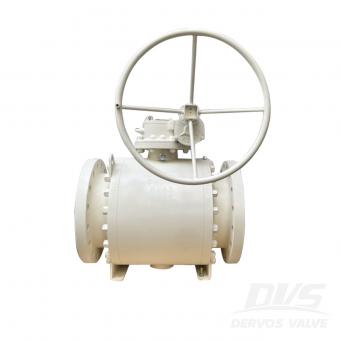
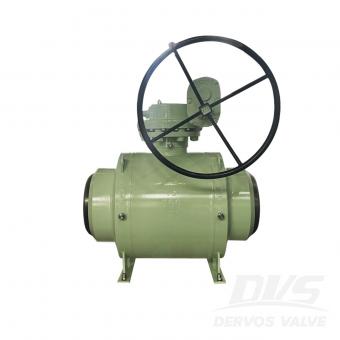
DERVOS VALVE operates more as an industrial valve engineering supplier with a strong focus on pipeline isolation solutions, including line blind, spectacle blind, and sliding blind valve configurations.
From a sourcing perspective, they are often used by EPC contractors and distributors who need:
● Flexible manufacturing support
● Customized pipeline isolation solutions
● Faster lead times compared to large OEM-heavy supply chains
● API-oriented production and documentation support
Their typical application areas include:
● Pipeline isolation systems
● Oil & gas facilities
● Petrochemical plants
● Industrial power systems
In many projects, DERVOS is positioned as a practical engineering supplier rather than a traditional legacy OEM, especially for customized or non-standard line blind valve requirements.
Emerson is primarily known for automation and process control, and their valve portfolio is often integrated into broader control systems.
In real plant environments, Emerson’s strength is not just the valve itself but the combination of:
● Control valve technology
● Actuation systems
● Digital monitoring and diagnostics
They are typically chosen in highly automated LNG, refining, and chemical facilities.
Emerson is primarily known for automation and process control, and their valve portfolio is often integrated into broader control systems.
In real plant environments, Emerson’s strength is not just the valve itself but the combination of:
● Control valve technology
● Actuation systems
● Digital monitoring and diagnostics
They are typically chosen in highly automated LNG, refining, and chemical facilities.
Neway has strong EPC exposure and is frequently involved in international oil & gas projects.
From an engineering standpoint, they are capable of handling:
● Large-scale valve packages
● API-compliant manufacturing
● Export-oriented documentation requirements
They are often selected for projects where volume supply and certification coverage are more important than brand heritage.
L&T Valves is closely associated with infrastructure-scale energy and industrial projects.
They are typically involved in:
● Refinery expansion projects
● LNG terminals
● Large pipeline systems
Their strength lies in engineering support and project execution capability across large EPC contracts.
From a practical engineering standpoint, selecting a line blind valve manufacturer is less about brand hierarchy and more about matching the supplier to the operating conditions.
For example:
● Severe refinery service → Velan, Powell
● Pipeline transmission systems → Cameron
● EPC large-scale supply → Flowserve, Neway, L&T
● Flexible engineered solutions → DERVOS VALVE
● General industrial applications → Crane, Bray
In real projects, the “best” manufacturer is the one that can meet API requirements, deliver reliable documentation, and align with shutdown safety procedures — not necessarily the most well-known name.
Copyright © 2015-2026 DERVOS VALVE CO.,LTD.All Rights Reserved Blog / Sitemap / XML / Privacy Policy