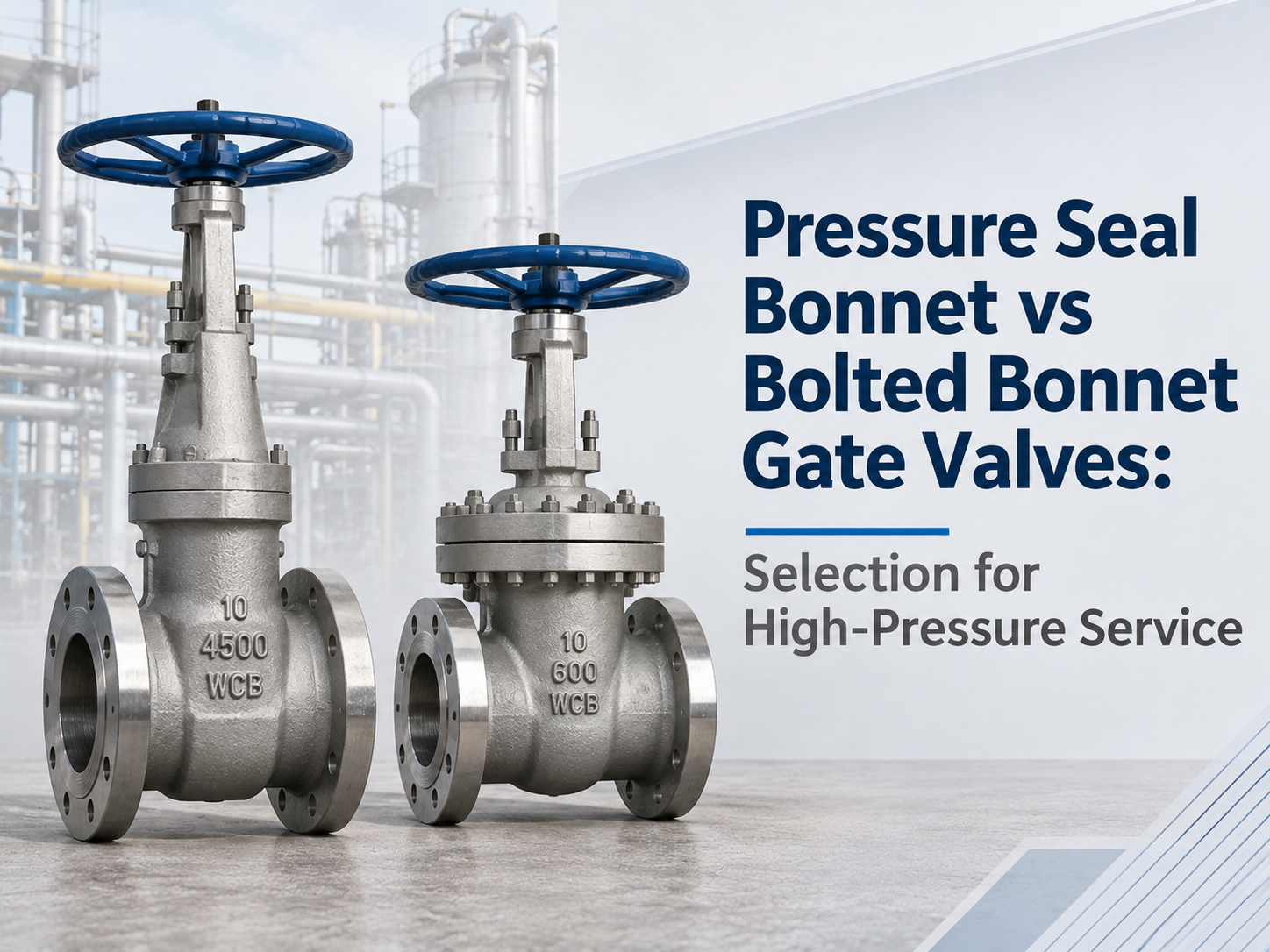
A pressure-seal bonnet is usually the stronger candidate for very high-pressure, high-temperature service because internal pressure increases the sealing load at the body-bonnet joint. A bolted bonnet relies primarily on bolt preload to compress its gasket and is often simpler to inspect and disassemble. That does not create a universal pressure-class cutoff. A Class 600 valve may use a pressure seal, while a bolted-bonnet design may be available at a higher class. The correct choice depends on the applicable pressure-temperature rating, valve size, material, thermal cycles, start-up conditions, maintenance plan, and the manufacturer’s qualified design. Quick Selection Answer Choose a pressure-seal bonnet when the service combines high pressure with high temperature, repeated thermal loading, or a critical external-leakage consequence, and the plant can support its more specialized maintenance procedure. Choose a bolted bonnet when the approved valve design satisfies the full pressure-temperature envelope and familiar disassembly, gasket replacement, and general maintenance access have greater value. Do not use the bonnet style to decide the valve function. Gate, globe, and check valves can all be made with pressure-seal constructions, but they perform different jobs in the system. How Does a Bolted Bonnet Work? In a bolted-bonnet valve, a flanged joint connects the bonnet to the body. Studs or bolts apply the initial clamping force, compressing a gasket between the mating faces. The bolting, flange geometry, gasket, surface finish, assembly method, and temperature all affect joint integrity. As internal pressure rises, pressure-generated forces tend to separate the body and bonnet. The joint must retain enough gasket compression after pressure, temperature change, bolt relaxation, and thermal expansion are considered. Correct tightening sequence and controlled preload therefore matter. The main practical advantage is familiarity. Maintenance teams can see and access the external bolting, and the disassembly sequence is generally straightforward. However, the joint may become large and heavily bolted as pressure, size, and design load increase. How Does a Pressure-Seal Bonnet Work? A pressure-seal bonnet uses an internal gasket and a retaining system rather than a conventional large external body-bonnet flange. Exact details vary, but common designs use a bonnet or cover, pressure-seal gasket, spacer or thrust ring, and segmented retaining ring inside the body neck. Process pressure acts on the bonnet assembly and forces the sealing elements against their contact surfaces. As pressure increases, the body-bonnet sealing load also increases. This is why the design is described as self-energizing or pressure assisted. Self-energizing does not mean self-assembling. At zero or low pressure, the process has not yet created its full sealing force. The initia...
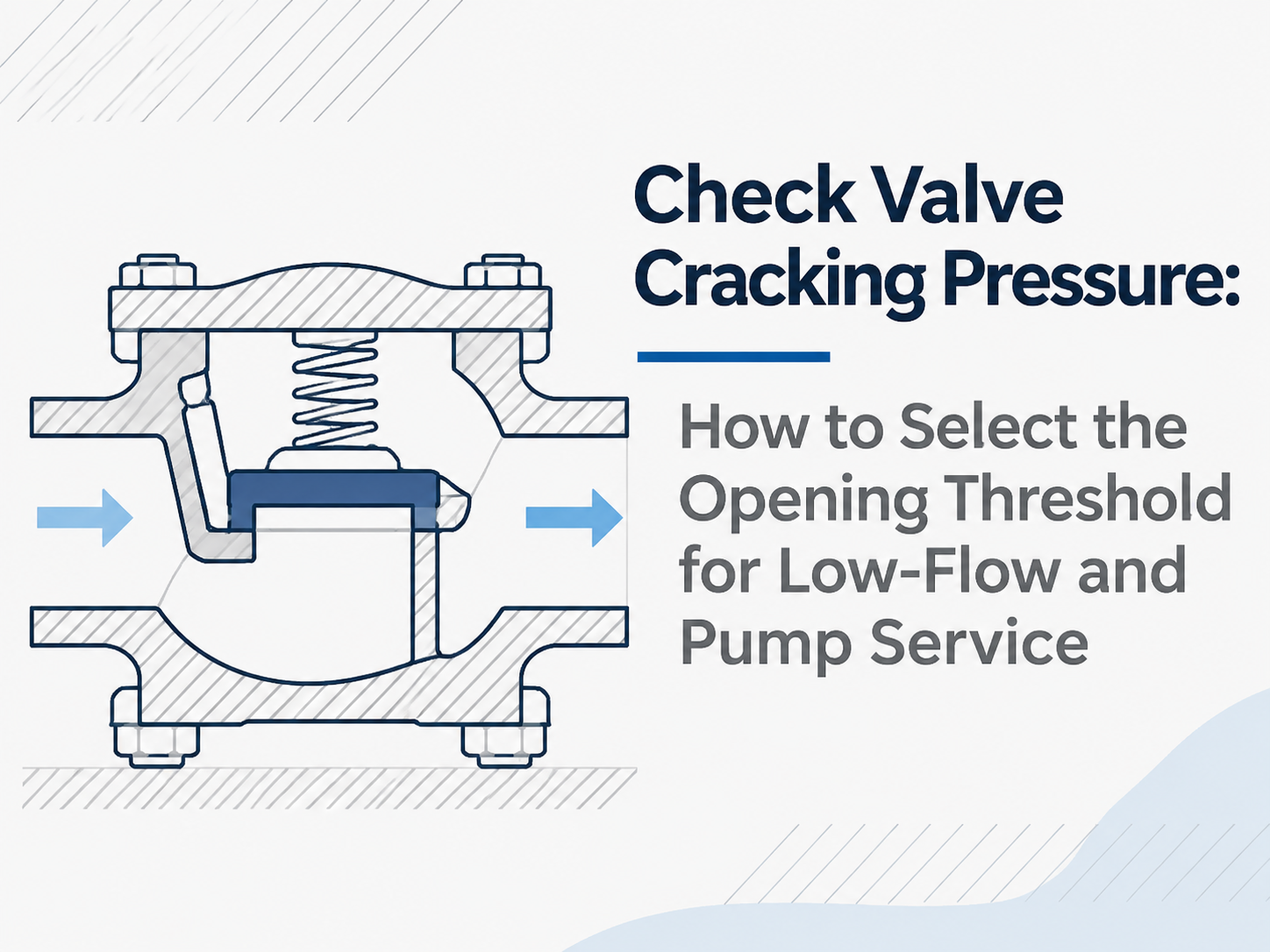
A check valve can begin to pass fluid and still be far from a stable open position. Check valve cracking pressure is therefore the threshold for first detectable flow, not the full-open pressure drop or proof of reliable minimum-flow operation. For low-flow and pump service, the opening threshold is acceptable only when the system can exceed it in the worst forward-flow case. The selection must then pass three separate checks: stable valve travel at minimum flow, acceptable pressure loss at normal and maximum flow, and timely closure when the pump stops. Start with the Worst Available Differential Pressure Parker defines cracking pressure as the upstream pressure at which detectable flow is measured, while Swagelok notes that first flow does not mean the valve is fully open. The relevant system value is not pump discharge pressure alone, but the pressure difference across the valve when it must open. For an initial screen: Available opening ΔP = minimum upstream pressure at the valve − maximum downstream pressure at the valve If the pressures come from remote points, correct them for elevation and line losses. Evaluate the least favorable credible case, such as a variable-speed pump starting at low speed or a standby pump opening against a live common header. The maximum guaranteed cracking pressure of the offered valve should be below this available ΔP, with an engineering allowance for manufacturing tolerance, temperature, orientation, deposits and measurement uncertainty. There is no defensible universal allowance. A nominal value alone is insufficient because catalog cracking pressure may be specified as a range, and a valve left idle may initially require a higher differential than it does after cycling. Low Cracking Pressure Does Not Solve Low-Flow Instability After the closure member lifts, more differential pressure and flow force are needed for stable travel. An oversized valve may crack open but hover near the seat because velocity is too low, causing clicking, flutter, impact and accelerated wear. Swagelok’s service guidance identifies excessive spring cracking pressure and excessive valve size as possible causes of chatter near the threshold. Size from the operating envelope rather than automatically matching the pipe diameter. Ask the supplier to evaluate three points for the exact size, spring and trim: Operating point Required evidence Minimum continuous flow Stable-open position, minimum stable flow or velocity, and corresponding ΔP Normal flow Model-specific pressure-drop curve or validated flow coefficient Maximum flow Peak ΔP, velocity limits, erosion risk and acceptable travel Cracking pressure answers “When does motion begin?” The flow curve and stable-flow limit answer “Will the valve remain open without damaging itself?” Pump Opening and Pump Shutdown Are Different Design Cases At s...
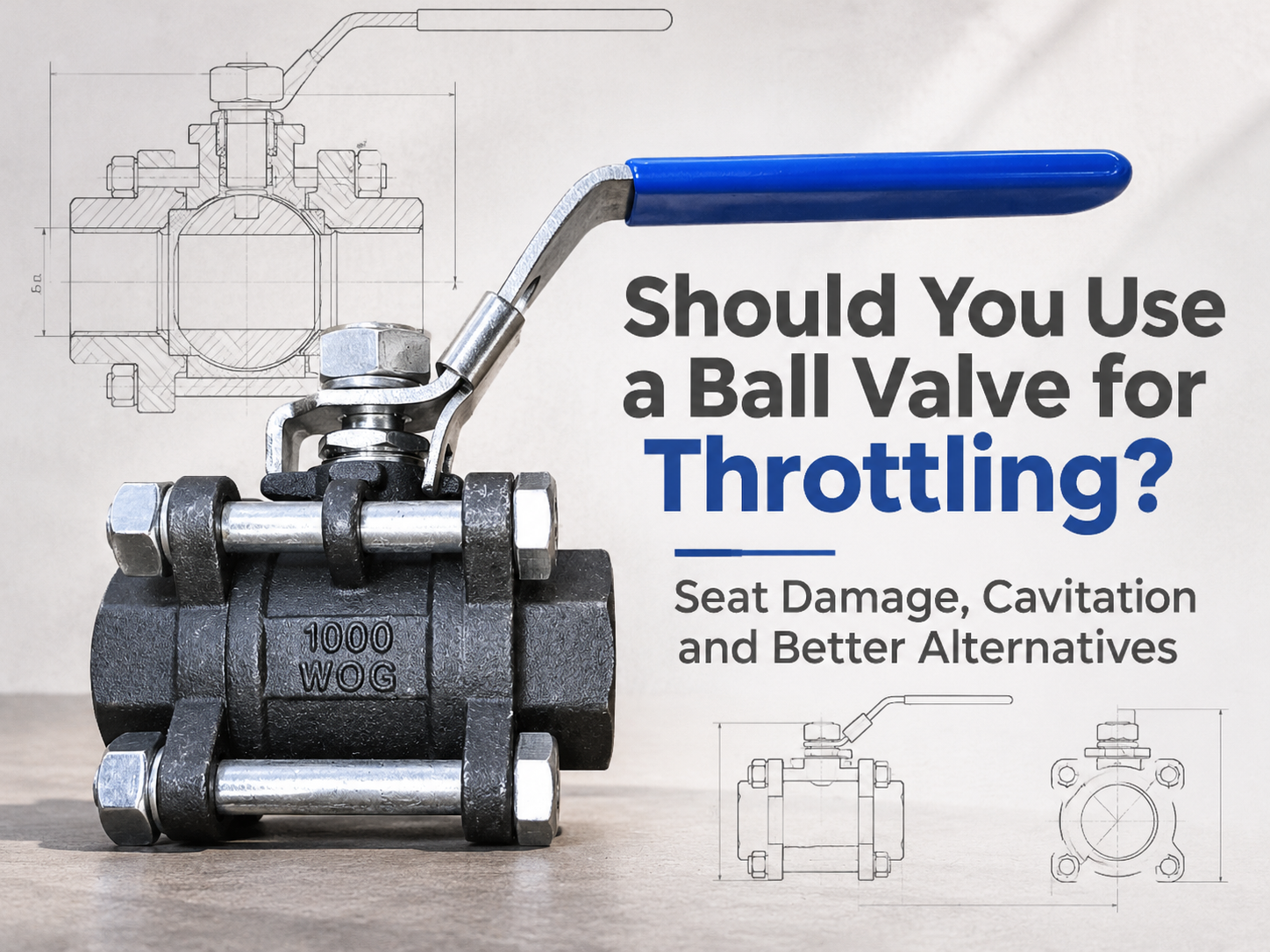
A standard on-off ball valve should not be the default choice for continuous throttling. It can restrict flow, but that does not make it a control valve. Holding it partly open can expose the seat to a concentrated high-velocity jet, produce unstable control and, in liquid service, create cavitation. Brief restriction during start-up or shutdown may be acceptable if the manufacturer permits it. Regular modulation requires a valve designed and sized for that duty. A Part-Open Ball Puts the Seat in the Flow Path When a standard ball valve is fully open, the bore provides a relatively straight flow path. As the ball rotates toward closed, the opening becomes a narrow, changing shape. Velocity rises through this restriction, and the emerging jet can pass close to the downstream seat edge and body cavity. That matters because the seat performs the shutoff function. A soft seat may deform, cut or erode under high velocity, heat and entrained solids. A metal seat may tolerate harsher conditions, but hardness alone does not provide a suitable control characteristic or prevent local erosion. Damage often appears later as increased shutoff leakage, even though the valve still moves normally. Control quality is another limitation. A conventional full-port ball may pass a large increase in flow over a small change in travel once it begins to open. The actuator can therefore hunt around a narrow angle instead of positioning smoothly across a useful range. A positioner cannot correct an unsuitable valve characteristic. Cavitation Depends on the Local Pressure, Not Just Line Pressure Cavitation is possible when liquid accelerates through the restriction and its local pressure falls below the liquid's vapour pressure. Vapour bubbles then form. If pressure recovers above vapour pressure downstream, the bubbles collapse and release damaging energy near the valve or downstream pipe. Ball valves are generally high-recovery valves: much of the pressure lost at the narrowest flow area is recovered downstream. That means the minimum internal pressure can be considerably lower than the measured outlet pressure. A moderate-looking inlet-to-outlet pressure drop may therefore hide a more severe pressure dip inside the valve. Noise resembling gravel, vibration and rough pitting are warning signs, but sound alone is not a design method. The evaluation needs minimum, normal and maximum flow; upstream and downstream pressure at each case; fluid temperature and vapour pressure; density; solids content; valve size; and the manufacturer's pressure-recovery and sizing data. If downstream pressure remains below vapour pressure, the condition is flashing rather than cavitation and requires a different damage assessment. A Ball Valve Can Throttle When It Is a Control Valve A V-port or segmented ball introduces a shaped opening that gives a more predictable relationship between travel and flow. Correctly sele...

Payment:
30% T/T When Order, 70% T/T Before ShipmentProduct Origin:
ChinaLead Time:
30~60 days Ex Works after order confirmationMaterial:
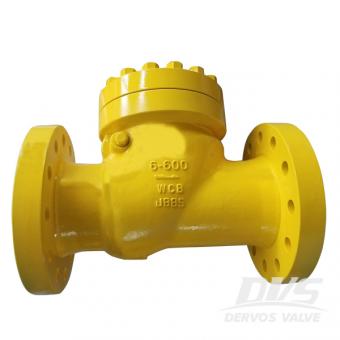
WCBAPI6D swing type check valve RF connnection bolted bonnet full pore WCB body, WCB+13Cr disc, A105+13Cr seat ring, WCB hinge. Suitable temperature in -29℃~+425℃
Quick Detail
|
Type |
Swing Check Valve |
|
Size |
4 inch-6 inch |
|
Design Pressure |
CL600 |
|
Construction |
BC, Swing type |
|
ConnectionType |
Flange |
|
OperationType |
- |
|
Body Material |
WCB |
|
DiscMaterial |
WCB+13Cr |
|
Hinge Material |
WCB |
|
Seat Material |
A105+13Cr |
|
Design Code |
API 6D |
|
Face to Face Dimension |
ASME B16.10 |
|
Test and Inspect |
API 598 |
|
Pressure & Temp |
ASME B16.34 |
|
Medium |
Water, Oil and Gas |
|
Origin |
China |


If you are interested in our products and want to know more details,please leave a message here,we will reply you as soon as we can.
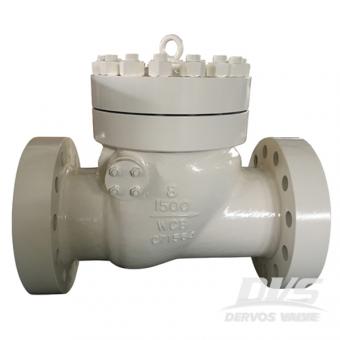
The 8 inch non return check valve conforms to BS 1868 design code, with bolted bonnet and swing type disc. The flanged check valve is made of carbon steel A216 WCB. Design Feature 1.BB: bolted bonnet 2.Swing type disc 3.Reduced bore design 4.Superior flow rates 5.Minimized friction loss 6.Standard trim material for selection 7.External or internal hinge pin available on request 8.Cylinder and counter weight available on request 9.Bare stem and actuators are available on request Quick Detail Type Check Valve Size 8'' Design Pressure ANSI 1500 Construction Bolted Bonnet, Swing Type Connection Raised Face Flange Design & Manufacture BS 1868 End to End ASME B16.10 Connection ASME B16.5 Pressure & Temp ASME B16.34 Test & Inspection API 598 Body Material Carbon Steel Applicable Temp -29℃~+400℃ Media W.O.G. Dimension Class 1500 NPS in 2 2 1/2 3 4 6 8 10 12 DN mm 50 65 80 100 150 200 250 300 L-L1 (RF-BW) in 14-1/2 16-1/2 18-1/2 21-1/2 27-3/4 32-3/4 39 44-1/2 mm 368 419 470 546 705 832 991 1130 L2 (RTJ) in 14-5/8 16-5/8 18-5/8 21-5/8 28 33-1/8 39-3/8 45-1/8 mm 371 422 473 549 700 841 1000 1146 H (OPEN) in 12-1/4 12-1/4 13 14 15-3/4 20-7/8 22-1/16 25-5/8 mm 310 310 330 355 400 530 560 650 WT (kg) RF 69 93 140 232 490 990 1490 1970 BW 49 74 111 185 375 803 1250 1625
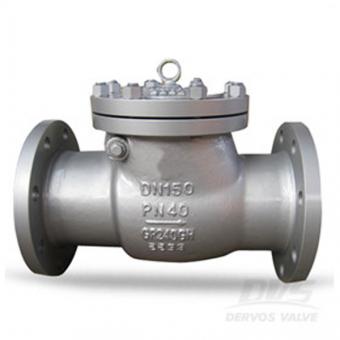
The swing type check valve, designed with PN40 RF flange, bolted cover, is made of cast steel 1.0619 and ss316 trim material. The full bore check valve can be manufactured per client's special requests. Quick Detail Type Non Return Valve ( Check Valve) Nominal Size DN 150 NominalPressure PN 40 Construction BB, Swing Type Disc, Exnternal Pin Connection Raised Face Flange Design & Manufacture DIN 3356 End to End EN 558 Connection EN 1092 Test & Inspection EN 12266 Body Material GS-C25 (1.0619) ApplicableTemp -29℃~+425℃ Media W.O.G. Material No Part Name Carbon steel to ASTM Alloy steel to ASTM Stainless steel to ASTM WCB LCB WC6 WC9 C5 CF8 CF8M CF3 CF3M 1 Body A216 WCB A350 LCB A217 WC6 A217 WC9 A217 C5 A351 CF8 A351 CF8M A351 CF3 A351 CF3M 2 Seat Ring A105 A350 LF2 A182 F11 A182 F22 A182 F5 A182 F304 A182 F316 A182 F304L A182 F316L 3 Disc nut A182 F304 A182 F304 A182 F316 A182 F304L A182 F316L 4 Disc washer A182 F304 A182 F304 A182 F316 A182 F304L A182 F316L 5 Disc A216 WCB A350 LCB A217 WC6 A217 WC9 A217 C5 A351 CF8 A351 CF8M A351 CF3 A351 CF3M 6 Hinge A216 WCB A350 LCB A217 WC6 A217 WC9 A217 C5 A351 CF8 A351 CF8M A351 CF3 A351 CF3M 7 Hinge pin A182 F304 A182 F304 A182 F316 A182 F304L A182 F316L 8 Yoke A216 WCB A350 LCB A217 WC6 A217 WC9 A217 C5 A351 CF8 A351 CF8M A351 CF3 A351 CF3M 9 Bonnet nut A194 2H A194 4 A194 7 A194 8 10 Bonnet bolt A193 B7 A193 L7 A193 B16 A193 B8 11 Gasket Stainless Steel Spiral Wound graphite or Stainless Steel Spiral Wound PTFE 12 Cover A216 WCB A350 LCB A217 WC6 A217 WC9 A217 C5 A351 CF8 A351 CF8M A351 CF3 A351 CF3M 13 Hook screw Steel 14 Name Plate Stainless steel or Aluminum 15 Rivet Stainless steel or Aluminum Other Material ( Alloy 20, ANSI 321, Monel Hastelloy, etc)are available on request Our Service A good customer service is as valuable as product itself. In Dervos, we will offer a full range of customer service to make you feel easy when doing business with us. Providing weekly production report When production begins, you will get production report weekly, so that you can have good command of product status and report to your customer at the meantime. Offering warranty of 18 months 18 months warranty period will be offered after shipment, no concern to purchase valve from Dervos. Providing solutions within 3-days for complaints All the complaints will be solved within 3 days, in this case, you can timely reply and solve problems for your customer, to relax them even when complaints happening.
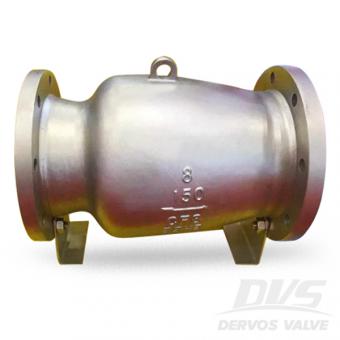
The stainless steel CF8 non return valve features in non slam type disc, ANSI 150 flange end, and full port design. Quick Detail Type Non Return Valve ( Check Valve) Size 8'' DesignPressure Class 150 Construction Non Slam Type Connection RF Flange Design & Manufacture ASME B16.34 End to End ASME B16.10 Connection ASME B16.5 Pressure & Temp ASME B16.34 Test & Inspection API 598 Body Material A351 CF8 Trim Material SS304 Media W.O.G. Available Modifications for Dervos Valves -Valve Pressure -Valve Size -Reduced Bore & Full Bore -Body & Trim Material (Disc, Seat, Pin, Spring) -End Connection (Flange, BW, SW, Thread, Wafer, Lug) -Available Operation (Bare Stem, With Actuators) -Available Counterweight -Available Cylinder -Customizing Coating -Customizing Packaging Related Knowledge What is non-slam check valve? Water hammer is a hydraulic phenomenon that undergoes an abrupt change in its rate of flow and are caused by sudden shutting or slamming. Water hammer will reduce process efficiency, cause valve damage, gasket joint leaks and other problems. The non-slam check valve is designed to reduce water hammer. An internal spring can prevent the disc from slamming close.The design of a non-slam check valve could eliminate pressure flutuations, vibration and damges. Plus, the disc and spring experience minimal wear over time, which will largely extend the service lives of non-slam check compared to swing check valve.
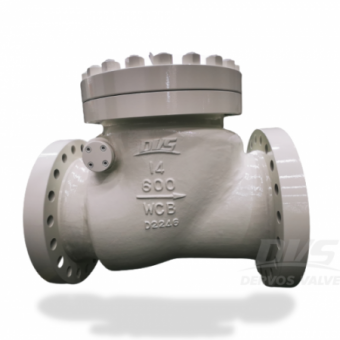
Chinese manufacturer Dervos offers 14 Inch swing check valves made according to API 6D. Other features cover CL300, RF End Connection, WCB body.
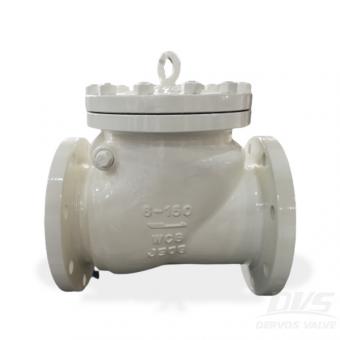
The swing check valve is made of A216, a kind of WCB. Manufactured according to BS1868, the check valve is 6 inch and 150LB. And the valve is capable in working temperature between -19 to 425 degree Celsius.
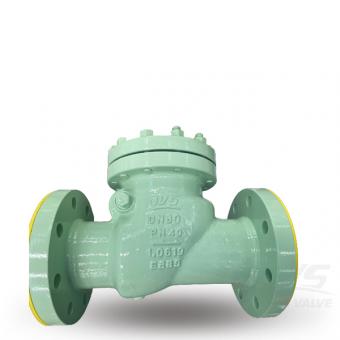
The swing check valve is made of 1.0619, a kind of carbon steel, as per DIN standard.The check valve is DN80 and PN40, or 3 inch and 300LB. And the valve is capable in working temperature between -19 to 425 degree Celsius.
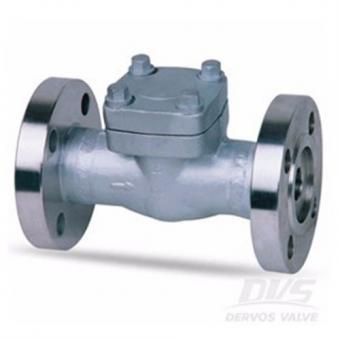
The 1 inch swing check valve has the construction of bolted bonnet and RF flange end. The forged steel swing check valve is designed with reduced bore as per API 602. Dervos could also do customizing service as per clients’ requests on sizes, design ratings, materials, and standards and so on.
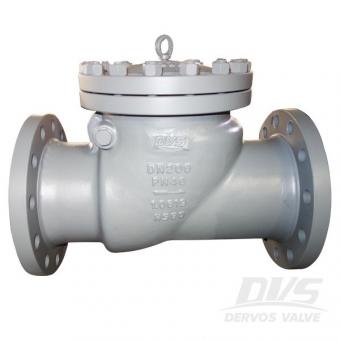
Made of high-quality casting, the DIN swing check valve has a cast steel body with bolted bonnet structure and flange connection. The valve is designed with good sealing performance and minimal water hammer effect.
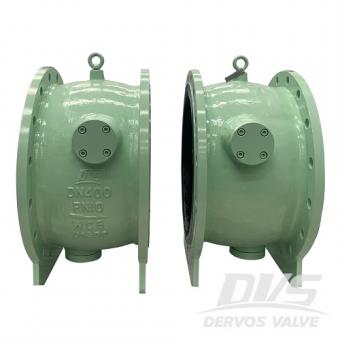
DN400 PN10 check valve is made according to DIN standard. The valve body is made of WCB. It has the structural characteristics of swing type and structural length of 310mm. It has the connection mode of RF. This valve has a built-in damper, which is mainly used for shock absorption and energy dissipation.
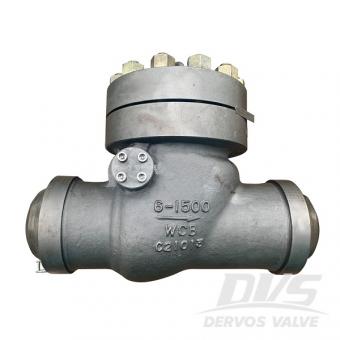
6" 1500LB swing check valve is made according to API 6D standard. The valve body is made of WCB. It has the structural characteristics of swing type. It has BW connection mode.
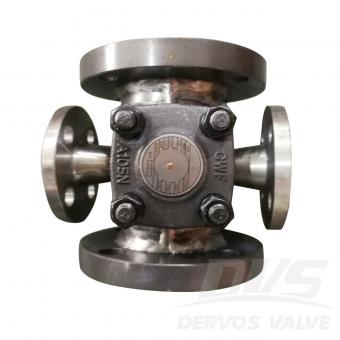
1" 150LB swing check valve is made according to API 602 standard. The valve body is made of A105. It has the structural characteristics of bolt cover, swing type and full bore. Its connection mode is RF (Welded Flange).
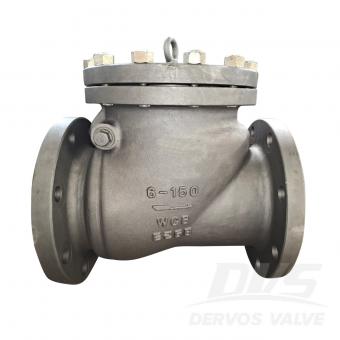
6" 150LB check valve is made according to API 6D standard. The valve body is made of WCB. It has the structural characteristics of swing type and external pin. Its connection mode is RF.
Copyright © 2015-2026 DERVOS VALVE CO.,LTD.All Rights Reserved Blog / Sitemap / XML / Privacy Policy