English

English

Get a Quote
News
  • Operation Tips About Gate Valve
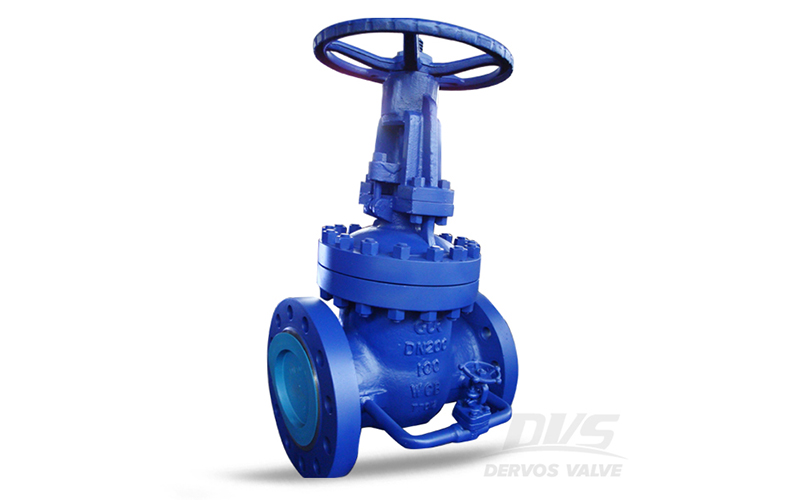
    Operation Tips About Gate Valve Oct 03, 2015
    1. Gate valves are usually put in on-off occasions and they are forbidden to be used to regulate the flow.   2. It is suggested to use gate valve with flexible or split wedge when the application scenarios are above 260℃, in that way stuck could be avoided out of thermal expansion.   3. When it comes to high velocity (turbulent) or thermal cycling, the threaded seat must be welded with the valve body. Please specify that when ordering.   4. After the gate valve is closed, you should reverse the stem for around 1/8 to 1/4 turn to relieve the pressure of the stem. This prevents the valve from impeding or damage even if the stem slightly expand in use.   5. Due to the different caliber size, application environment, and materials, certain gate valves require special installation. If the valve you order must be specially installed, you should indicate the direction of the valve when ordering.
    View More
  • What Would Happen If Butterfly Valve with Wrong Diameter Put In Use
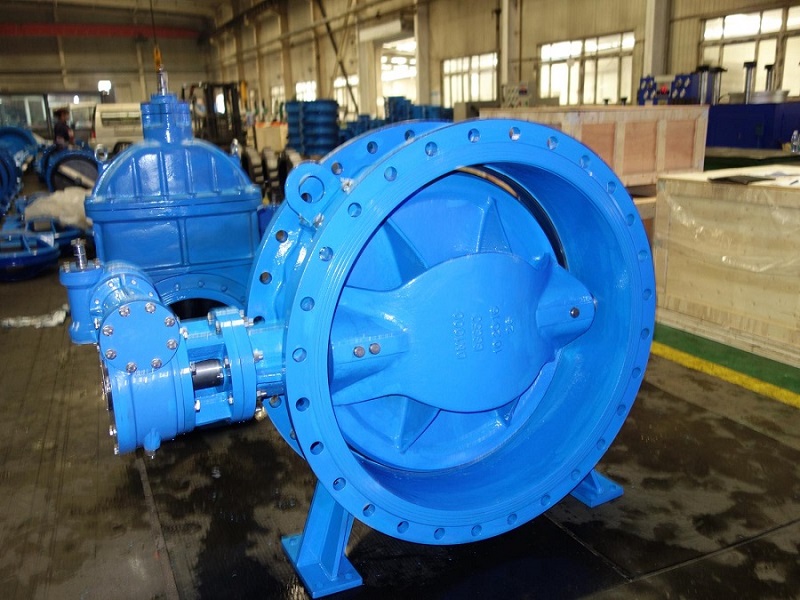
    What Would Happen If Butterfly Valve with Wrong Diameter Put In Use Sep 15, 2015
    The diameter of the butterfly valve is mainly determined by the flow, medium and flow rate. In general, the flow rate of liquid is not more than 5m/s and up to 7-8m/s. In general, the flow rate of water is 2-3m/s, the flow rate of low pressure gas is recommended for 2-10m/s, the flow rate of medium pressure gas is recommended for 10-20m/s; As for the flow rate of steam, the flow rate of low pressure steam is recommended for 20-40m/s, the flow rate of medium pressure steam is 40-60m/s, and the flow rate of high pressure steam is 60-80m/s.   Of course, sometimes, in order to reduce pressure loss, people will choose a larger diameter butterfly valve, so the flow rate will be slower. However, this cannot be done if the valve is operating with a low flow rate.   Liquids flow through a zone of absolute low pressure and undergo rapid evaporation and re-condensation in a very short period of time. This phenomenon is called cavitation effect. Because the gas cannot change state at low pressure, this phenomenon does not occur in the gas stream. When the fluid flows into the high-pressure area, the steam bubbles will suddenly condense, collapse or coalesce, the flow rate can reach 110m/s, the flow pressure can reach 50Mpa, causing impact damage to the pipe wall.   When the valve pressure is less than 1.5Mpa and cavitation occurs, but does not cause serious damage to the material, so no special measures are necessary.
    View More
  • Dervos to attend Valve World Expo 2016
    Dervos to attend Valve World Expo 2016 Sep 04, 2015
    Dervos Valve Industry Company Limited is about to attend Valve World Expo 2016 and the exhibition position is Hall 4 / G59. We look forward to your arrival and hope there ‘s cooperation in the future. If you are interested in our products, please call Tel: 0086-592-5185 336 or email us through: inquiry@dervosvalve.com. DERVOS is a professional exporter of industrial valves which was founded in 2008. The professional sales and service team started the business in valves from then on and has expanded the markets to 5 continents: Europe, Asia, America, Africa, and Oceania. Valve World Expo, the international trade fair and convention for industrial valves and fittings, is a biennial event that has been held in Düsseldorf since 2010.   In all, 12,500 trade visitors came to Düsseldorf on the three days of the trade show. By that time, we will also bring our latest researches and products to the exhibition. Hope to meet you there.   Exhibition: Valve World Expo 2016 (10th Biennial Valve World Conference & Exhibition) Date: 29 Nov-1 Dec, 2016 Organizer: Messe Düsseldorf GmbH Address: Düsseldorf, Germany International Exhibition Centre Company exhibition position: Hall 4 / G59
    View More
  • Common faults and solutions of marine valves
    Common faults and solutions of marine valves Aug 25, 2015
    Thanks to the development of today’s science and technology, the marine valves have been greatly improved, with better body strength, strong resistance to abrasion and corrosion and longer service life. Occasionally, however, some unexpected faults would affect the use and health of the valve. How are some common faults and relevant ways to fix it.   1. The device doesn’t work and DCS alarms timeout Possible causes: A. The power dead; B. The main loop lacks of phase; C. The control loop fails;   Solutions: A. Check the power supplier and voltage of each circuit; B. Check if the main circuit phase wire is broke; C. Check if the switch limited position or the torque switch works normally. Whether the DCS is protected by chain;   2.DCS alarms once upon it is operated Possible causes: A. The short-circuit of the main circuit leads to the protective act of the thermal relay or power switch trip; B. Fails of internal components or body cause excessive torque protection; C. The electrical equipment's torque control mechanism fails or the torque setting value is too small;   Solutions: A. Check whether the power switch trip and thermal relay ; B. Check if the transmission mechanism is stuck; C. Check the torque setting value;   Through the above analysis, we will have a general understanding of these failures and the corresponding solutions. There will be other faults in marine valves in the future, but as long as we actively analyze these faults, we will finally find a suitable solution.
    View More
  • Six points about the principle of safety valve designing
    Six points about the principle of safety valve designing Sep 18, 2015
    1. First of all, the design of the safety valve must meet the requests from users. 2. The price of the product should be the most reasonable once upon the actual working condition. 3. The first though design should have in their mind is that making the overall performance of the valve reach the anticipation and standards. 4. More tests promise more precise and detailed parameters. 5. The spring’s stiffness should be paid more attention. Appropriate design enables the valve’s internal parts to match each other batter, making it easy to assemble, disassemble and maintain. 6.Safety valve needs to be designed to have a longer service life. Generally, the medium of safety valve can be divided into three types: steam, gas and liquid. But designers cannot do performance tests of various media at the same time. Due to heavy oil (asphalt) and other media, the qualified performance data obtained from the cold test may become unsatisfactory. Therefore, the safety valve design cannot duplicate any other mature product models. The valve should be manufactured with appropriate spring rigidity and reasonable internal structure according to different media. Of course, the design principle of the safety valve is to produce products that users satisfy, and the only design shortcut is the experience accumulated from practice.
    View More
  • 5 questions about the use of valves
    5 questions about the use of valves Aug 26, 2015
    1. Why does a double seating valve tend to oscillate at a small opening state?   When it comes to a sing-spool valve, it will have excellent stability when the medium is open-flow type, which means the medium flows towards the direction favorable to the opening of the valve. In contrast, when turn it into close-flow type, the valve’s stability falls. Based on the above, the double seat valve has a bad stability and tends to vibrate at small opening sate, because its two spools--the upper one is in flow-close situation while the lower one is bound to be in flow-open--work simultaneously.   2. Why can’t a double seal valve be used to cut off medium?   Tanks to its force-balanced structure, the double seal valve has a large differential pressure. But the leakage brought by the imperfect contact of the two sealing faces will lead to horrible consequences if it is used as a cut-off valve.   3. Why does a linear motion valve do worse in anti-blocking than rotary motion valve?   The linear motion valve cut off the flow vertically but the medium horizontally flows in and out. The flow path in the cavity, extending in twist and turns, enables the impurities to precipitate in the so-called dead zones. As time goes by, the path will be blocked. On the contrary, the rotary motion valve cut the flow off horizontally and has a relatively simple flow path. Therefore, the rotary motion valve has a better anti-blocking performance.   4.Why the stem of linear motion valve is relatively small   It refers to an easy mechanical principle: high sliding friction brings low rolling friction. The stem of the linear motion valve moves up and down. The packing, which is slightly compressed, will wrap the stem very tightly, resulting in a large backlash. To avoid that, the stem is designed to be very thin and small.   5. Why does rotary motion valve can bear high differential pressure?   That’s because the resultant force that the medium produced on the spool or plate only has a very small torque on the axis of rotation. As a result, the rotary motion valve bears high differential pressure
    View More
first page 41 42 43 44 45 46 47 48 49 last page
[  A total of  49  pages]

Leave a message

    If you are interested in our products and want to know more details,please leave a message here,we will reply you as soon as we can.

Home

Products

about

contact