In the export of industrial valves, packaging is often regarded as merely the final step before delivery. However, during actual transportation, packaging directly affects the overall condition of the valve during transit, handling, and even at the moment the customer unpacks it.
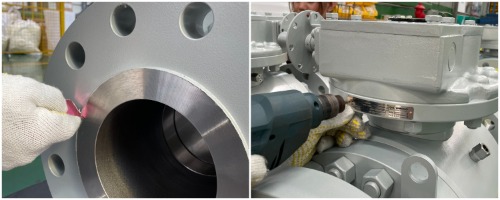
Before entering the packaging process, all valves undergo cleaning, inspection, and product information verification. This stage ensures that each valve is in a stable and fully controlled condition before packaging.
● Remove oil and grease from the valve body surface
● Inspect flange sealing surfaces and the valve cavity to ensure no foreign matter is present
● Install and securely fix the nameplate to ensure product information is clear and identifiable
This process provides a reliable foundation for subsequent protection and transportation.
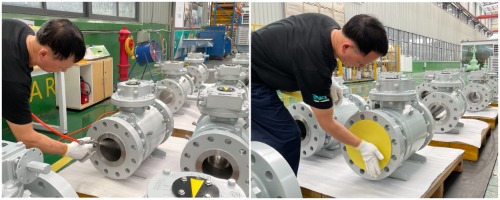
To address the conditions typically encountered during export transportation, valves receive targeted protective treatment prior to packaging:
● The valve cavity is evenly coated with anti-rust oil to reduce the risk of corrosion in humid or salt-laden environments
● Protective covers are installed on all flange faces to prevent impact damage or contamination during handling and transport
These measures ensure that both internal components and sealing surfaces remain in good condition until the valves arrive at the customer's site.
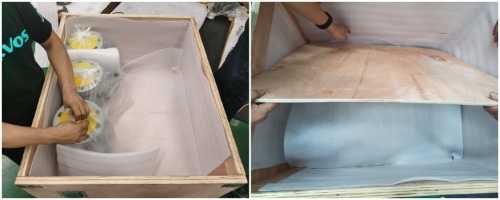
During the inner packaging stage, DERVOS applies a multi-layer cushioning structure to provide comprehensive protection for each valve:
● Impact-resistant pearl cotton is placed around all sides and at the bottom of the inner carton
● Separators are installed between valves to prevent direct contact
● Each valve is individually wrapped with protective cushioning material, with special attention given to coatings and machined surfaces
This packaging structure effectively reduces the risk of paint damage, abrasion, and surface defects during transportation.
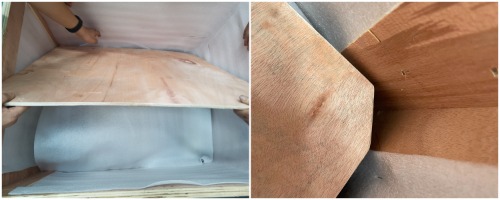
When multiple valves are packed in the same crate, custom wooden partitions are used to secure each unit:
● Valves are precisely positioned according to their dimensions to prevent movement inside the crate
● Partitions feature chamfered edges, making it easier for customers to open the crate and remove the valves
● A balance is achieved between transportation stability and on-site handling convenience
These details are often among the first things customers notice when receiving the goods, reflecting the supplier's attention to both protection and user experience.
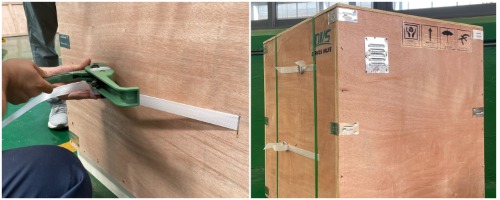
At the final stage, the valves are fully packaged in robust outer crates:
● The outer crate features a stable structure designed to meet the requirements of export transportation and repeated handling.
● Secure crate sealing ensures suitability for long-distance transportation and warehouse stacking.
● The packaging facilitates container loading, shipment, and on-site receiving.
Manufacturing and delivery capability reflected through packaging details.
6. Inverted Suspension Testing to Ensure Packaging Reliability
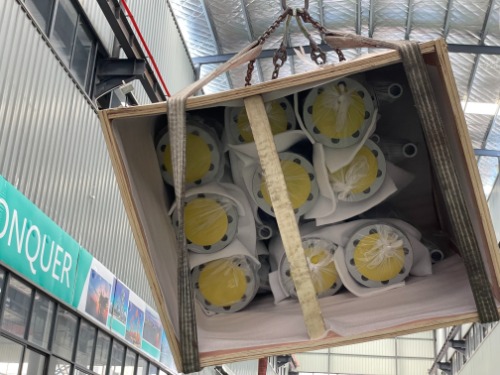
To verify the stability and reliability of the packaging under real transportation and handling conditions, Dervos conducts inverted suspension testing on finished packaged crates:
● The fully packaged valve crate is turned upside down to simulate potential unexpected situations during lifting and handling.
● The crate structure, internal supports, and the valve itself are inspected to ensure they remain secure and stable.
● Any signs of loosening or movement are promptly corrected, ensuring the final packaging can withstand the challenges of transportation and repeated handling.
Through this additional procedure, Dervos further confirms the robustness of its packaging solution, ensuring that valves remain fully protected during transportation, handling, and even upon unpacking at the customer' s site.
At Dervos, packaging is regarded not merely as transportation protection, but as an integral part of our responsibility to customers. Through standardized procedures and strict attention to detail, we strive to ensure that every valve arrives at the customer' s site in the same condition as when it left the factory.
It is these tangible, visible details that often leave customers pleasantly surprised when they receive their shipment.
Copyright © 2015-2026 DERVOS VALVE CO.,LTD.All Rights Reserved Blog / Sitemap / XML / Privacy Policy