English

English

Get a Quote
Industry Knowledge
  • The Working Characteristics of Different Check Valves
    The Working Characteristics of Different Check Valves Mar 16, 2020
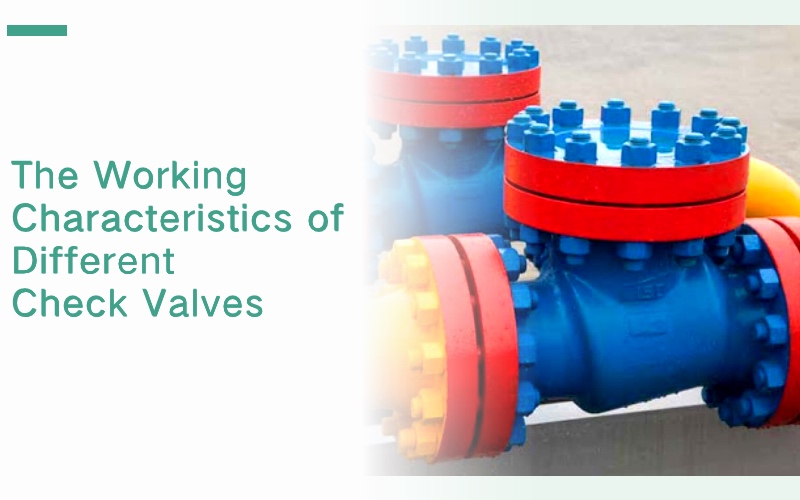
    Check valve is a valve that its opening and closing part relies on the medium flow and force to move, precluding the back flow of the medium.As one of automatic valves, check valve mainly used for one-way flow of media on the pipeline, allowing the media to flow in one direction only.The fluid under pressure makes the valve flap open and flow from the inlet side to the outlet side. When the pressure on the inlet side is lower than the outlet side, the valve flap automatically closes under the action of fluid pressure an Check valve according to its structural characteristics can be divided into WAFER check valve, lift check valve, swing check valve, counter weight check valve, etc. WAFER check valve 1. Compared with swing check valve, the flow resistance is large,Wafer check valve is not suitable for the outlet of high pressure (Class900 and above) pumps and compressor; not suitable for pulsating media conditions;not suitable for oxygen conditions. 2. Because it’s Structure of WAFER,Wafer check valve is not suitable for large diameter (DN600 or more), high pressure (Class900 and above) occasions. 3. Wafer check valve should as far as possibleinstalledhorizontally. In case of vertical pipeline, make sure the media flowfrom top to below. Lift check valve 1. Subject by the working principle,lift check valve can only be installed in the horizontal pipeline. 2. Compared with the swing check valve,its flow resistance is large,lift check valve is not suitable for large diameter (DN50 and above) occasions, in general,it’s suitable for DN40 and smaller application. Swing check valve 1.  Swing check valve should as far as possible installed horizontally. In case of vertical pipeline, make sure the media flow from top to below. 2.  limited by the structure,swing check valve should not be used for DN40 and below on the pipeline. 3. For large diameter pipelines (e.g. DN400 and above), Tilting swing check valves are recommended. Counter weight check valve 1. Choose according to needs 2. Counter weight check valveis used inwhere serious water hammer may occur.
    View More
  • Handel Butterfly Valves or Gearbox Butterfly Valves
    Handel Butterfly Valves or Gearbox Butterfly Valves Mar 11, 2021
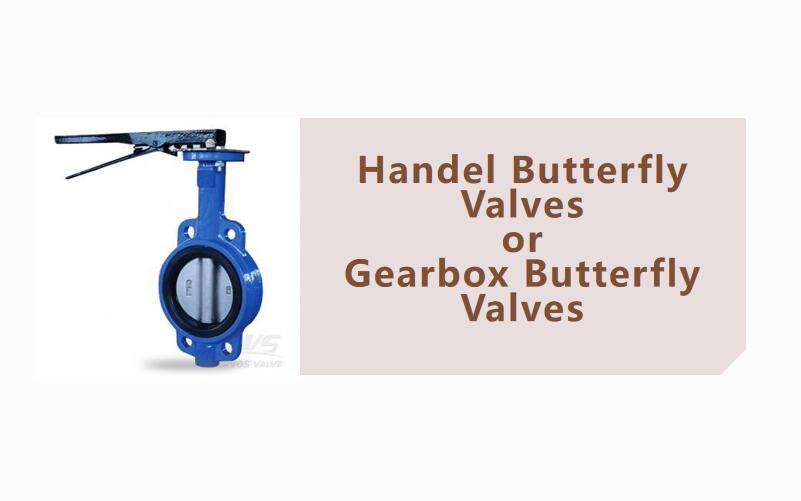
    Commonly known as manual butterfly valve, butterfly valve with lever and butterfly valve with gearbox are both valves that require manual operation, but there are still differences between the two in use.   1. The lever of manual butterfly valve directly drives valve plate, switching quickly, but laborious; Gearbox butterfly valve drives valve plate by gearbox, switching slowly but effortless. Therefore, when the pressure inside the pipeline is large, it will be especially laborious to use the handle butterfly valve, and Dervos recommends you to choose the gearbox butterfly valve.   2. In engineering projects, the gearbox butterfly valves are preferred. Because in addition to saving labor, its sealing performance is also better than that of the handle butterfly valve, especially under the working conditions that require frequent switch, the gearbox butterfly valve will have a longer service life.   3. Handle butterfly valve is generally used more in small diameter (within DN200) because small diameter butterfly valve has less torque and can be opened and closed directly by hand, while gearbox butterfly valve uses gear box to drive the stem, which is more labor-saving.   When the torque of the valve stem is greater than 300N-M, use the gear box drive, otherwise, the handle drive.
    View More
  • Occasions Butterfly Valve Capable For
    Occasions Butterfly Valve Capable For Feb 26, 2021
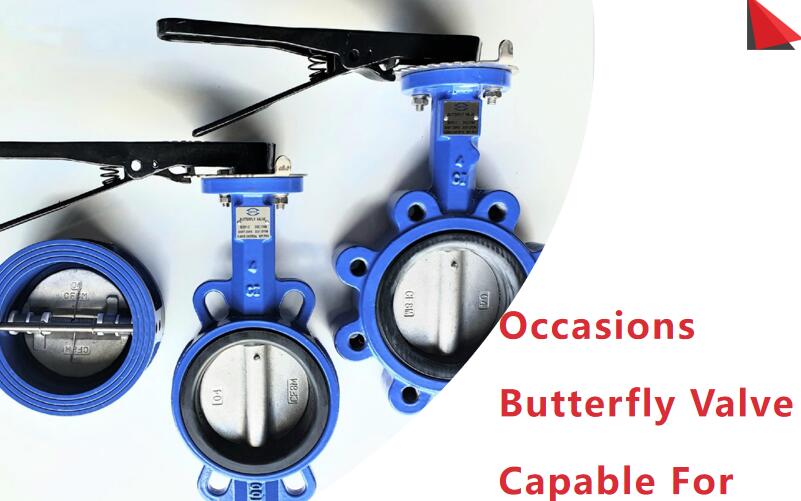
    Butterfly valves are suitable for regulating and intercepting the flow of medium in the pipelines of various corrosive and non-corrosive fluid media in the engineering systems of furnace, gas, natural gas, liquefied petroleum gas, city gas, hot and cold air, chemical smelting and power generation and environmental protection.   Butterfly valve is suitable for flow regulation. Since the pressure loss of butterfly valve in the pipeline is relatively large, about three times that of the gate valve, therefore, when selecting the butterfly valve, full consideration should be given to the pipeline system affected by the pressure loss, and the sturdiness of the butterfly plate to withstand the pressure of the pipeline medium when it is closed should also be considered. In addition, it is also necessary to consider the limits of the working temperature of the resilient valve seat material under high temperature.   When its under special working conditions such as throttling adjustment, or requiring strict sealing, or severe wear, or low temperature (cryogenic), it is necessary to use specially designed metal sealed triple or double eccentric butterfly valves with regulating devices.   Concentric butterfly valves are suitable for pipelines that require complete sealing, zero leakage in gas test, high life expectancy and working temperature from -10 to 150℃ for fresh water, sewage, seawater, salt water, steam, natural gas, food, medicine, oil and various acid and alkali and others   Soft seal eccentric butterfly valves are suitable for bi-directional opening and closing and adjustment of pipeline for ventilation and dust removal. Soft seal eccentric butterfly valves are widely used in metallurgy, light industry, electric power, petrochemical system of gas pipeline and waterway, etc.   Metal-to-metal line sealed double eccentric butterfly valves are suitable for urban heating, steam supply, water supply and gas, oil, acid and alkali pipelines, as a regulating and intercepting device.
    View More
  • Role Triple Eccentric Hard Seal Butterfly Valve Played in Petrochemical Industry
    Role Triple Eccentric Hard Seal Butterfly Valve Played in Petrochemical Industry Feb 25, 2021
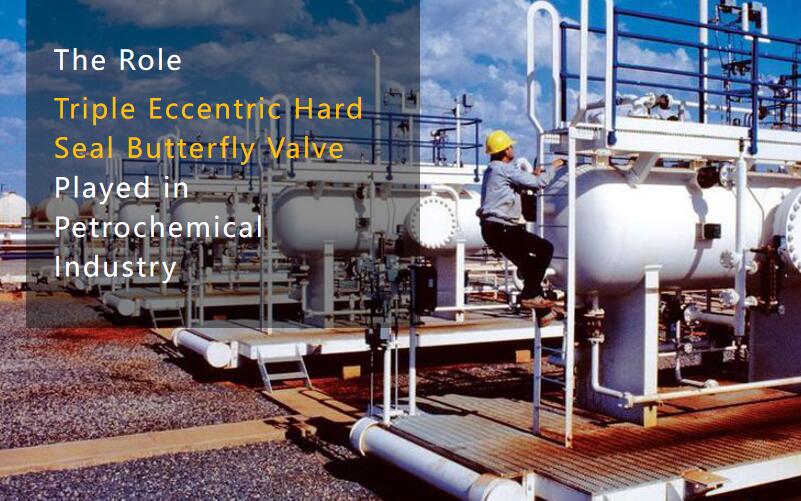
    Triple eccentric hard seal butterfly valve has played a very important role in the petrochemical industry. The triple eccentric hard seal butterfly valve can accurately break off the working condition when the system fails, greatly preventing worse consequences. Secondly, the triple eccentric hard seal butterfly valve is also very easy to operate, and it can also enjoys a strong stability.   The triple eccentric hard seal butterfly valve is designed with the principle of three-dimensional eccentricity, which idealizes the spatial movement trajectory of the sealing surface. And the sealing surfaces are free from friction and interference with each other. Coupled with the proper choice of sealing materials, its sealing performance, corrosion resistance, high temperature resistance and wear resistance of the butterfly valve are firmly guaranteed.   Its main features are as follows.   1、Small opening torque, flexible and convenient, labor-saving and energy-saving. 2、Triple eccentric plate makes the butterfly disc tighter and tighter the more it is closed. Its sealing performance is reliable. 3、Remarkable resistance for high pressure, corrosion and wear; longer service life, etc.
    View More
  • What are the pros and cons of extended stem/bonnet
    What are the pros and cons of extended stem/bonnet Feb 02, 2021
    When we mention Cryogenic Valves, usually it refers to service temperature from -46 °C to -196 °C, and extended stem or extended bonnet. Here are the advantages of extended stem or bonnet:  1.The extended stem/bonnet can protect the stuffing box from low temperature and make sure low leakage here. 2.This design can also facilitate rapid replacement of main valve parts, where you don’t need to disassemble the valve body, all you need to do is just removing the cover to replace the parts. What could be the disadvantages of extended stem or bonnet?  First, it requires larger room for installation. Second, the stem or the bonnet will easily get bent or deformed due to moment by the actuator or the inappropriate calculation of its length.  Dervos is a leading industrial valve maker and trader in China, specializing in the production of cryogenic valves. In addition to those in rare conditions, we also produce other industrial pipeline valves, such as trunnion-mounted ball valves, shut-off pig valves and so on. To learn more about our industry-leading products, contact us today.
    View More
  • Special Cleaning Requirements for Cryogenic Valves
    Special Cleaning Requirements for Cryogenic Valves Dec 30, 2020
    Cryogenic valves are intended for very cold applications. The term "cryogenic" refers to temperatures below -50゜C.   Valve materials for cryogenic service are required for good ductility. Sealing parts, gaskets and other fittings should also be adapted to these extremely cold conditions on demand.   Industries associated with liquefied and compressed natural gas, as well as liquid oxygen, nitrogen or helium, rely on these special valves for the frequent, safe and reliable transport of cryogenic liquids and gases.   Special Cleaning Needs & Concerns To Be Stressed   The valve manufacturers are required to remove grease and all organic contaminants from the valve with a special solvent, keeping the valve clean. Ultrasonic cleaning is a common choice.   Some cleaning gases such as oxygen or chlorine require a very high level of cleanliness to ensure that no organic material or fiber breaks remain on the valve after the cleaning. The cleaned and certified valves are placed in double-sealed polyethylene bags to ensure that the valves are stored in a clean environment until they are installed and used.   Operators should perform a thorough inspection when installing cryogenic valves. This is critical to ensure that no lubricants or grease are accidentally introduced into the valve. Some specialty lubricants are available for use in cryogenic environments, and whether or not they are allowed should depend on the specific application requirements.   As mentioned earlier, cryogenic valves must avoid staining with fiber breaks. As a general rule, fibers longer than 1/8 inch are not allowed in the valve. In many cases, fibers or breaks of any length are not allowed in the valve.   Finally, inspectors should regularly check cryogenic valves and oxygen systems to see if there are internal or external leaks. Internal valve leaks can be prevented by installing the valve properly and a reliable seal design. Cryogenic service requires robust and stable seals to ensure long-lasting and reliable operation of the equipment. Here at Dervos, we’re a leading provider for products inindustrial valve, and we’re certified with the CE, ISO, API and other institutions. We strive to offer the best quality products and customer service through our extensive experience. Contact us today for more information.
    View More
first page 21 22 23 24 25 26 27 28 29 30 last page
[  A total of  37  pages]

Leave a message

    If you are interested in our products and want to know more details,please leave a message here,we will reply you as soon as we can.

Home

Products

about

contact